


Four Step Process
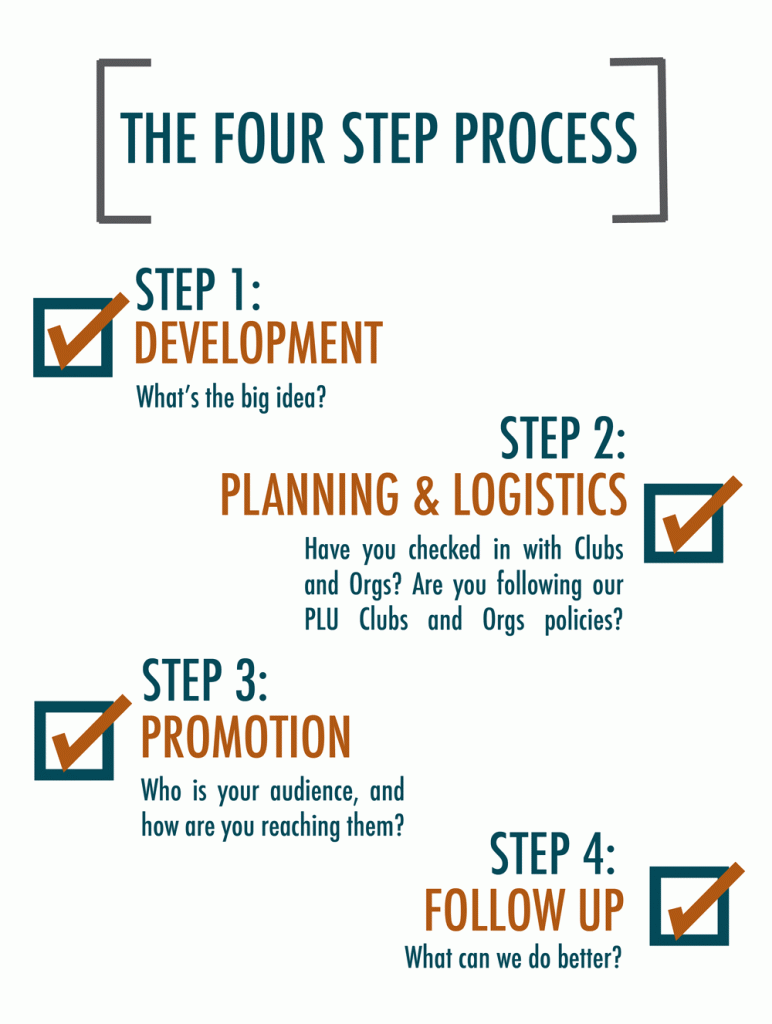
Successful programs are not born, but carefully crafted, thought out, and revised along the way. If your group is going to be successful at recruitment and outreach, good programming is a necessity. The key to successful programming involves four basic steps: development, planning and logistics, promotion and follow up. The more your group follows these steps, over the years, the more your groups programs will be sustainable and long-lasting.
Programming
Programming Policies
Visit the Student Club/Organization Handbook for detailed information about programming policies. Look under “Sponsoring Events,” “Policies and Procedures for Travel,” and Raising Money for Your Club/Organization.”
1. DEVELOPMENT
This is the time for your group to brainstorm, dream a little, and forget about logistics or realities. It is also an important time to ask questions.
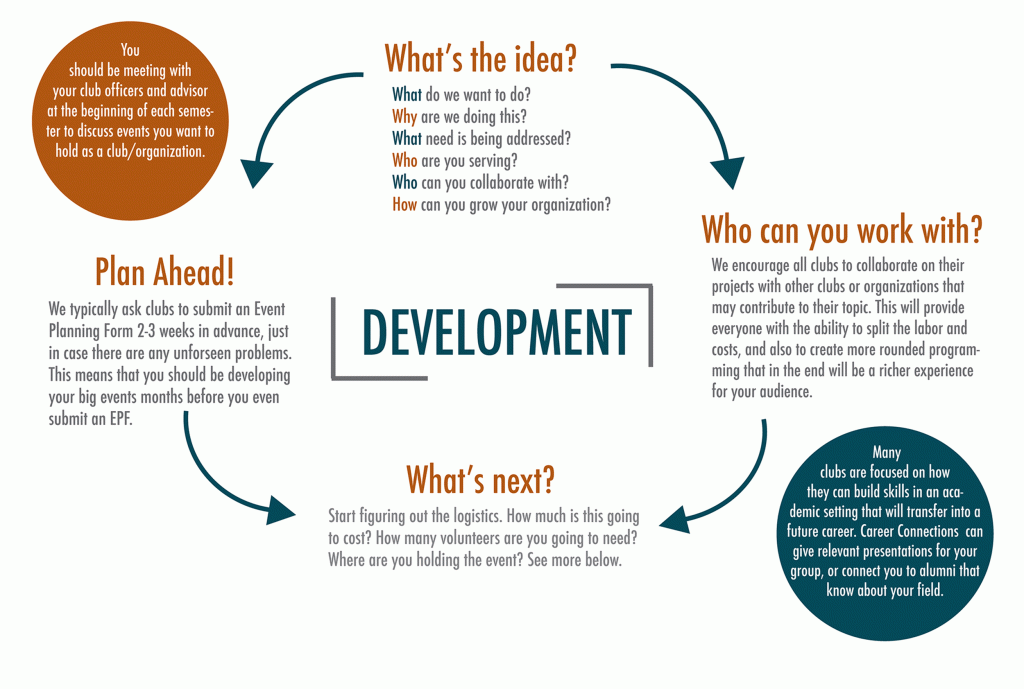
At the end of the development stage, consider your budget/how you are going to finance the program. Once you have these two things in hand, you’re ready to begin planning.
2. PLANNING & LOGISTICS
Now’s the time to hone in your ideas and figure out what’s possible:
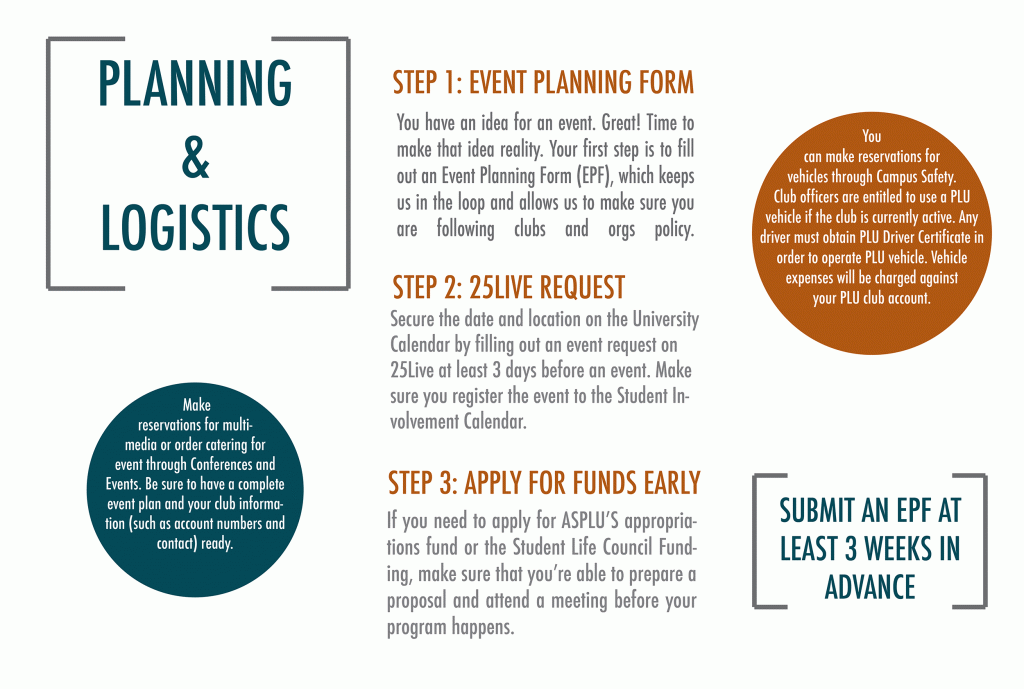
The Event Planning Form helps the Clubs office keep track of the club events on campus. This is so that we can help spread the word about events, keep students safe, and make sure all clubs and orgs are following PLU policies.
Please fill this form out for all club events and meetings, at least two week before the actual event. If there is a recurring event, like a weekly meeting, the event planning form can be filled out just once each semester. You do not need an EPF if you are tabling, unless you will be fundraising. Note that if you reserve a room on campus and don’t fill out an EPF, you may not use that space, and if it is locked, Campus Safety will not be able to open it for you.
You can make reservations for space, multimedia, or order catering for events through Conferences and Events, namely through EMS. Sign in to EMS with your Epass information, and you should already be linked to the club you are affiliated with (if not, contact clubs@plu.edu and we’ll fix that for you). From there, you will be able to reserve a room on campus, so be sure to have a complete event plan ready.
In addition, if you wish to have Catering or any Media services from Instructional Technologies (such as projectors, microphones, etc.), you need to contact those departments separately. Note that Catering requires a final headcount at least five days in advance!
University Catering Services provides catering for campus venues; including outdoor spaces. All food & beverage needs for events scheduled within the Anderson University Center are required to be obtained through Catering Services. More information can be found on Catering Services website at https://www.plu.edu/catering
You should also actively be talking to Catering Services even if you don’t plan on them providing food for your event. If you are planning any bake sales, potlucks, or events where your members will be handling food, chances are that there are some forms you need to be filling out and policies that you need to be aware of.
There are tables in the AUC across from OMM that you may use to table. You can reserve these tables by using EMS, which will schedule the dates and times you wish to table. As with other club events; if you’d need to purchase any supplies for your tabling, if your tabling includes fundraising, handing out items, or bringing guests or working with an outside organization, you’ll need to submit an EPF to engage@plu.edu a minimum of two weeks prior to your proposed event date.
You can make reservations for vehicles through Campus Safety here. Club officers are entitled to use a PLU vehicle if the club is currently active. Any driver must obtain PLU Driver Certificate in order to operate PLU vehicle. Vehicle expenses will be charged against your PLU club account.
PLU Driver Certificate >
Always remember that inter club collaboration is an option! If you’re thinking of an event that could be hosted by more than one club (i.e. you have similar interests) why not talk to other club presidents? Co-hosted events can help spread around the costs of an event, give you more manpower to get things done, and it will definitely widen your audience base.
Don’t know any other club leaders? Don’t be shy! Chances are, club presidents will be more than happy to plan something out. To start with, check out our list of clubs–maybe you didn’t know we had certain clubs!
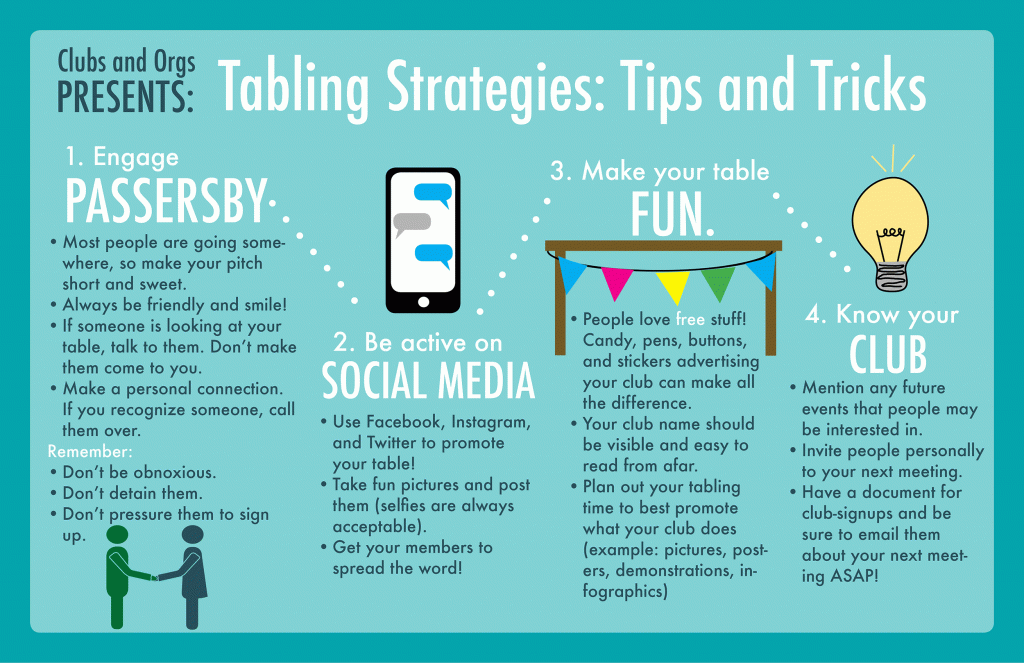
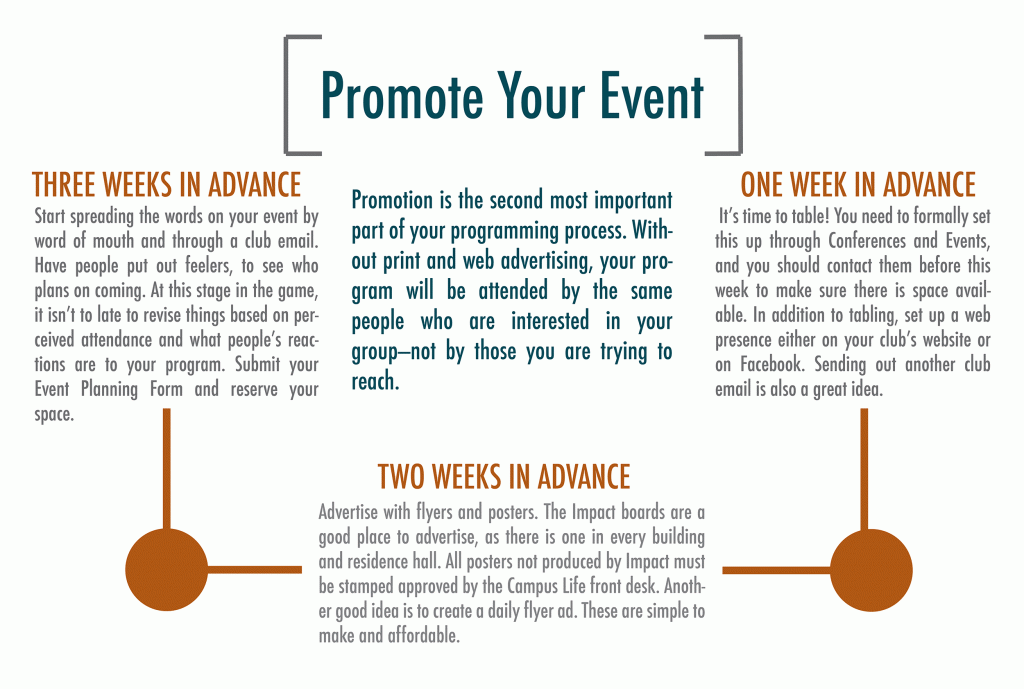
3. PROMOTION
4. FOLLOW UP
Few groups realize that the program is not the end of the programming process. After your event is finished, if you want to be successful in the future, you will follow up your program with both formalized and informal evaluations, to provide your group with good information for the rest of the year and future year’s groups.
In immediate follow up, you should clean up the space you have used to return to its original state and tear down any advertising. At the next club meeting, you should review with your group what worked and what did not, leave notes to pass on for future event planning purposes, identify any difficulties that occurred with the process and action steps for improvement in the future, send Thank You notes to key players in the planning, send Thank You notes to people who may have stepped up in a moment of need, and thank your group and planning team.