
Mural Components
The mural, created in collaboration with members of the Puyallup and Nisqually tribes, incorporates graphic elements with deep cultural and spiritual significance. The design represents an enduring connection to the land and waters, reflecting a belief system centered on harmony, sustainability, and respect for nature. Through storytelling, ceremonies, and care for the land, these traditions continue to be passed down through generations.
Left Upper Panel Elements
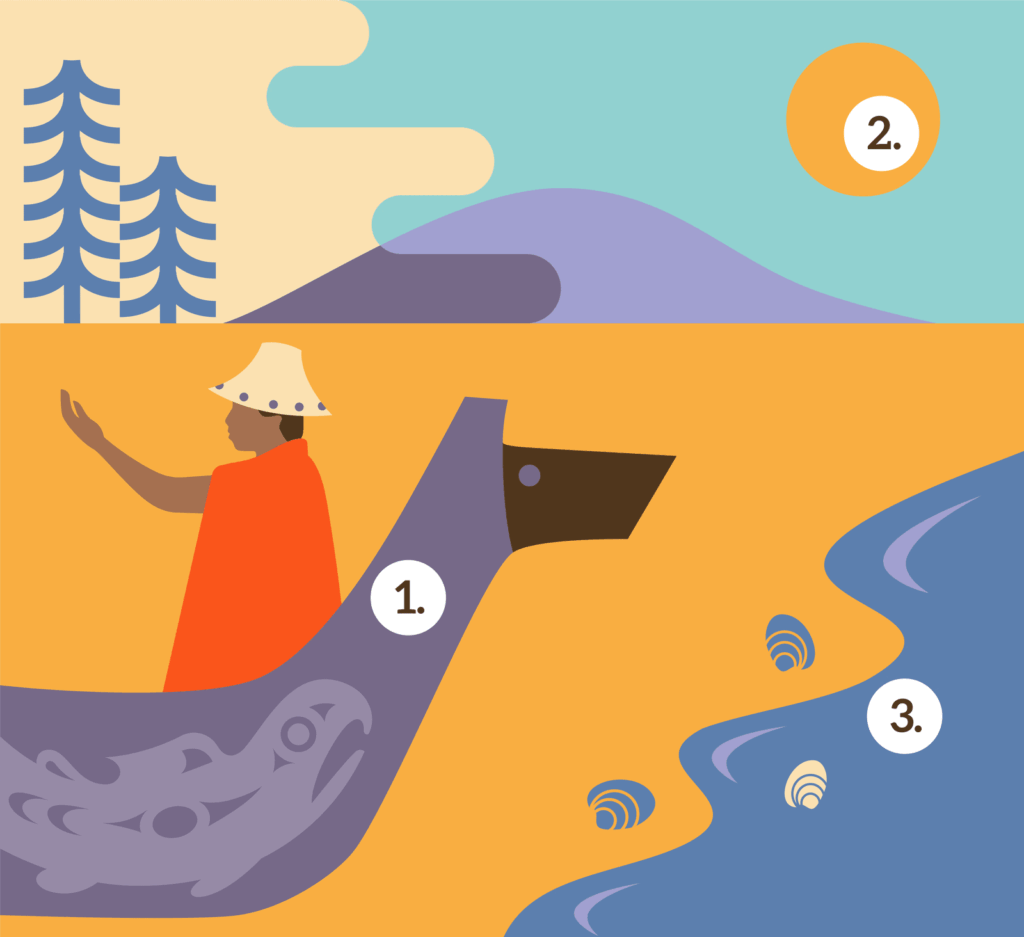
1. Canoe
The canoe is central to the Coast Salish peoples, including the Puyallup and Nisqually, symbolizing transportation, trade, and connection to the water. Canoes were carved from cedar trees and used for fishing, hunting, gathering, and intertribal gatherings. Today, the canoe remains an emblem of unity and resilience, celebrated in events like the annual Canoe Journey.
2. Sun
Cosmological Beliefs: The sun and moon often play roles in creation stories, guiding seasonal activities and marking time.
3. Water and River
Water and rivers represent life, sustenance, and spiritual renewal. The Nisqually River and Puyallup River are ancestral waterways that support ecosystems vital to their survival. Water is often part of purification rituals and sacred ceremonies.
Left Window Panel

4. Shellfish, Mussels, and Clams
These marine resources are staples of the traditional diet and are gathered during specific seasons. They also hold economic importance in contemporary times. Shellfish harvesting ties the tribes to their ancestral shorelines and knowledge of tides and marine ecosystems.
5. Salmon
Salmon are a cornerstone of the tribes’ diet, culture, and spiritual beliefs. The First Salmon Ceremony honors the salmon’s return and ensures respect and sustainability. Both tribes are leaders in advocating for salmon habitat restoration and conservation, recognizing the fish as a gift from the Creator.
Center Upper Panel Elements
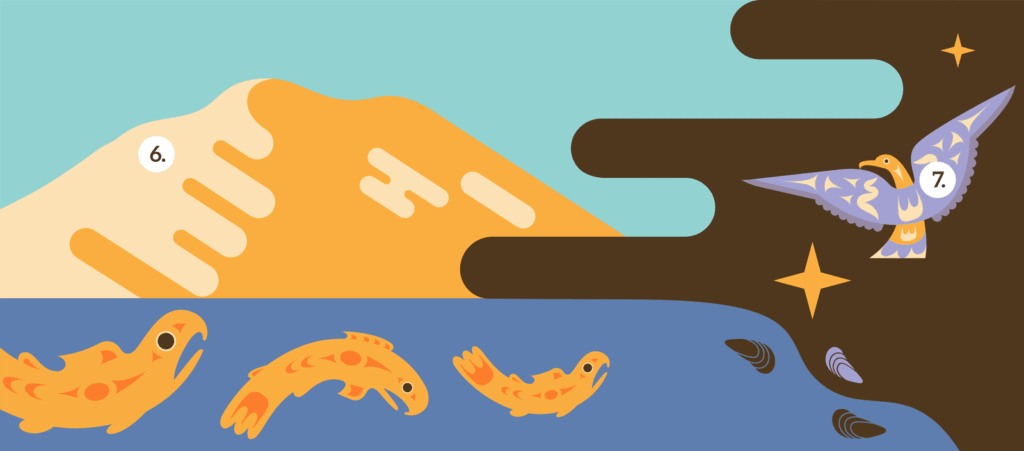
6. Mount Rainier (Tahoma)
Known as Tahoma, Mount Rainier is a sacred place. It is seen as a provider of water through glaciers and rivers and as a spiritual entity with great power and significance. Stories about the mountain often teach lessons about respect, humility, and the interconnectedness of life. Mountains are seen as sacred spaces closer to the spirit world. They are often part of origin stories and reflect a connection to the land and ancestors.
7. Seagull
Seagulls are viewed as messengers and symbols of coastal life. They represent adaptability and the abundance of marine resources.
Right Window Panel Elements

8. Forest and Tree
Cedar trees are particularly sacred, used for everything from canoes and houses to regalia and ceremonial objects. Cedar is also a spiritual protector. Forests are places of gathering medicinal plants, hunting, and spiritual reflection.
9. Sun, Moon, and Sky
The sun and moon often play roles in creation stories, guiding seasonal activities and marking time. The sky connects the people to their spiritual ancestors. They help determine planting, harvesting, and ceremonial times.
Right Upper Panel Elements
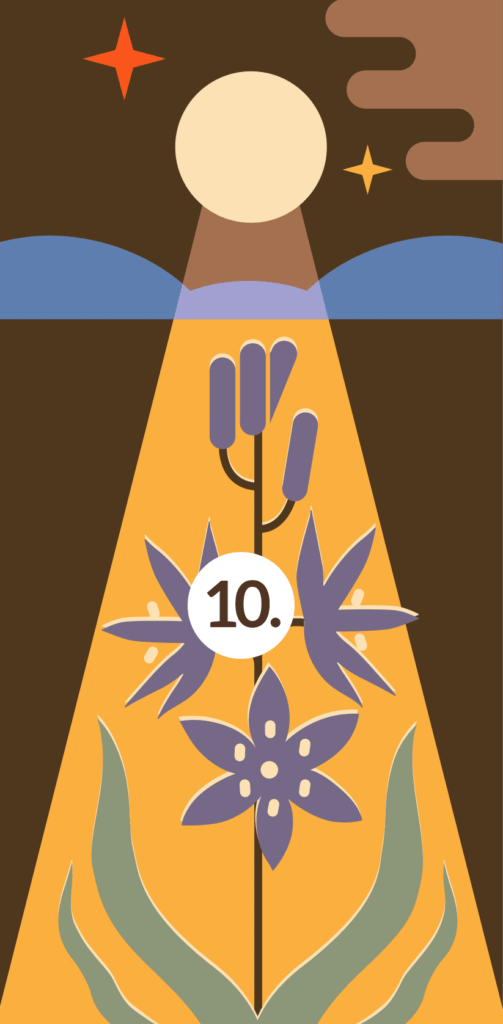
10. Camas Plant
Camas plants (Camassia species) are perennial wildflowers native to North America, particularly the Pacific Northwest. They are well known for their striking star-shaped, blue or purple flowers that bloom in the spring.
Camas roots are a traditional food source for Indigenous peoples – the bulbs were harvested in late spring or early summer when the plants had finished flowering. The bulbs were traditionally roasted in underground pits for up to two days, a process that converted the inulin in the bulbs into sugars, making them sweet and digestible.
The tribes used controlled burns to manage camas meadows, reduce invasive plants, and stimulate growth. These burns also improved soil fertility and created ideal conditions for camas and other edible plants to thrive.
Camas harvesting and preparation were often associated with community gatherings and ceremonies, emphasizing its role in fostering social connections.

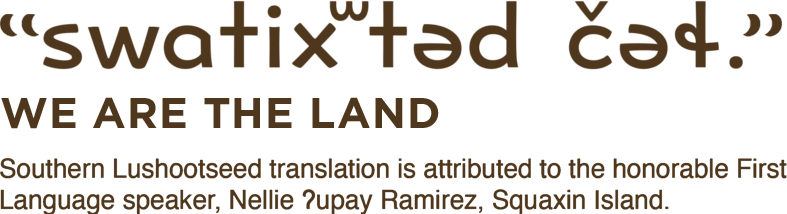
We Are the Land celebrates the profound bond between the land and its people. We honor the natural world’s sacred wisdom and abundant gifts that sustain life in this region. We hope this mural inspires reflection on our collective history and the importance of nurturing deep-rooted relationships to unite our communities for future generations.
“Grandma Nellie (my teacher and relative) was born in 1906 and lived her childhood years off the mainland of Squaxin Island, immersed in Southern Lushootseed. She learned English fluency at boarding school in her teen years.”
-Misty Kalama, Puyallup Tribal Elder & Southern Lushootseed Language Teacher
WITH GRATITUDE
We wish to extend a special thanks to the following members from the Puyallup, Nisqually and PLU community. Without their contributions, this project would not be possible.
Puyallup tribal members Misty Kalama, Nico Kalama-Archer, Kendall Archer, Laverne Squally, Amber Hayward • Nisqually tribal members Cynthia Iyall, and Christopher Gerber Nisqually Art Coordinator.• Blair Alexander • PLU students Mackenzie Mayhem, Fulton Bryant Anderson, Georgia Smith, Brandon Ducusin, Emma Gassman, Savannah Thacker, Elizabeth Bankowski • PLU staff George Zeno, Lace Smith, Dr Suzanne Crawford O’Brien, Bridget Yaden, Nicole Juliano, Sam O’Hara, Britt Board, Christopher Albert, Shalita Myrick, Greg Perkinson and Simon Sung.
DEDICATED AUGUST 2025 | MURAL ARTIST: PAIGE PETTIBON
IN PARTNERSHIP