
The Night Shift: Late-night summer research at Keck Observatory
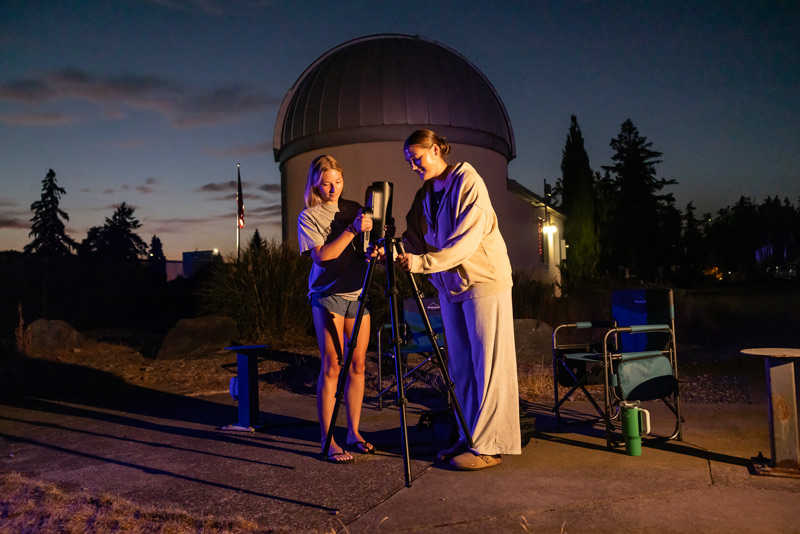
Four nights a week throughout summer, from sunset until as late as 2 a.m., students gather around PLU’s 16-inch telescope and a newer “smart telescope,” collecting images of galaxies and stars.
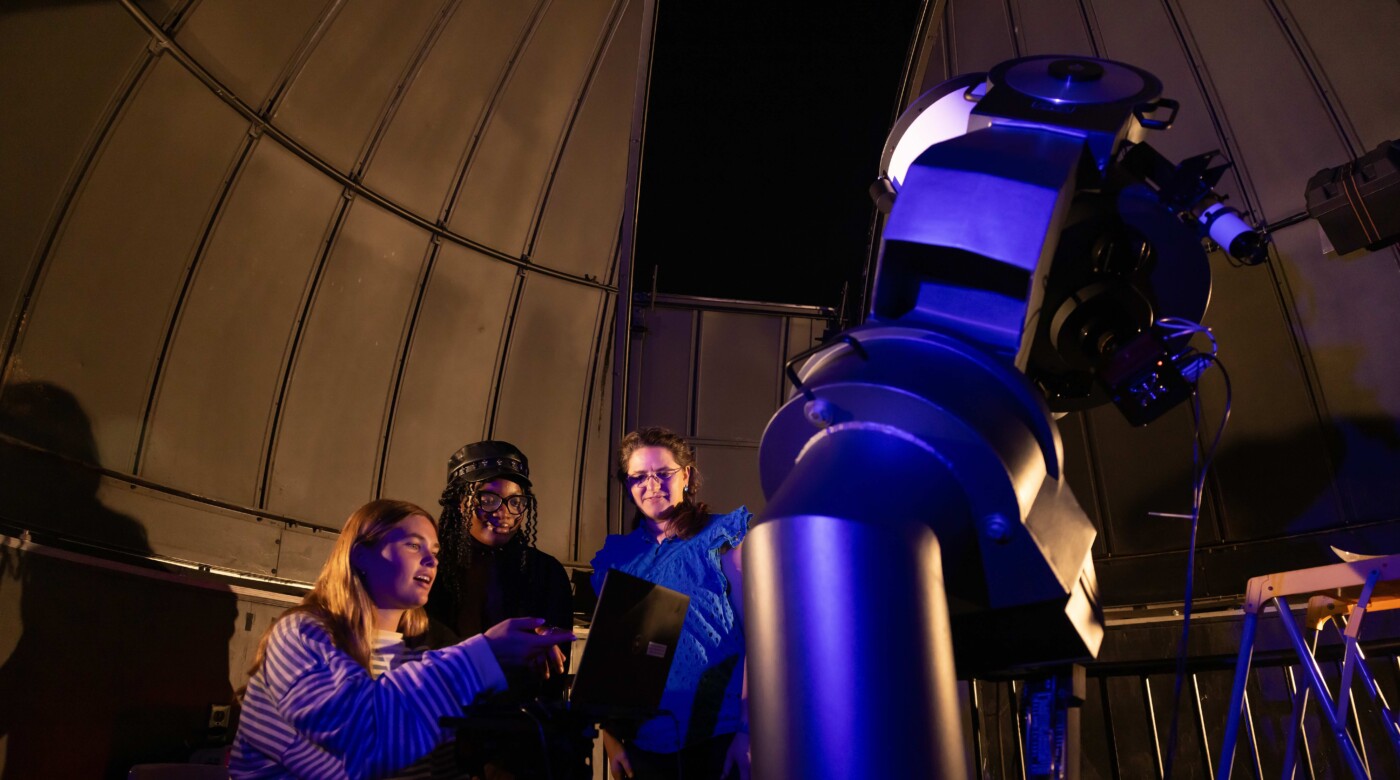
Image: Students gather in the Keck Observatory for their summer research projects, Tuesday, July 21, 2026, at PLU. (PLU Photo / Sy Bean)
By Britt Board
Upstairs, they work beneath the observatory dome. Downstairs, they analyze data, troubleshoot problems, and build the kind of camaraderie that only comes from chasing answers together late into the night.
This summer’s research projects tackle two big questions: What can the structure of spiral galaxies reveal about their histories, and can astronomers trust the images produced by smart telescopes?
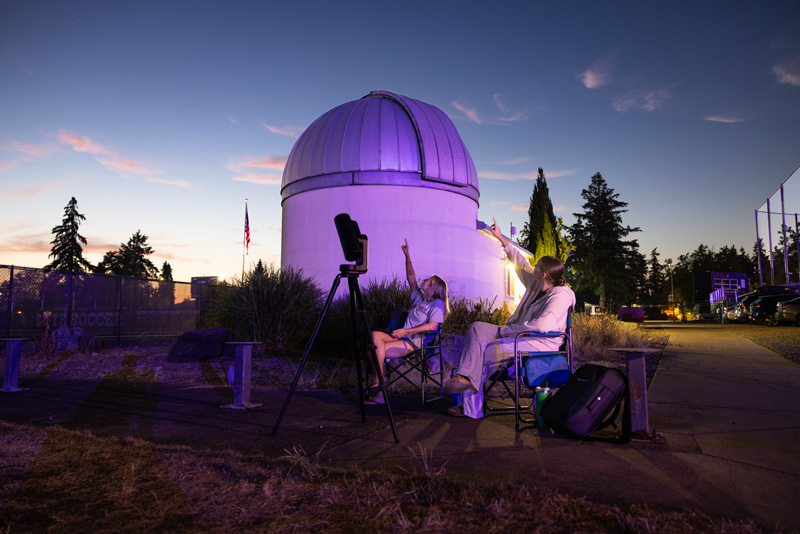
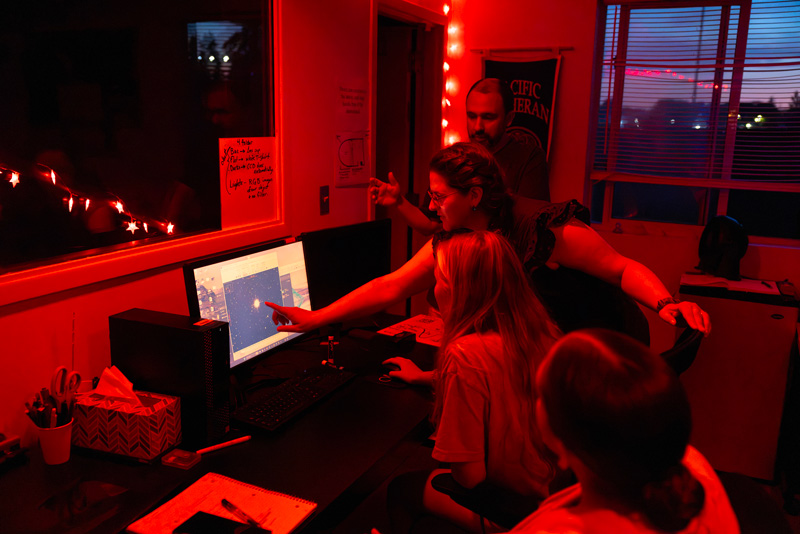
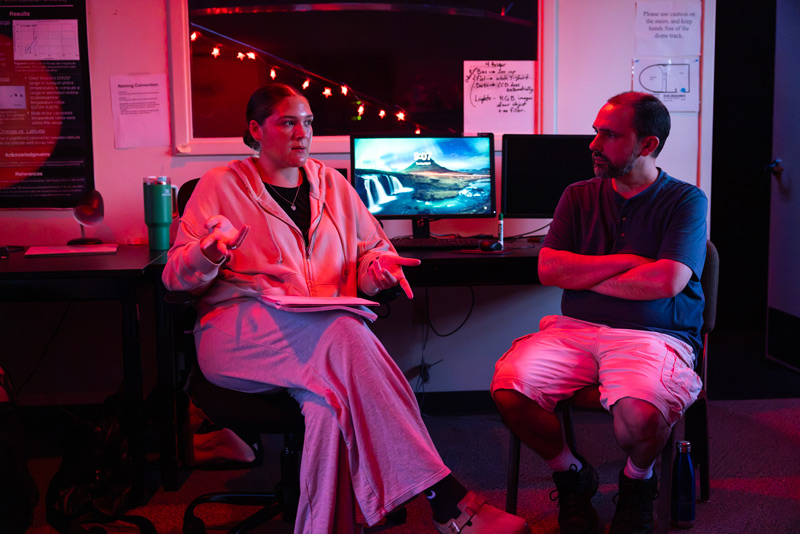
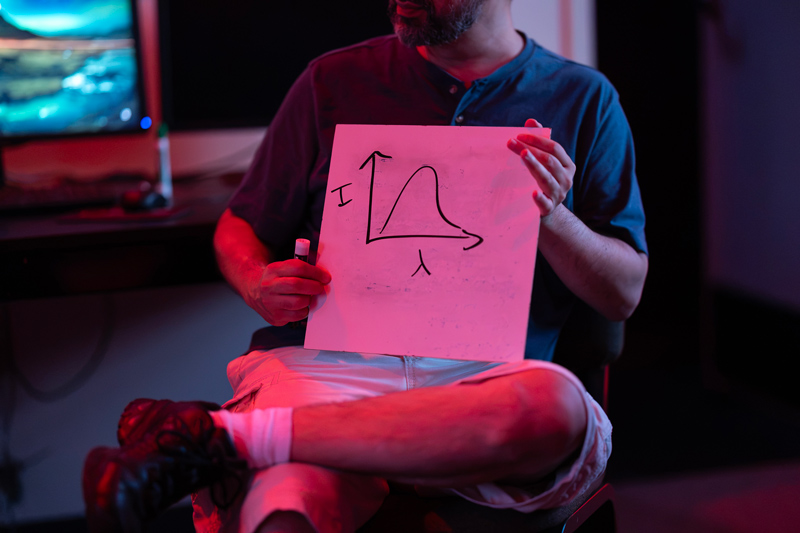
In Professor Katie Hay’s project, students are analyzing the structure of nearby spiral galaxies, measuring features such as arm curvature, winding patterns, brightness, and stellar density. The goal is to better understand how galaxies form and change over time. “The best way we can learn about our own galaxy is by looking at others,” Hay says.
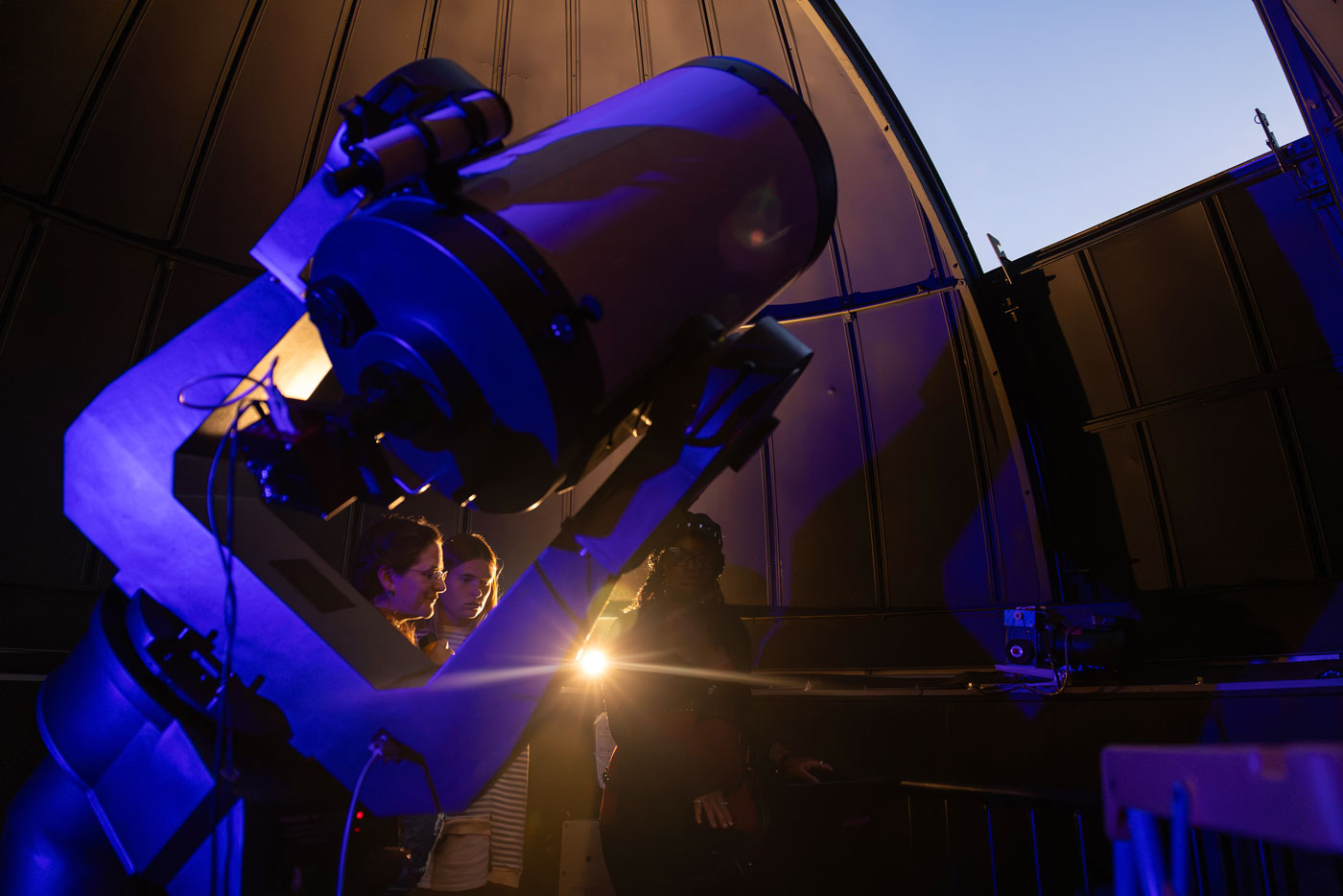
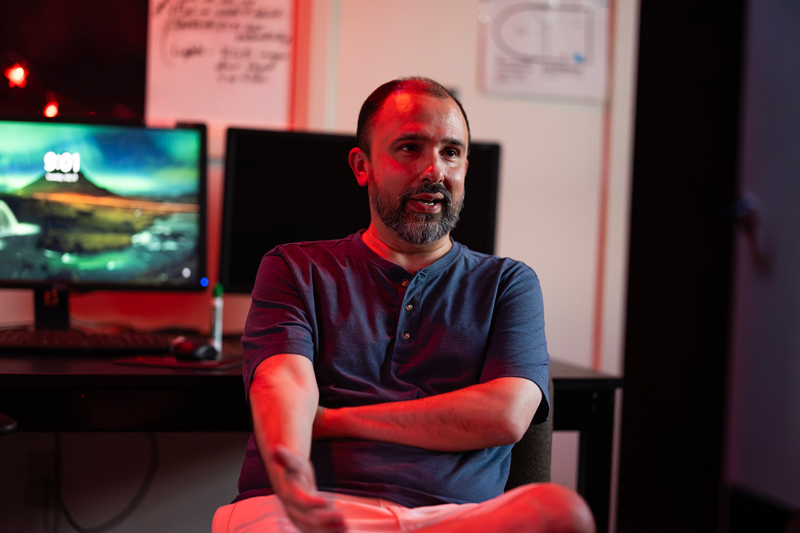
Assistant Professor Sean O’Neill’s team is investigating whether affordable smart telescopes accurately capture properties such as stellar color and brightness. In other words, assessing whether they can produce more detailed and reliable photos for scientific purposes.
"The best way we can learn about our own galaxy is by looking at others" –Professor Katie Hay
The work is collaborative by design. Teamwork is a big part of both projects. “Working with dedicated, intelligent, hardworking students is the best part,” O’Neill says.
Students feel that spirit immediately.
“This is probably the most exciting thing I’ve ever done,” says Draca Dragona Gibson ’28, who is studying relationships between galaxy structure, color, and luminosity. “Hay and O’Neill go out of their way to make sure everyone is happy, fits in, and has the best experience.”
Mia Speir ’28, who is researching galaxy morphology, shares, “It’s going to be a cool experience that will help our future careers.”
The collaborative nature of the project stands out to Mackenzie Horak ’27. “To me, this work is so refreshing because we’re not being graded. It’s important, and we’re taking it seriously, but we want to be here, and it’s not a competition.”
For Fiona Stromire ’28, the appeal is simple: “I get to nerd out.”
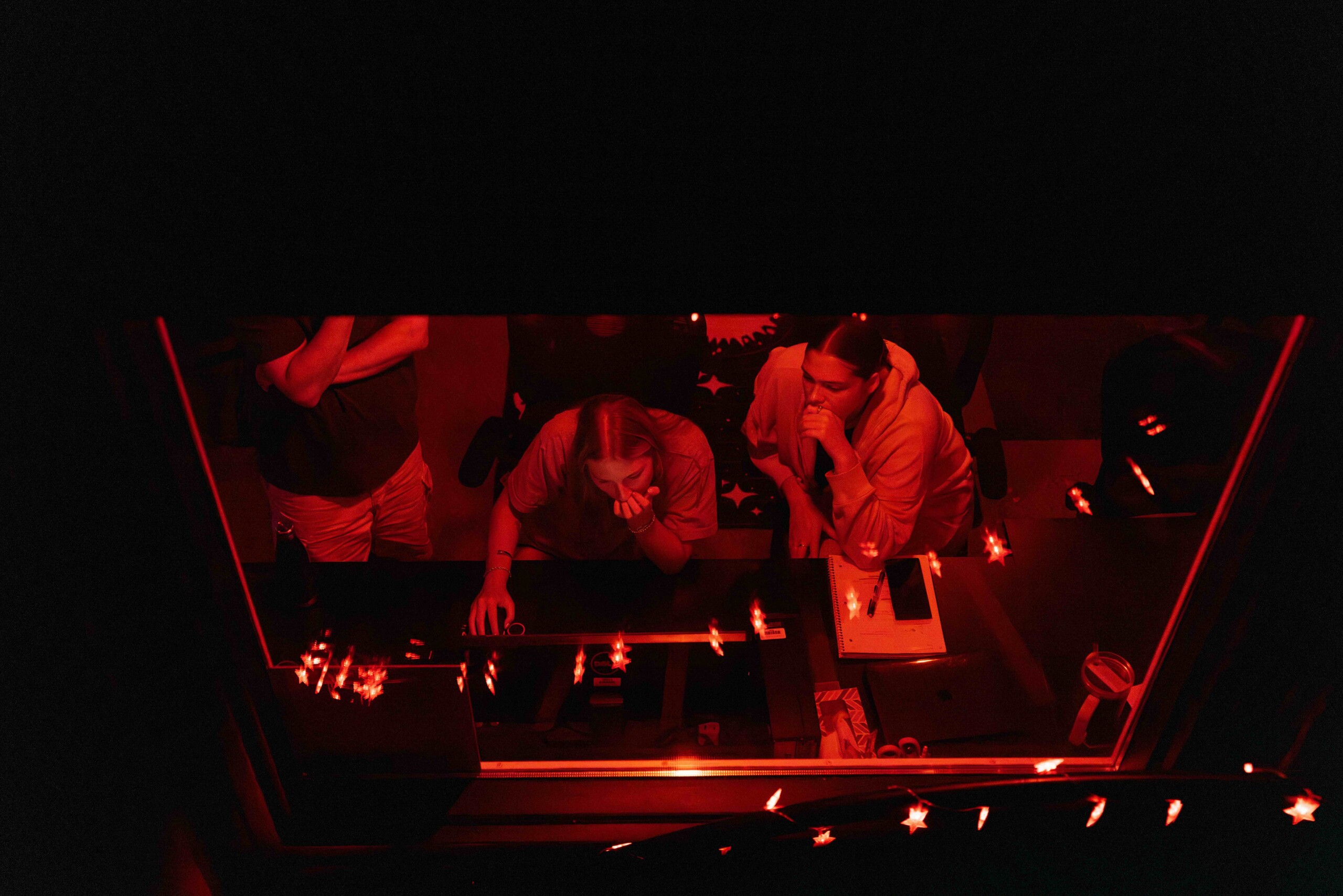
By August, the students will have produced original analyses, presentations, and research tools, while also contributing data that future PLU researchers can build upon. They’ll spend the summer learning how to operate telescopes, analyze complex datasets, write code, and ask scientific questions that don’t have answers.
The specialness of the projects is not lost on the students. “Since I was a kid, I’ve always loved astronomy. I used to read a ton and check out NASA’s data for fun. This project is proof that I can do things in the field. And I feel like I belong in this field,” Draca says.