


“By experiencing music at a ‘refined’ level, the student can then raise his own goals and develop his own personal vision.”
– Maurice Skones, October 1977 Scene
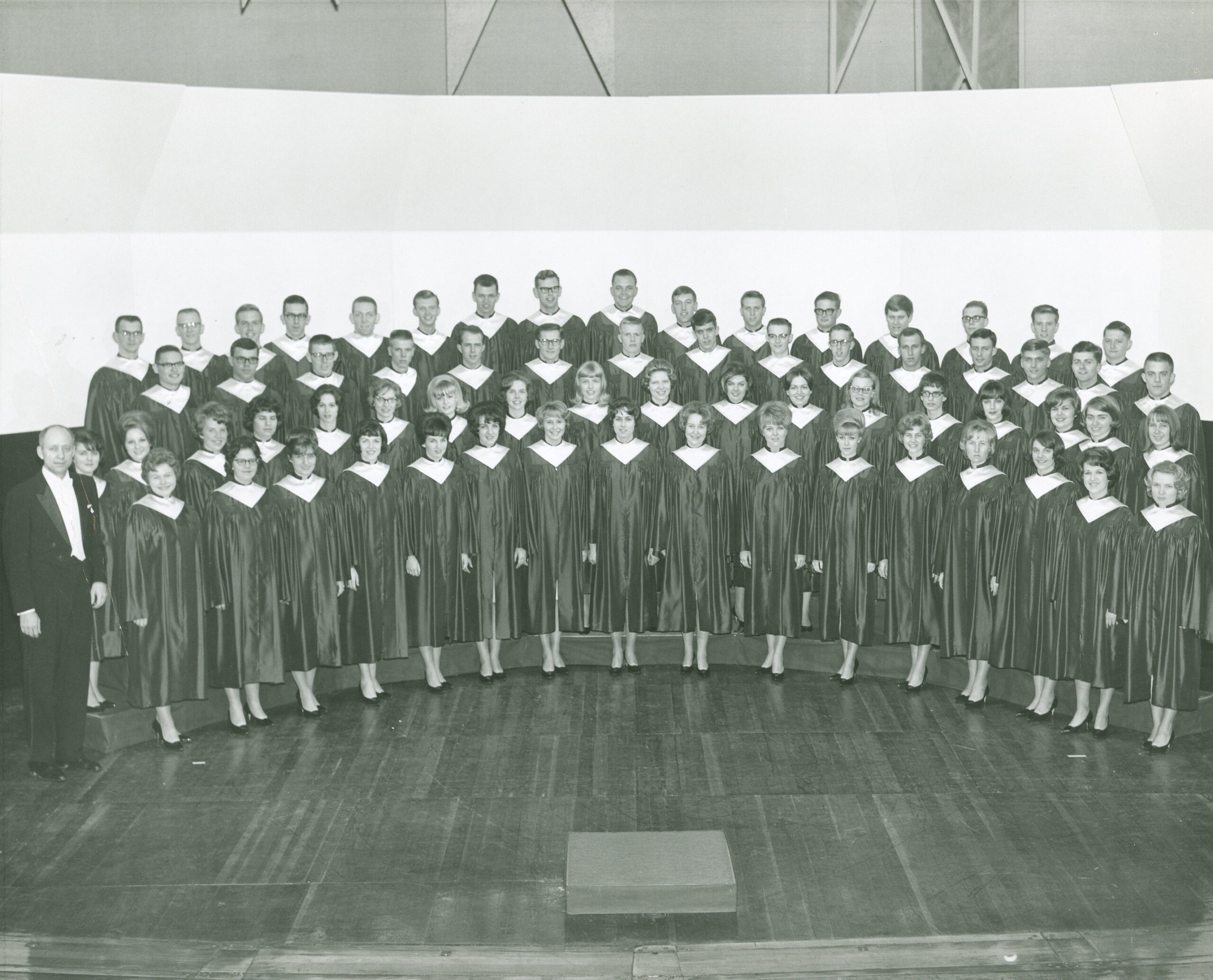
Choir of the West group photo, 1964-65
Maurice Skones lead the Choir of the West through regular international travel and premier performances of works by major composers. While the choir had often visited the Midwest and travelled to Europe during Gunnar Malmin’s tenure, under Skones, tours grew to cover wider swaths of the United States and further destinations beyond its borders. In a departure from its traditional repertoire, the group also performed avant-garde works and collaborated with renowned contemporary musicians.
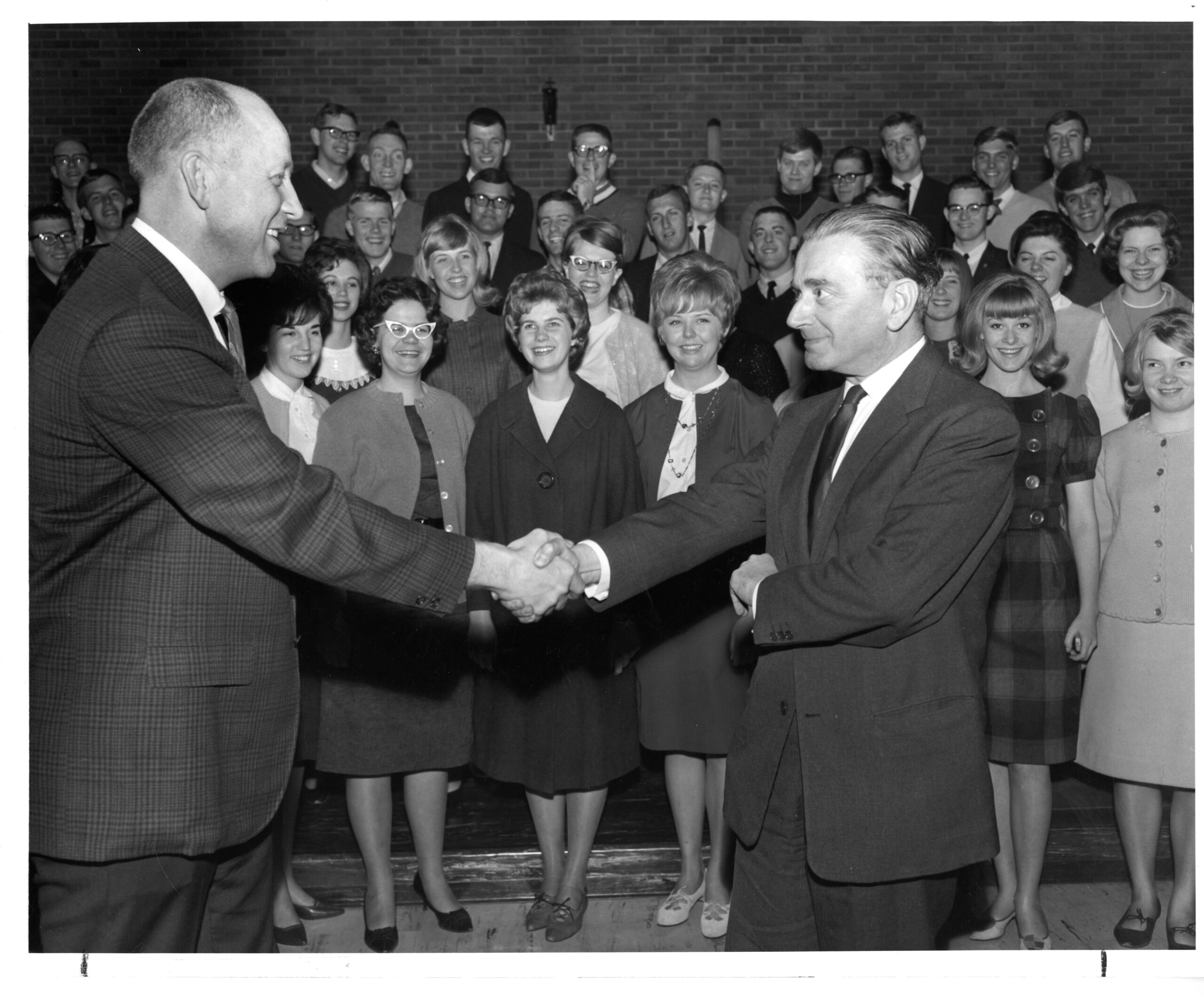
Maurice Skones and Miklós Rózsa with the Choir of the West
During his first year as director, the Choir of the West premiered of “The Vanities of Life” by Hungarian composer Miklós Rózsa. Rózsa, an Academy Award-winning composer of Hollywood films such as Ben-Hur and Spellbound, attended the performance to a packed house of 1,250 in Pacific Lutheran University’s Eastvold Chapel. He was quoted in the March 23, 1965 Tacoma News Tribune as saying, “I am overwhelmed at how they sang. It surpasses all expectations. I didn’t really imagine that a choir could sing for 27 minutes without interruption and by memory. In precision and dramatic values this choir is undoubtedly the best I’ve ever heard.” Rózsa collaborated with the Choir of the West again in 1973 when they premiered his “23rd Psalm” and 1978 to record an album of his best-known works titled “To Everything There is a Season,” which can be heard under the Audio tab at the bottom of the page.
In the late 1960s, the group premiered William Bergsma’s “The Sun, the Soaring Eagle, the Turquoise Prince, the God,” a musical account of an Aztec sacrificial rite and French composer Jean Berger’s “Word of God,” written especially for the opening of PLU’s new Olson Auditorium in 1969 . Avant-garde and contemporary music were the focus of two PLU-hosted festivals in the mid 1970s, where the Choir of the West performed the West Coast premiere of Krzysztof Penderecki’s “The Passion According to St. Luke” and “Creation” by American composer Vladimir Usschevsky. During these performances, the musical group utilized a mixed choir, electronic tape, a soprano solo, and a tape solo, expanding the choir’s range. That said, this period does not represent a complete break from tradition. In fact, the Skones years featured many performances of classical works, including Beethoven’s Ninth, Handel’s “Messiah,” Rossini’s “Petite Messe Solennele,” Verdi’s “Requiem,” and Bach’s Mass in B Minor, a collaboration with the University Chorale and University Symphony that was the largest musical venture in PLU’s history.
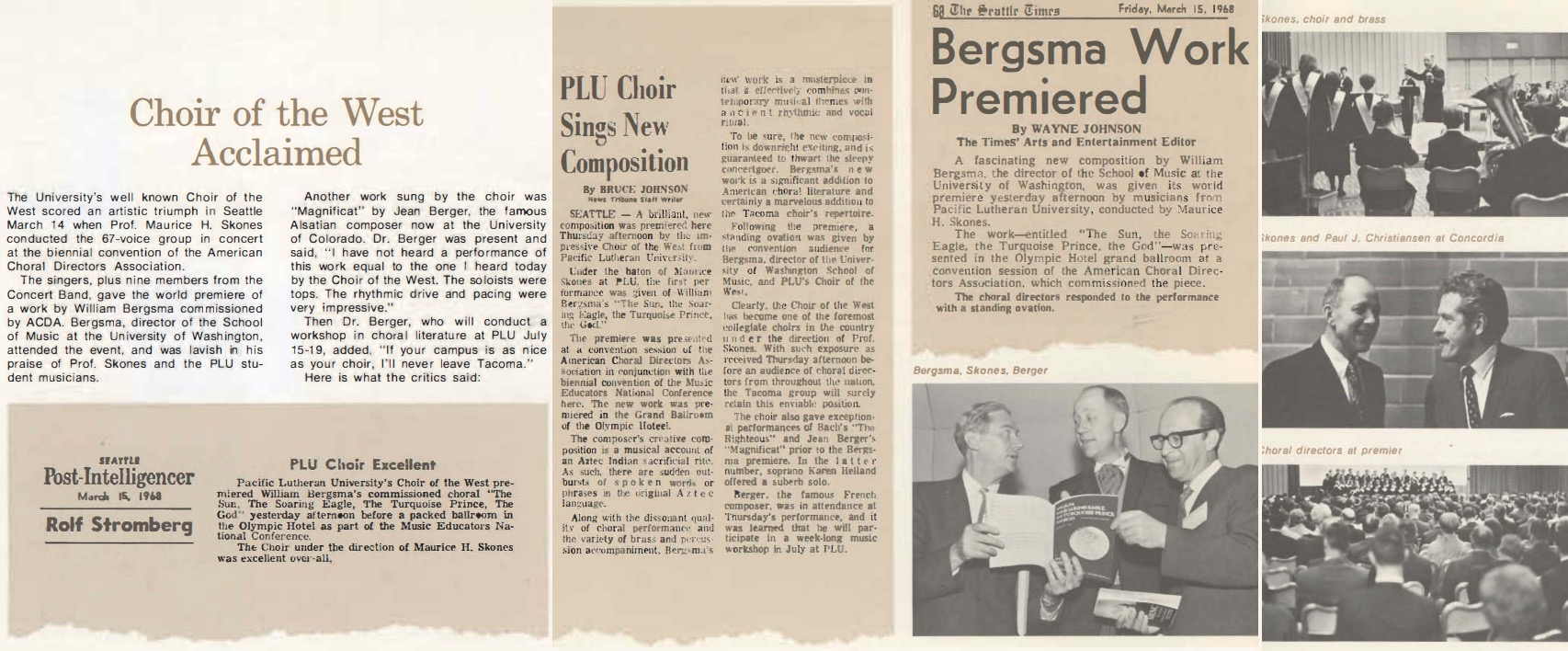
2 page spread from the May 1968 issue of Reflections on the Bergsma premiere
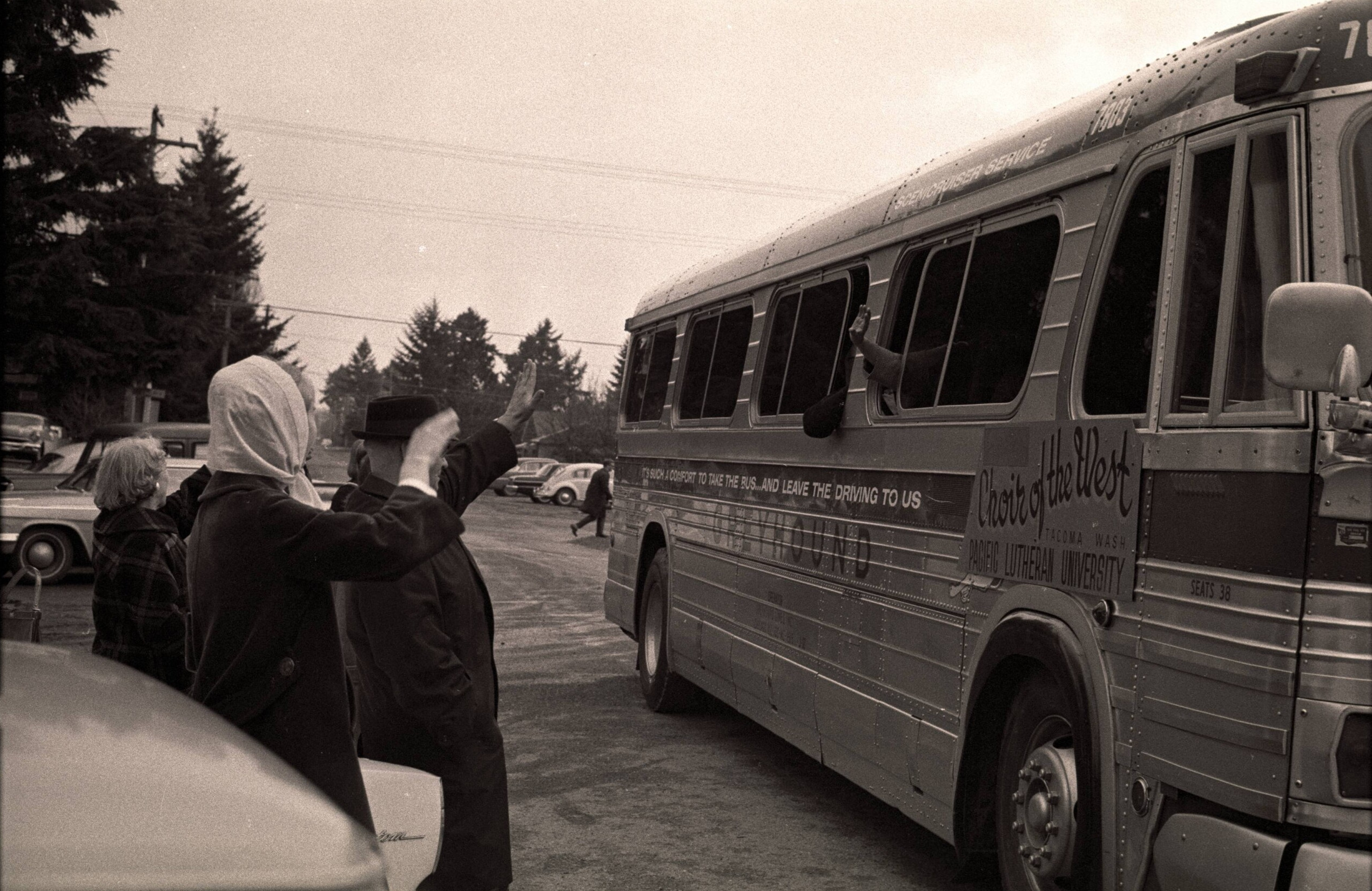
The Choir of the West leaves for tour in 1966
As the Choir of the West continued to experiment and honor the classics in their musical selections, the group also expanded their tours while continuing usual performances throughout Puget Sound and the West Coast. Domestically, the group returned to the Midwest, began visiting the Southwest, and made several East Coast tours, including high profile performances at Carnegie Hall, the National Cathedral, and the Kennedy Center.
Internationally, they visited the Canadian provinces of Saskatchewan and Alberta for the first time, made several visits to Mexico, performed in Kingston, Jamaica, and toured Europe in 1970 and 1977. The 1977 European tour marked the 50th anniversary of the Choir of the West and was, according to the October 1977 issue of the PLU magazine, Scene, very well-received. According to the magazine, some audience members were moved to tears, and the composer Ingvar Lidholm is quoted as saying that the choir’s performance of his “A Riveder La Stelle” in Stockhom was “absolutely the most beautiful and powerful performance of the work” he had ever heard.
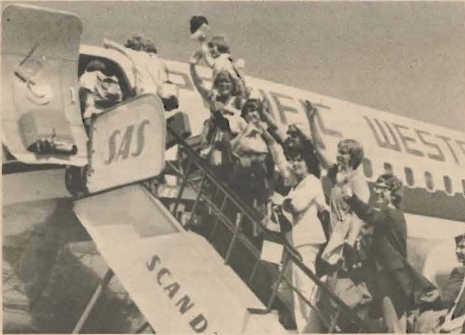
Choir of the West leaving Oslo in 1977
“By American standards, PLU is a small university. For that reason it is unbelievable that full-time students can achieve results which must be envied by many professional choirs. The choir had good voices in all sections, but with an evenness, a breath technique and precision that I find it difficult to remember having heard before.”
– Torstein Grythe, Aften Posten June 21, 1977
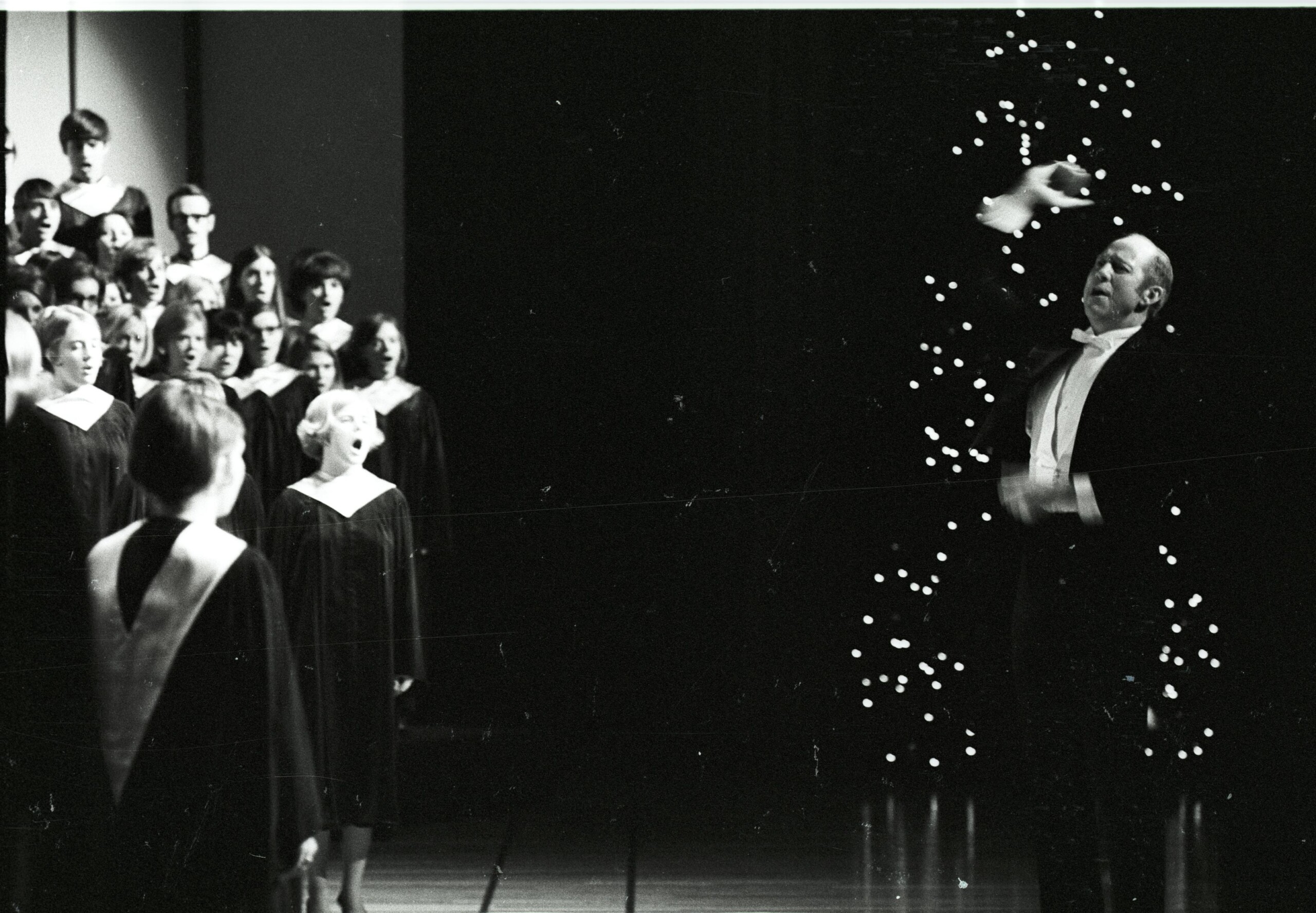
Maurice Skones conducting the Choir of the West at the 1970 Christmas Concert
The annual Christmas concert was another area for innovation. Skones brought a more cinematic interpretation to the event, adding narration by Professor T.O.H. Karl of the Speech Department and scenic artwork to the choral program. The Tacoma News Tribune described the 1966’s Christmas program as “a brilliant pageantry of word, song, and scenic art” and “a majestic cultural and spiritual experience” in the December 9th issue. These larger productions occurred alongside the traditional performances around the region, including Portland, Oregon in 1974 and Spokane, Washington in 1981.
During the 1982-1983 academic year, Skones lead a final Midwest tour highlighted by the premiere of a new major work by Krzysztof Penderecki, entitled “Agnus Dei,” at Nashville’s Performing Arts Center before he resigned.
This final tour was a fitting illustration of his time as director, both traditional in the sense that it was the fifth such trip to the Midwest, and breaking new ground with the premiere of a work by a contemporary composer in the choir’s first visit to Tennessee. Skones was a transformational leader for the Choir of the West, under whose guidance the group reached new audiences while growing and experimenting musically and maintaining a strong connection to its roots.
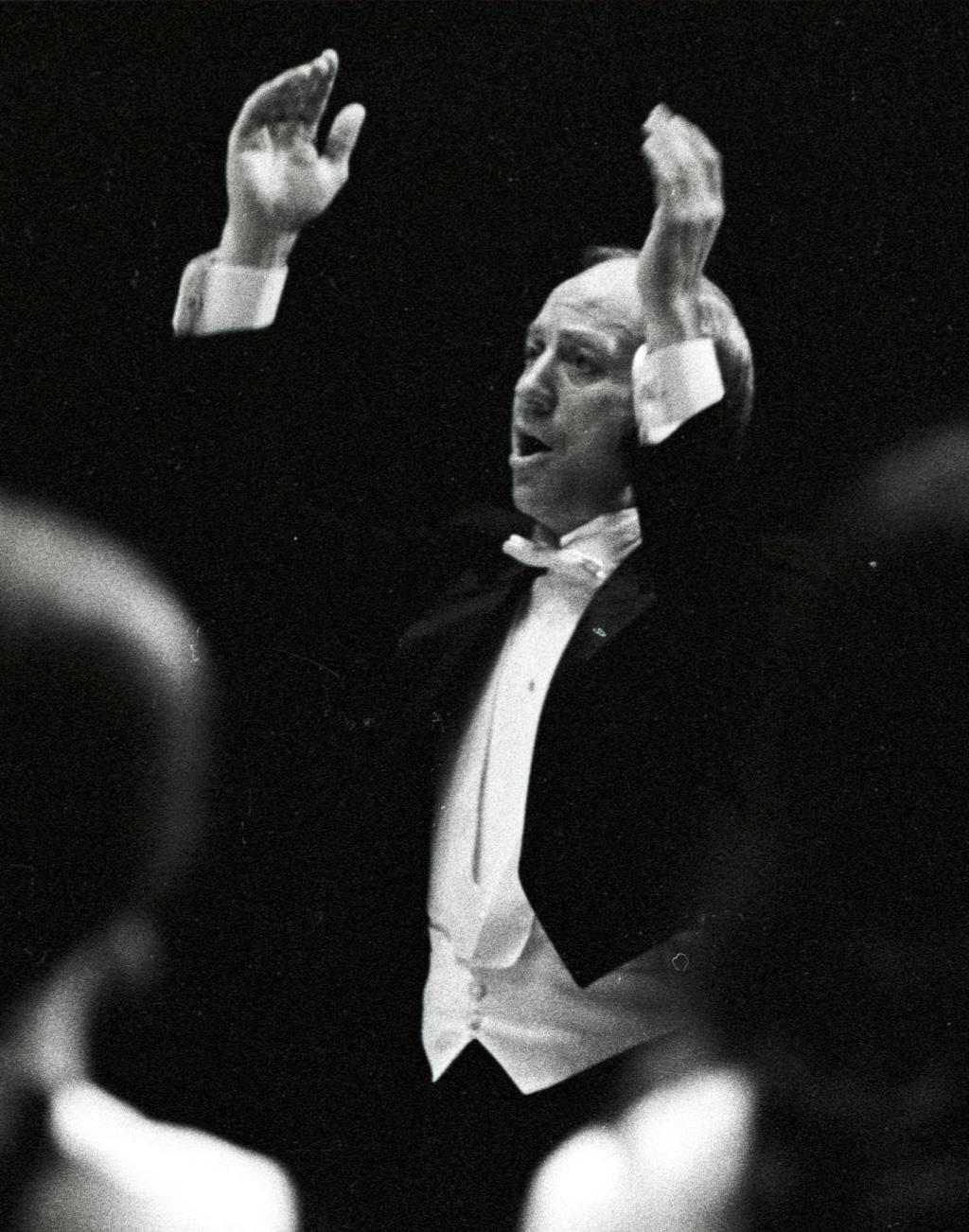
Maurice Skones
Maurice Skones was born July 24, 1926 in a small Montana town. He grew up in the town of Turner, Montana.
Skones graduated from Concordia College in Minnesota in 1948, where he had studied under Paul Christiansen, with a Bachelor of Arts degree in music. In 1957, Skones received his Masters Degree in choral music from the University of Montana. He went on to pursue advanced studies at the University of Washington and at the University of Arizona, where he completed his doctoral degree in Choral conducting in 1981.
From 1948 until 1956, Skones was the Supervisor of Music for Cut Bank High School in Montana. In 1957, he accepted a position as Associate Professor of Music and Director of Choirs at Adams State College in Alamosa, Colorado. He held this position until coming to PLU in 1964. By that point, he already had 15 years of experience directing Lutheran church choirs, was the director of the Rocky Mountain District Choral Union of the American Lutheran Church and was a member of the International Board of the Choral Union.
Skones came to PLU in 1964 to be the director of the Choir of the West. During his 18 years in Parkland, he served as chairman of the music department and took the choir on many tours. These tours were highlighted by performances at Carnegie Hall in New York and the Kennedy Center in Washington, D.C. as well as two European tours, one in 1970, and the other in 1977.
In 1983, Skones returned to the University of Arizona to be the Head of Choral Activities and the Graduate Conducting Program. He retired from that position in 1992 and also served as Acting Director of the School that year. In 1997, he returned for three years to serve as Director of the Choral Activities. Following his second retirement, he worked as a guest conductor and as an adjudicator for choral festivals in the USA and Canada and served as director of Our Savior’s Lutheran Church Chancel Choir until one month prior to his death from cancer in May 2002.
Click the previews below to read articles on the Choir of the West
1964-1970
1971-1975
1976-1980
1981-1983
Click the preview images below to see the full Choir of the West photographs
1964-1975
1976-1983
Richard Nance
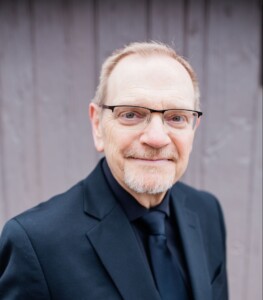
Press play below to hear Richard Nance describe Maurice Skones’s time with the Choir of the West. This is an excerpt from the Choir of the West 90th Reunion Concert.
Philip Nesvig
Press play below to hear alum Philip Nesvig describe his time in the Maurice Skones era of the Choir of the West. To read a transcript of the interview please click here.
Choir of the West recordings
Press play below to hear recordings of the Choir of the West during the Maurice Skones era (1934-1983)
Surely He Hath Borne Our Griefs
Maurice Skones conducts “Surely He Hath Borne Our Griefs” at the 1992 Choir of the West reunion.
Spring
Maurice Skones conducts “Spring” at the 1992 Choir of the West reunion.
Ezekiel Saw the Wheel
Maurice Skones conducts “Ezekiel Saw the Wheel” at the 1992 Choir of the West reunion.
90th Reunion Concert
Maurice Skones’s former student Geoffrey Boers conducts members of the Skones era Choir of the West at the 90th Reunion Concert.