


2015 Lutheran Studies Conference
“Tikkun Olam: The Legacy and Future of Jewish-Christian Relations”
September 25, 2015
The year 2015 marks the 70th anniversary of the liberation of the Nazi concentration camps and the execution of German and other European Lutherans who resisted the National Socialist regime. Such an anniversary invites the university and larger community to consider a relationship marked by polemic, persecution, tolerance, and the possibility of growing friendship around a common cause. Might the crises of the contemporary moment unite Christians with Jews in tikkun olam, in efforts to bring healing to the world?
This fifth annual conference invites participants to consider the ancient legacy of Jewish and Christian separation; Christian sponsored anti-Judaism, especially as that polemic appeared in the German reformer, Martin Luther; the artistic treasures shared by Jews and Christians; healing practices among Jews and Christians; and the re-shaping of this troubled relationship over the past 50 years through Lutheran and Jewish commitments to reconciliation. Let us be clear: some religious communities are marked by a “closed particularity,” an unwillingness to listen, converse, and learn from the other. Yet here at PLU, a Lutheran university devoted to inter-religious dialogue, there is a place where scholarly understanding and genuine friendship are fostered: an “open particularity” that welcomes the wisdom and practices of many traditions.
The annual Lutheran Studies Conference provides an opportunity for the university, the larger community, and persons from diverse religious and humanistic viewpoints to explore particular and pressing issues within the thoughtful and generous milieu of Lutheran higher education. Each conference welcomes scholars, artists, and religious leaders whose expertise is offered in an engaging and thought-provoking manner. As a university of the church, PLU promotes the 500-year Lutheran tradition of asking difficult questions, welcoming opposing viewpoints in civil conversation, nurturing a community of intellectual charity, and challenging students, alumni, and friends to promote a just, peaceful, and sustainable way of life for all, not just the privileged few.
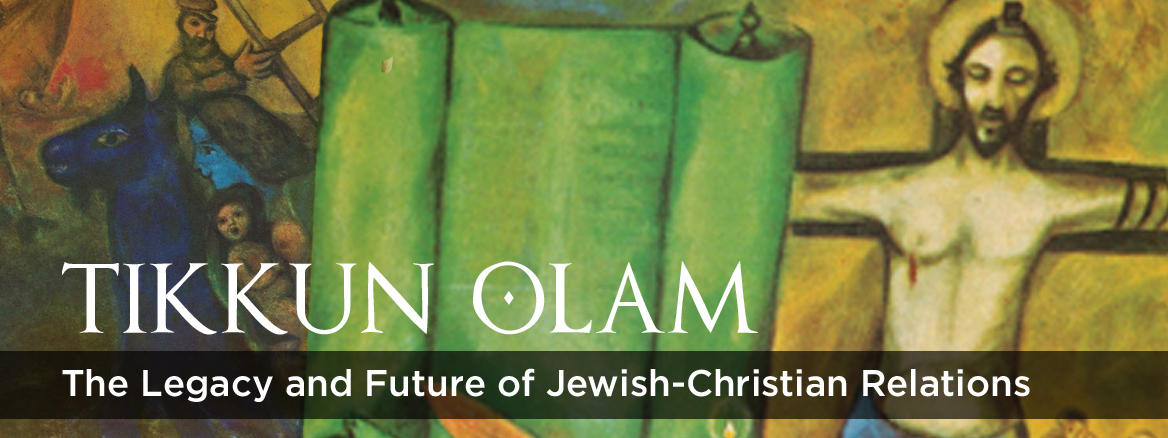
Artwork: Marc Chagall, “Yellow Crucifixion”
Conference Schedule
Thursday, September 24, 2015
- 8:00 a.m. – Registration begins in the North Lobby University Center across form the Concierge Desk; Conference booklet; name badges for registered participants; banquet tickets for pick-up
- 9:00 a.m. – Breaking Up Is Hard To Do: Why Jews and Christians Parted Ways
Dr. Agnes Choi, Assistant Professor of New Testament, PLU
The origins of Christianity lie in Judaism: Jesus was Jewish, the disciples were Jewish, and Paul was Jewish. The Christian Old Testament was written by Jews. Why, then, aren’t Christians Jewish? This presentation will consider Judaism and Christianity in the first century C.E. and will explore some of the reasons that led to the parting of the ways between Jews and Christians.
- 10:00 a.m. – Jewish-Christian Relation in Sixteenth Century Germany
Dr. Michael Halvorson, Associate Professor of History, PLU
This presentation examines the complex relationship between European Christians and European Jews in Sixteenth Century Germany. Particular attention will be paid to Martin Luther’s controversial statements on the Jews, and later episodes of polemic, persecution, and tolerance that came in their wake.
- 11:00 a.m. – The Past is Present: Holocaust Remembrance in Contemporary German Art
Dr. Heather Mathews, Associate Professor in Art History, PLU
In Germany, art plays a major role in the public narrative of the Holocaust. Stories of victims, perpetrators, survivors, and their descendants that might otherwise have been forgotten or ignored are coaxed out of local histories by public artworks and the monuments. The imagery of these artworks deals with the Holocaust on both individual and symbolic levels, addressing private losses as well as the enormous scope of National Socialist violence as a whole. As they give testimony to the past, might these artworks also offer opportunities for healing in the present?
- 12:00 p.m. – Lunch
- 1:00 p.m. – The Jewish Healing Movement: Restoring Self, Community, and the Earth
Dr. Suzanne Crawford O’Brien, Associate Professor of Religion and Culture, PLU
This presentation explores the origins and developments of the Jewish Healing Movement. Shaped by interreligious conversation and dialog, this grassroots effort within mainstream Jewish communities has led to the creation of systems of support and rituals of renewal for individuals, communities, and the suffering Earth.
- 2:00 p.m. – The Songs We Share
Dr. Samuel Torvend, University Chair in Lutheran Studies at PLU, serves as host of this session that will include a variety of singers, as well as the voice of Mahalia Jackson singing Duke Ellington’s superb jazz interpretation of Psalm 23.
From the ancient Jewish community, Christians received the Psalms of the Hebrew Bible. These lyrical texts explore every dimension of human experience and thus offer Jews and Christians an honest evocative vocabulary: from profound sorrow to confident hope, from simple doubt to thanksgiving for earth and its many species. In this session, participants will encounter psalm excerpts sung in Hebrew, Latin plain song, German chorales, Anglican chant, and contemporary jazz.
- 3:00 p.m. – Dabru Emet: A Jewish Perspective on Christians and Christianity
Rabbi Bruce Kadden, Lecturer in Religion, PLU; Temple Beth-El, Tacoma
Dabru Emet (Hebrew for “Speak the Truth”) proposes a series of theses concerning Jewish views of Christianity and a call for Jews and Christians to work together for justice in the world. Signed by over 220 rabbis and Jewish scholars, Dabru Emet was first published in the New York Times on September 10, 2000. For many if not most Christians, it is a little known document of inter-religious good will. Copies of the document will be available at this presentation.
- 4:00 p.m. – Reconstructing a Lutheran View of Judaism: Recent Developments in the ELCA
Dr. Darrell Jodock, Drell and Adeline Bernhardson Distinguished Professor of Religion Emeritus, Gustavus Adolphus College, St. Peter, Minnesota, and founder of the Institute for Jewish-Christian Understanding at Muhlenberg College
This session will examine several recent ELCA statements regarding Lutheran-Jewish relations. How have they come to terms with Luther’s writings on the Jewish people? What kinds of commitments have those statements made? And how are those commitments being carried out?
- 5:00 p.m. – Dinner options
1) The University Commons provides a variety of options: there ar also a variety of restaurants within easy walking distance of the university campus.
2) Reception in the Regency Room followed by conference banquet for guests of the university and those who have pre-purchased banquet tickets. Due to catering policies, no banquet tickets are available on September 24.
- 7:00 p.m. – The Complicated Road to Mutual Recognition: Interfaith Dialogue and the Changing realities of Christian-Jewish relations in America
Dr. Yaakov Ariel, Professor of Religious Studies and Co-Director of the Center for Jewish Studies, University of North Carolina at Chapel Hill
Lagerquist Concert Hall, Russell Music Center
The presentation will follow Christian-Jewish relations in America since the turn of the twentieth century in relation to the movement for interfaith dialogue, which began its hesitant course in the 1920s. Dr. Ariel will explore the rampant bigotry of the 1920s-1930s, the change towards more accepting attitudes during and after WWII and the flowering of interfaith reconciliation in the wake of Vatican II. It will look at the Jewish reaction, culminating in Dabru Emet, and will look at the different trends in our generation.