


The Rainier Writing Workshop (RWW) offers a premier three-year, low-residency MFA in Creative Writing at PLU. This independent-study program focuses on three primary genres: Poetry, Fiction, and Nonfiction, blending rigorous mentorship with flexible, remote learning.
The Rainier Writing Workshop: Low-Residency MFA Overview
The Rainier Writing Workshop (RWW) is a three-year, low-residency MFA program specializing in Poetry, Fiction, and Nonfiction. The academic cycle begins annually on June 1st, marking the start of the summer term and culminating in a 10-day residency at the Pacific Lutheran University (PLU) campus each July.
Degree Completion & Requirements
Earning the MFA requires the successful completion of four residencies and three years of faculty mentorship. Candidates must also complete a specialized “Outside Experience” project alongside two major writing milestones: a Critical Paper (20–40 pages) and a final Creative Thesis. The thesis length is genre-dependent, requiring 30–60 pages for Poetry or 60–120 pages for Prose.
The Mentorship & Learning Model
The RWW distinguishes itself through a collaborative one-on-one mentorship that balances student independence with expert faculty guidance. Instead of a fixed curriculum, the program uses a tailored syllabus designed by the mentor to meet the participant’s specific goals. Participants commit to at least 15 hours of work per week, submitting 5 to 7 work packets to their mentor annually.
Packet Exchanges & Feedback
During the mentorship year, writers produce original work, revise previous drafts, and analyze at least three books per packet. Each exchange includes reflective letters to the mentor detailing the writer’s progress. Communication methods—including electronic exchange, phone calls, or mail—are determined by the pair. Mentors provide a two-week turnaround on feedback, offering craft suggestions and specific reading assignments for the subsequent packet.
MFA Enrollment Pathways
Prospective students can enter the MFA in Creative Writing through two distinct academic tracks based on their prior experience and educational background:
Regular Standing (3-Year Track)
The Regular Standing pathway is a comprehensive three-year, four-residency program designed for writers who do not currently hold a Master’s degree in English or Creative Writing. This track provides the full foundational sequence of mentorship and residency intensives required for the terminal degree.
Advanced Standing (2-Year Track)
The Advanced Standing pathway is an accelerated two-year, three-residency program tailored for applicants who already possess a Master’s degree (or higher) in English or Creative Writing. This track is also open to writers with significant relevant professional experience.
Extended Residency Options: Students enrolled in Advanced Standing have the flexibility to extend their studies to a three-year duration. This allows for an additional year of mentorship and a fourth residency, contingent upon a post-admission consultation with the Program Director.
MFA Course Schedule
Year One
ENGL 504: Residency One
ENGL 511: First Year Mentorship
Year Two
ENGL 505: Residency Two
ENGL 512: Second Year Mentorship.
Year Three
ENGL 506: Residency Three
ENGL 513: Third Year Mentorship
ENGL 599: Thesis
ENGL 507: Residency Four
Year One
ENGL 504: Residency One
ENGL 511: First Year Mentorship
Year Two
ENGL 505: Residency Two
ENGL 512: Second Year Mentorship
ENGL 599: Thesis
ENGL 506: Residency Three
THE SUMMER RESIDENCY: IMMERSIVE CAMPUS EXPERIENCE
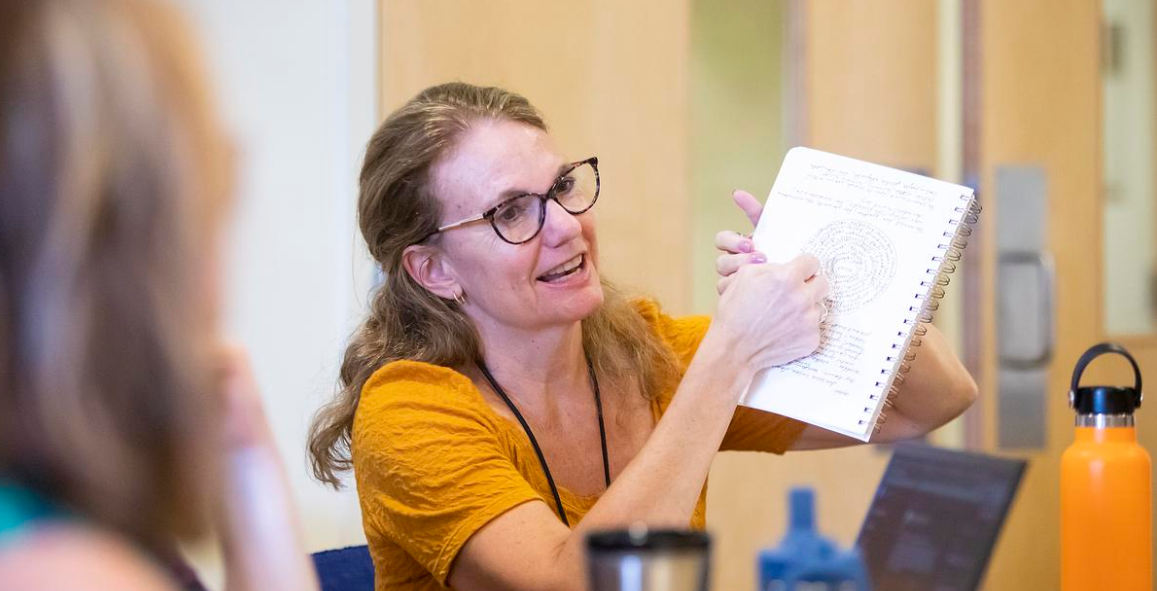
The annual MFA residency is a mandatory, intensive 10-day gathering held on the PLU campus. This period serves as the cornerstone of the program, facilitating the transition between academic years through high-level craft immersion and community building.
The Academic Schedule & Curriculum
Residency days are rigorous, with scheduled activities running from 8:00 AM to 8:00 PM. The curriculum is divided into two primary components:
-
Mandatory Morning Workshops: Led by core and guest faculty, these are split into two phases. The first half focuses on the student’s primary genre, while the second half utilizes mixed-genre workshops to encourage cross-disciplinary growth.
-
Customizable Craft Classes: Participants select a personal “menu” of classes regardless of their genre focus. Offerings cover poetry, fiction, and nonfiction technique, alongside professional development topics like pedagogy and maintaining a long-term writing practice.
Faculty Mentorship & Cohort Integration
A pivotal aspect of the residency is the initial mentor pairing. Participants meet with their faculty mentor to establish the upcoming year’s exchange schedule, communication methods, and specific reading and writing goals. Additionally, cohort-specific meetings provide a roadmap for the year’s requirements, while open-mic readings and shared meals foster a collaborative social environment.
Housing, Logistics, and Meals
To ensure full immersion, all participants reside in on-campus dormitory housing at PLU.
-
Accommodations: Each student is provided a private room with shared bathroom facilities.
-
Dining: All meals are included for the duration of the residency.
-
Policy: Room and board are integrated into the full program cost, and all participants are required to stay on campus; there is no opt-out provision for housing or meals.
OUTSIDE EXPERIENCE
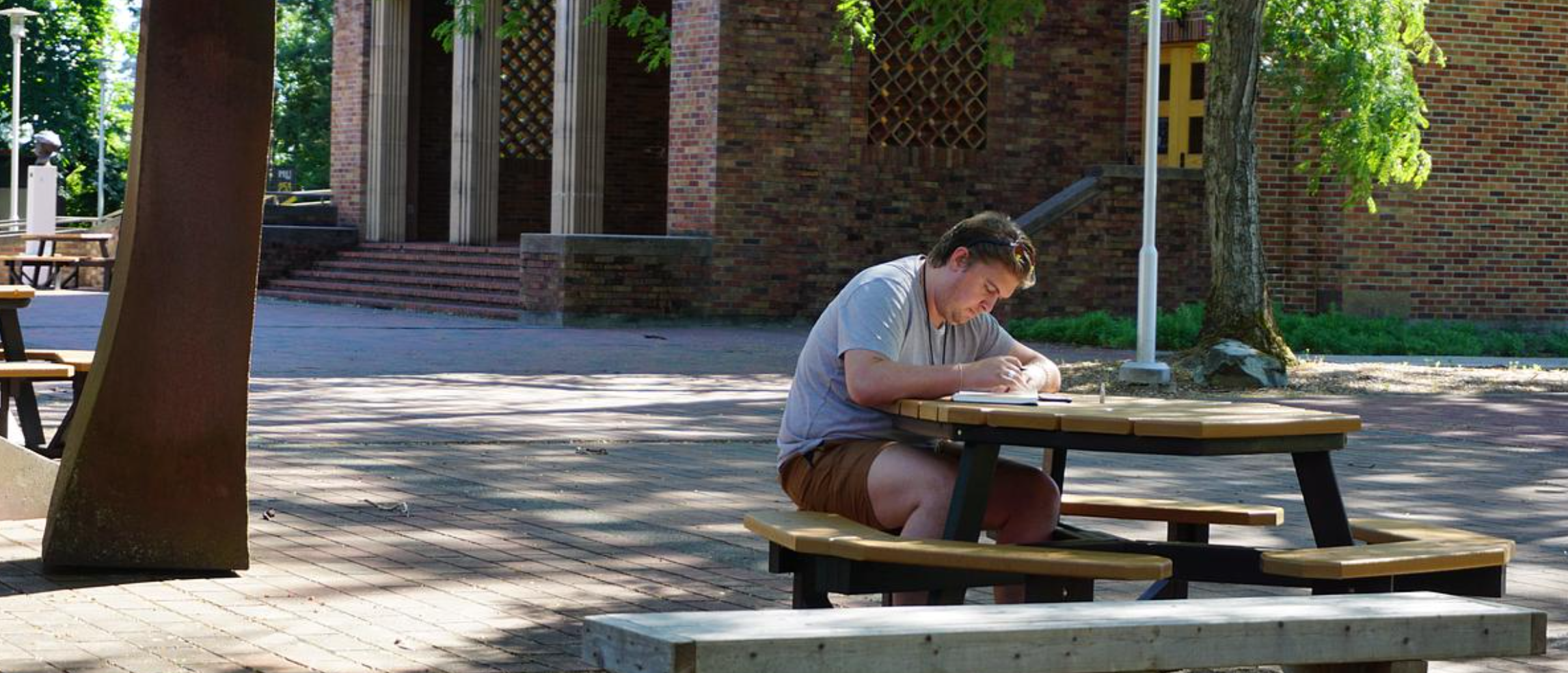
A hallmark of the Rainier Writing Workshop, the “Outside Experience”, is a self-directed, credit-bearing project completed during the second year of the MFA program. This requirement allows participants to bridge the gap between academic study and the professional writing life through a custom-designed initiative.
Core Objectives and Project Pathways
The project is highly flexible, designed to meet the specific career or creative goals of the student. Common pathways include:
-
Craft Advancement: Attending external writing conferences, specialized workshops, or independent residencies to refine technical skills.
-
Professional Immersion: Gaining industry experience through publishing internships, editorial work, or teaching opportunities.
-
Project-Specific Research: Engaging in deep-dive field research or archival study to support the development of a creative manuscript.
-
Literary Citizenship: Designing community-based projects that contribute to the cultural and literary life of the participant’s local region.
Design and Oversight
Each experience is uniquely tailored to enhance the participant’s primary course of study. Students collaborate directly with the Outside Experience Coordinator, who provides the necessary support and oversight to ensure the project meets the program’s rigorous professional standards.
Previous MFA students have attended writing residencies or conferences at The Vermont Studio Center, The Anderson Center, the Virginia Center for the Creative Arts, Centrum, Fishtrap, Kachemak Bay Writers Conference, Fairbanks Summer Arts Festival, Canto Mundo Latino Writers’ Retreat, Kiskey Libra Artist Residency, Community of Writers at Squaw Valley, National Endowment for the Humanities Summer Seminar, Scholars-in-Residence Program at the C.S. Lewis Study Centre in England, among others.
Travel abroad for MFA students has included locations such as: Ireland, Germany, England, France, Laos, Bali, Hawaii, Nicaragua, Mexico, Antarctica, Korea, the Dominican Republic, Guam and Costa Rica, among others. These travels involved research and interviews for novels, memoirs, and poetry sequences; some students participated in immersion programs in language-acquisition for translating or other specific research that would benefit their thesis.
RWW participants have led local writing workshops in poetry, fiction, and nonfiction; designed courses for the Attic Institute; developed creative writing courses at the college and high school levels; worked as Writers in the Schools; taught writing in a prison in Mexico; taught writing to at-risk youth. Others supported literacy/literary events in their communities: founded local reading/open mic series; curated a reading series; organized a Latino Literary Festival; served on the organizing committee of a city-wide book fair, among others.
Additional projects completed by past students include: internships with national and regional presses; edited anthologies; collaborations with artists for multi-media projects; participated in the Jack Straw Writers’ Program; wrote for radio or magazines. Other students worked with Nisqually tribal elders to record their history; did a sixteen-day solo wilderness retreat; conducted research on brown bears in Katmai National Monument, rode the Trans-Siberian railroad; walked the Camino del Santiago, studied the journals of explorer Alexander von Humboldt in Costa Rica; traced the settings of novelist Anthony Doerr’s All the Light We Cannot See, among others.
The Rainier Writing Workshop has special affiliations with The Vermont Studio Center in Johnson, Vermont, and The Anderson Center in Red Wing, Minnesota. The program can arrange residencies at these centers for interested participants. Through the Deborah Tall Scholarship Fund, the program also occasionally provides partial funding for participants who might have substantial costs associated with their Outside Experiences.
For more examples, see the Outside Experience Archives on Soundings.
"It's been a wonderful experience. I love the opportunity to be on campus for 10 days of immersion for four straight summers. The classes at the residencies are very well thought-out." Liz '25
Course Descriptions
ENGL 504 : Residency One
Residency One. Gather with program faculty and participants on the PLU campus in July for the 10-day residency. Substantial reading and preparation will be required in the two months prior to the residency. During the residency, each participant will be paired with a faculty mentor for the following mentorship year.
ENGL 511 : First Year Mentorship
First Year Mentorship. The participant is expected to submit 7 mailings to the mentor during the year. There will be a strong emphasis on critical reading and writing.
ENGL 505 : Residency Two
Residency Two. Gather with the program faculty and participants on the PLU campus in July for the 10-day residency. Substantial reading and preparation will be required in the two months prior to the residency. During the residency, each participant will be paired with a faculty mentor for the following year.
ENGL 512 : Second Year Mentorship
Second Year Mentorship. The participant is expected to submit 5 mailings to the mentor during the year. In most cases, the Outside Experience will be completed by a participant during their second year. Substantial preparation for the Critical Paper will also begin during the second year.
ENGL 506 : Residency Three
Residency Three. Gather with the program faculty and participants on the PLU campus in July for the 10-day residency. Substantial reading and preparation will be required in the two months prior to the residency. Prior to the residency, each participant entering his/her thesis year will be paired with a faculty mentor for the following year. A sequence of “Pedagogy Sessions” will also be offered to the cohort; these classes explore issues in the teaching of creative writing.
ENGL 513 / ENGL 599 : Third Year Mentorship / Thesis
The participant is expected to submit 6 mailings to the mentor during the year. The main tasks of the year include: completing the Critical Paper (due on December 15); completing the Creative Thesis (due on April 30); submitting a final program bibliography; and preparing to deliver a class presentation and a graduate reading in the final residency.
ENGL 507 : Residency Four
Residency Four. During the residency, graduating participants will take part in the following: thesis-manuscript critique sessions with their genre peers; a sequence of “Grad Sessions” that explores post-MFA issues; an optional class presentation; a mandatory graduate reading. The graduation ceremony takes place on the second Sunday of the residency.
Social Media