
Earth & Environmental Science
Undergraduate Major & Minor College of Natural Sciences
Bachelor of Science

About:
Earth and Environmental Science at PLU is about understanding how our planet works and what it means to care for it well. This program blends the strengths of earth science and environmental studies, drawing on biology, chemistry, physics, geology, data analysis, and environmental justice. This approach helps you understand how Earth’s physical, chemical, and biological systems shape — and are shaped by — human communities and decisions.
You’ll investigate key topics of our times, like climate change, natural hazards, resource use, and more. These issues shape the places we live, and the choices societies must make, making scientific understanding more important than ever.
You’ll choose a concentration in either Earth Science or Environmental Science, allowing you to focus on what excites you most, whether that’s climate systems, landscapes and hazards, conservation, or sustainability. You’ll collect and analyze data, use scientific tools, and apply what you’re learning to local and global environmental challenges through research and field experiences.
When you graduate, you will be prepared for a career in environmental science, conservation, natural resource management, non-profit administration, policy, graduate school, and more.
Skills you'll gain from this program:
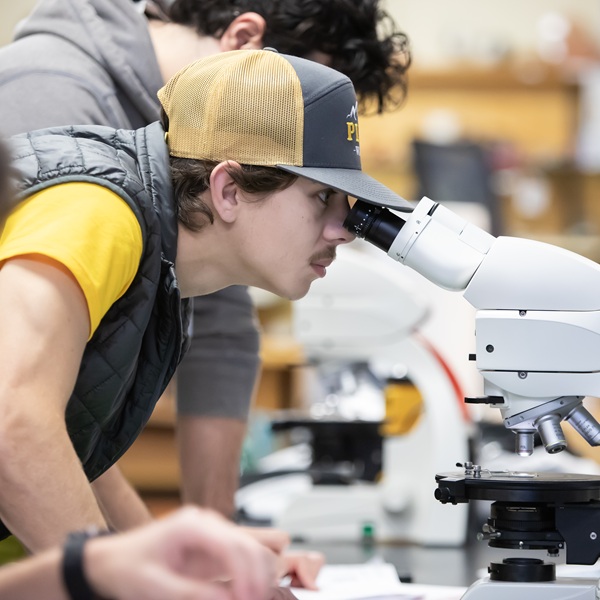
- Lab & Analytical Techniques — Analyze soil, water, rock, and environmental samples using lab-based methods and tools commonly used in professional science contexts.
- Earth Systems Analysis — Develop a scientific understanding of Earth’s physical, chemical, and biological systems and how they interact across landscapes, climates, and ecosystems
- Problem-Solving Across Disciplines — Integrate perspectives from earth science, biology, chemistry, social sciences, and environmental justice to understand complex environmental challenges and propose solutions.
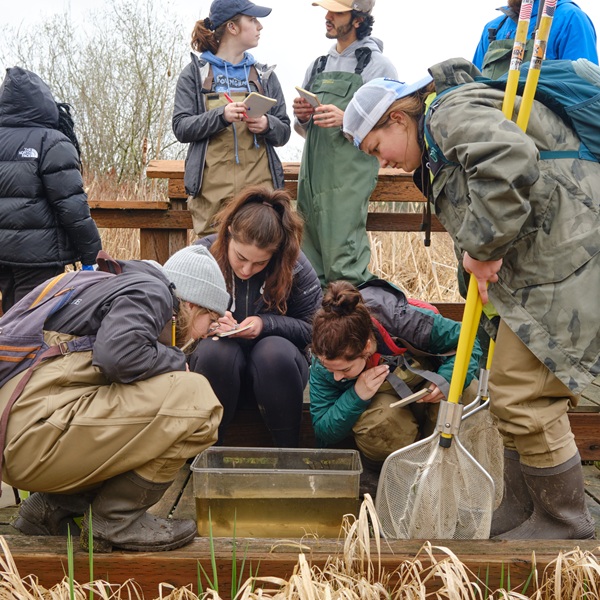
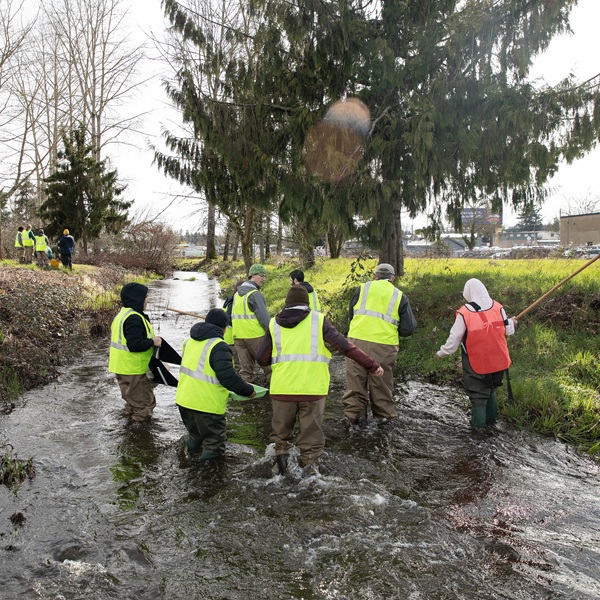
- Field Methods & Data Collection — Gain hands-on experience using geological and environmental field equipment to collect samples, measure environmental conditions, and conduct field investigations.
- Scientific Communication & Collaboration — Learn to write technical reports, present research findings, and collaborate with professors and peers on projects that address real-world environmental efforts.
Graduates from the last 5 years: Their jobs
Earth & Environmental Science is a new degree option, but PLU has long had both an Earth Science major and Environmental Studies major! Here are some of the jobs of graduates from those programs:
- Watershed Health Monitor, Washington State Department of Ecology
- Staff Geologist, Crawford & Associates, Inc.
- Science Teacher, Lake Washington School District
- Environmental Hazmat and Emergency Response Tech, Clean Harbors Environmental Services
- National Environmental Policy Act Specialist, AGEISS
- Scientist, Herrera Environmental Consultants
- Geologic Interpretive Guide/Mt. St. Helens, US Department of Agriculture
Graduates from the last 5 years: Their graduate programs
Earth & Environmental Science is a new degree option, but PLU has long had both an Earth Science major and Environmental Studies major! Here's where alum from those programs have gone on to graduate school:
- PhD in Marine Science, University of South Florida
- Master of Science in Biological Sciences, California Polytechnic State University
- Master of Science in Geospatial Technologies, University of Washington
- Master of Science in Geological Sciences, Ohio University
- Master of Science in Land Resources & Environmental Sciences, Montana State University
- Master of Science in Physician Assistant Studies, Northwest University
It’s FREE to apply to PLU
When you're ready, we're here. Apply now and fulfill your potential!
Get Started100% of Earth & Environmental Science students will complete hands-on experience through labs, field work, or research.
Research
Earth Science students regularly participate in PLU’s Natural Sciences Summer Undergraduate Research Program (NSSURP), which involves working with PLU professors on research projects (and getting paid for it!).
Advanced Instrumentation
You'll get to work with the same professional-grade equipment found in industry labs, including handheld Laser Induced Breakdown Spectroscopy (LIBS) and X-ray Fluorescent (XRF) analyzers, a research-level optical microscope, and equipment for measuring stream flow.
Study Abroad
See the world through an environmental lens. Earth and Environmental Science students can study away in Namibia, Norway, Trinidad & Tobago, Scotland, Costa Rica, Australia, New Zealand, and more.