


2026 Chemistry Capstone Symposium
All talks will be held in Rieke Science Center, Room 222.
Talks are anticipated to be approximately 25 minutes long including time for questions. The schedule of talks is given below.
View by Day: [ April 24th | May 1st ]
12:30-1:00 pm
Title: Redox-Targeted Cancer Therapy Using IrSe₂@RGD Nanozymes

Steven Chu, Senior Capstone Seminar
Abstract: Cancer cells maintain high antioxidant activity through systems like glutathione (GSH) and thioredoxin reductase (TrxR), which limits the effectiveness of oxidative therapies. In this presentation, IrSe₂@RGD nanoparticles are explored as a redox-active nanozyme platform. The selenium component depletes GSH and inhibits TrxR, while the iridium component exhibits peroxidase-like activity to generate reactive oxygen species. Together, these effects disrupt cellular redox balance and promote oxidative stress–inducing cell death. This provides another potential strategy in advancing cancer therapies.
1:00 – 1:30 pm
Title: Overcoming the KS Gatekeeper: Structural and Combinatorial Strategies to Increase Enzymatic Efficiency in Engineered Type 1 Polyketide Synthases in Microbes
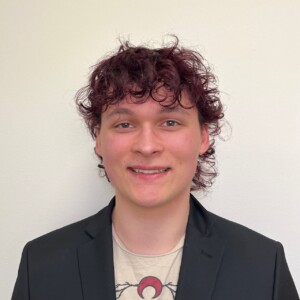
Landon Harris, Senior Capstone Seminar
Abstract: In this capstone talk, I explore the engineering of Type 1 Modular Polyketide Synthases (PKS’s), nature’s highly efficient assembly line for complex bioactive molecules. Despite their potential to create novel antibiotics and biofuels, bioengineered PKS’s often suffer from stalled assembly and low product titer’s The central component of this failure stems from the Keto synthase (KS) domain, which acts as the chain “gatekeeper” during the inter-modular transfer of each growing polyketide chain from the Acyl Carrier Protein (ACP) and Acyl Transferase (AT). Drawing on recent structural and biochemical studies. I analyze how the specificity of the KS-ACP interaction determines PKS efficiency. I evaluate two strategies to overcome this issue: ration design using AlphaFold- guided mutagenesis to remodel KS active sites, and combinatorial engineering using biosensor-assisted libraries to help determine successful domain boundaries between AT and KS domains. Through manipulating these domain interactions, researchers can bypass the gatekeeping activity, restoring PKS efficiency and increasing the titer of non-natural products. I conclude by discussing potential future applications of PKS engineering and its programmable platform that can potentially produce hundreds of de novo chemicals or antibiotics.
1:30 – 2:00 pm
Title: Solid-state Polymer Electrolytes for Lithium-Ion Batteries: Synthesis of a Zwitterionic Monomer

Jake Park, Senior Capstone Seminar
Abstract: Lithium-ion batteries are a staple energy source for our world. They power our consumer electronics, so there must be efficient, safe, and eco-friendly forms of lithium-ion batteries at our disposal. This research aims to aid the Waldow Research Group’s mission of creating high-performing, safe, and eco-friendly solid-polymer electrolytes for lithium-ion batteries. The synthesis towards a zwitterionic monomer was explored through the organic syntheses of the building block intermediates.
2:00 – 2:15 pm - Break
2:15 – 2:45 pm
Title: A Novel Iodine-Catalyzed Microwave-Assisted Synthesis of Naturally Occurring Antibiotic Compounds
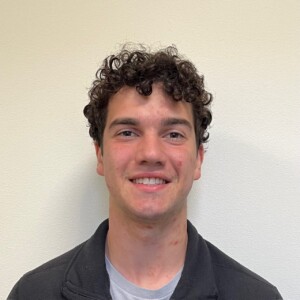
Misha Turchaninov, Senior Capstone Seminar
Abstract: Antibiotics and anti-cancer property-containing drugs are always in high demand and the discovery of medically viable molecules is of continuous research. The discovery of biologically active medicinal compounds is the preliminary portion of the experiment, followed by the discovery of the synthetic method. Diazaquinomycins (DAQs) are a class of molecules known to contain antimicrobial and anti-cancer properties, but the most popular synthetic method is extremely inefficient, hazardous, and produces highly acidic waste. Its efficient synthesis is of interest, and the use of an environmentally friendly method is preferred. Microwave irradiation poses a potential solution for this problem, because it provides safer reaction conditions and emits less greenhouse gasses. The exploration of the synthesis of DAQs starts with the synthesis of DAQ derivatives with molecular structures analogous to DAQs. This study explores the microwave-assisted synthesis of these analogs, specifically, the condensation of ethyl acetoacetate and formation of the amide bond with the amine group on 7-amino-2(3H)-benzoxazole (ABOZ) and 2,2,5,6-tetramethyl-4H-1,3-dioxin-4-one (TMD). The reaction conditions for this microwave reaction were augmented and studied in order optimize product yield.
2:45 – 3:15 pm
Title: Blending poly(3-hexylthiophene) with an ion-conductive polymer to enhance transient and capacitive properties in organic electrochemical transistors

Jeffrey Buetow, Senior Capstone Seminar
Abstract:
This study reports on the effect of blending an ion-conductive polymer with poly(3-hexylthiophene) for use in organic electrochemical transistors (OECTs). These devices have applications in biosensing and biotech, and use an organic mixed ionic-electronic conductor (OMIEC), typically a conjugated polymer, as their channel material. Their important figures of merit for characterization include the device’s switching kinetics, transconductance, charge mobility (μ), volumetric capacitance (C*), and the product μC*. Poly(ONDI-12), a ROMP polymer functionalized with an oligo ethylene oxide side chain with high ionic conductivity, is blended with P3HT, an OMIEC with poorer ionic conduction. It was hypothesized that a blend with poly(ONDI-12) will have greatly improved conductive properties compared to the unblended P3HT. OECT devices made with blends of P3HT and Poly(ONDI-12) as the OMIEC material were tested to determine their switching kinetics, transconductance, μC*, and volumetric capacitance. This study finds significant improvements in switching speed and volumetric capacitance, with no significant change in μC*, suggesting a corresponding decrease in charge mobility.
12:30 – 1:00 pm
Title: Metal–Organic Frameworks (MOF’s) as Effective and Green Materials for Perchlorate Removal from Water

Michael Brown, Senior Capstone Seminar
Abstract: Perchlorate contamination in water is a major environmental and public health concern because of its persistence, high solubility, and ability to disrupt thyroid function at very low concentrations. Conventional treatment methods, including ion-exchange resins and layered double hydroxides (LDHs), are commonly used for perchlorate removal, but they often suffer from slow kinetics, limited capacity, poor selectivity, and environmentally costly regeneration processes. Cationic metal–organic frameworks (MOFs), particularly silver bipyridine nitrate (SBN) and silver bipyridine acetate (SBA), have emerged as promising alternatives because of their rapid anion-exchange behavior, high perchlorate affinity, and tunable structures. Analysis of published studies on synthesis, uptake, selectivity, regeneration, and structural stability shows that both SBN and SBA outperform conventional resins and LDHs in removal speed and adsorption performance. SBN demonstrates high perchlorate capacity and strong reusability through reversible nitrate-to-perchlorate exchange, while SBA improves on this design by releasing acetate rather than nitrate, making the exchange process more environmentally benign. SBA also exhibits especially rapid uptake and strong performance in real groundwater and across a range of pH conditions. Overall, the available evidence supports cationic MOFs, especially SBN and SBA, as promising next-generation materials for perchlorate remediation, although further work is still needed to address long-term stability, practical regeneration, and large-scale implementation.
1:00 – 1:30 pm
Title: Optimization of substituted azaxanthone ligand for luminescent lanthanide RNA probes
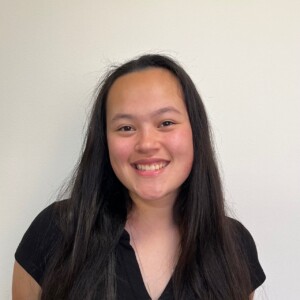
Lia Zaboski, Senior Capstone Seminar
Abstract: Continued groundbreaking research into the biochemical and therapeutic roles of RNA is underpinned by the technology to selectively detect its activity in vitro and in vivo. Much research depends on photoluminescence spectrometry and microscopy as key tools for studying RNA. A lanthanide antenna-ligand complex as an RNA probe could have the advantage of a longer luminescence lifetime that would enhance the differentiation of its signal from background noise. The proposed target in our studies involves a chelated europium(III)-complex with a substituted azaxanthone antenna. A new method for ligand synthesis has been optimized to avoid low-yielding reactions and difficult purification steps. One improved step includes the intramolecular Friedel-Crafts acylation of a nicotinic acid derivative using thionyl chloride and aluminum trichloride to form the tricyclic core instead of the extended heating of the same substrate in corrosive, viscous polyphosphoric acid as solvent and reagent. Secondly, conjugation of a chelating, substituted 1,4,7,10- tetraazacyclododecane (cyclen) ring to the azaxanthone is typically achieved by an SN2 strategy. As confirmed in our lab, radical bromination of methylated azaxanthones and picolines is especially low-yielding and prone to dibromination. Instead, a new SN2′ attachment strategy was explored via tosylation of the azaxanthone-N-oxide.
1:30 – 2:00 pm
Title: Advances in Activity-Based Fluorescent Probes for Prostate-Specific Membrane Antigen (PSMA) Guided Cancer Imaging

Paige Almanza, Senior Capstone Seminar
Abstract: Prostate specific membrane antigen (PSMA) is a key target for detecting prostate cancer due to its overexpression and its enzymatic activity. This presentation explores the chemical design and function of PSMA targeted fluorescent probes, with a focus on active systems that generate signals on the cancer. Experimental findings demonstrate that while increased fluorescence can correlate with cancer presence and PSMA expression, signal overlap and background fluorescence remain a challenge. Overall, this presentation highlights the activity-based probe design and careful chemical optimization are essential for improving tumor specificity and advancing clinical prostate cancer imaging technologies.
2:00 – 2:15 pm - Break
2:15 – 2:45 pm
Title: Energy transfer catalyzed [2+2] cycloaddition

Benjamin Thompson, Senior Capstone Seminar
Abstract: Forming new cyclobutanes is a challenging task, yet their formation can be essential for chemical synthesis of many bioactive products. Recent methods of forming new cyclobutanes have been found through photocatalysis. In this review, the basics of the photocatalyzed [2+2] reaction will be covered as well as new developments in stereospecific energy transfer (EnT) photocatalysis for the formation of cyclobutanes via [2+2] cyclo addition. Multiple different papers have begun using these reactions utilizing Pinacolborane (Bpin) to control stereoselectivity and catalysts reacting under blue LED light due to pi electron excitation.
2:45 – 3:15 pm
Title: Enhancing the Electrochemical Doping Kinetics of P3HT via Blending with P3MEEMT
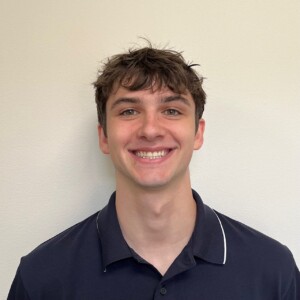
Quinn Bieber, Senior Capstone Seminar
Abstract: Organic mixed ionic and electronic conductors (OMIECs) are important to the development of bioelectronics due to their ability to facilitate dual-carrier transport. However, a fundamental design challenge persists as the trade-off between the structural order required to transport electronic charges and the polymer chain flexibility necessary for ionic transport and volumetric capacitance. This study investigates the enhancement of electrochemical figures of merit through the volumetric blending of poly(3-hexylthiophene) (P3HT), a high-mobility polymer with slow doping kinetics, and P3MEEMT, an OMIEC featuring polar sidechains that will improve ion infiltration.
Social Media