


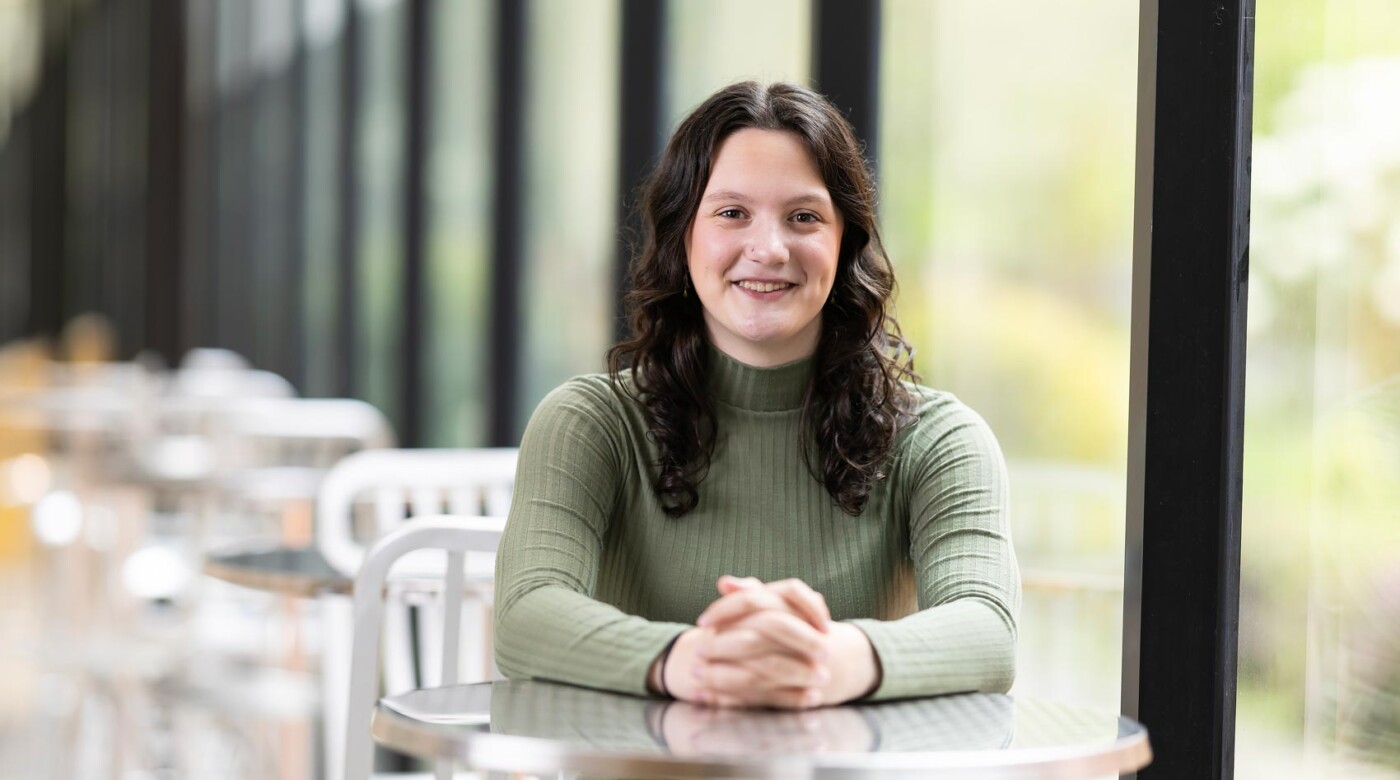
“I feel like a completely different person”: Meghan Buchanan ’26 looks back on her time at PLU
By Britt Board
Assistant Director of Communications
Meghan Buchanan ’26 didn’t always see herself as a math person.
“I actually haven’t always liked math. In fact, I hated it until high school. The stereotypes you hear about a kid in tears while their dad is trying to help them with math homework? That was me.”
That early frustration makes where she is now – a double major in math and computer science – quite striking. What changed was simple and lasting. “When I got to high school, all it took was one great teacher for me to flip that script.”
At PLU, that newfound interest turned into something bigger. “At that point, I knew I liked math, but I really had no idea what I could do with that interest until I got to PLU.”
Meghan immersed herself in math at PLU. In 2024, she and two other students participated in The Mathematical Contest in Modeling. She and her teammates spent 100 hours building a math model of momentum swings in tennis matches. Their team earned a Meritorious Designation, placing them in the top 5% of all submissions worldwide. Meghan sees the recognition as a cherry on top. “We grow from working with other people, and I am very glad to have gotten to do this at PLU.”
She also brought that collaborative, applied mindset to undergraduate research at the University of Wisconsin-Madison’s Biomedical Data Science department, where she worked on standardizing biomedical metadata using large language models. Ultimately, she presented this work at the Consortium for Computing Sciences in Colleges and earned first place for her research poster.
Mentors who shaped Meghan

Professor Ksenija Simic-Muller
“Ksenija has believed in my abilities mathematically and personally during my whole time at PLU. She has encouraged me to think about things in ways that I may not have initially, which I think has made me a better student and person in society.”

Professor Cameron Robinette
“She was my first math instructor at PLU and I have helped out as her grader, which made it easy to stay connected. We check in very frequently about school and personal life, and she has helped me navigate the logistics of school with my mom’s illness while being a big support.”

Professor N. Justice
“Dr. Justice has challenged me to think about how the mathematical or statistical decisions we make affect the story we tell. Before working with Dr. Justice, I had the impression that statistics was very algorithmic. But Dr. Justice has encouraged me to realize that there is so much more to math and statistics than techniques.”

Professor Jeff Caley
“He has been a mentor for me as I navigate internship and career searching. He has also helped me feel more confident in putting myself out there, asking questions, and taking advantage of every opportunity that presents itself.”
For Meghan, the magic shows up in smaller moments, too, like the math department’s monthly “Coffee, Fruit, and Donuts” event. “To have students and faculty that take time to connect outside of the classroom in a more casual setting has created a wonderful community that I have loved to be a part of.”
Faculty see that same combination of kindness and curiosity in her. As Associate Professor of Mathematics N. Justice puts it, “She’s an amazing student and person. Her personality, perseverance, and goals all embody PLU’s mission.”
Alongside her academic growth, Meghan’s time at PLU has been shaped by profound personal challenges. Supporting her parents through serious illnesses – and losing her mother this spring – reshaped how she sees both her work and her life.
Her dad’s stroke at the start of her sophomore year marked the first major medical crisis her family faced, followed soon after by her mom’s cancer diagnosis and a long, difficult course of treatment. As those realities unfolded, Meghan found herself navigating a lot while staying in school. “I didn’t stop working hard in classes, but my focus shifted to setting myself up to be able to take time away from school before the end of the year. At the same time, I had to figure out how to balance this work while spending as much time with my mom as I could.”
Meghan shares a trait with her mom that has shown up throughout their lives: “We both could get hyper-focused on our work and lose track of time. Now, I still care deeply about my work, but I am more intentional about how I spend my time outside of it.”
That shift also changed how she thinks about time itself – what to prioritize, what not to put off, and how to stay present even while planning what comes next. “I try to say yes to things I would have once postponed, make space for people I care about, and be present instead of always thinking about what’s next. It’s made me more grounded, more appreciative, and more willing to prioritize what actually brings joy to my life, rather than assuming I’ll have time to get to it later.”
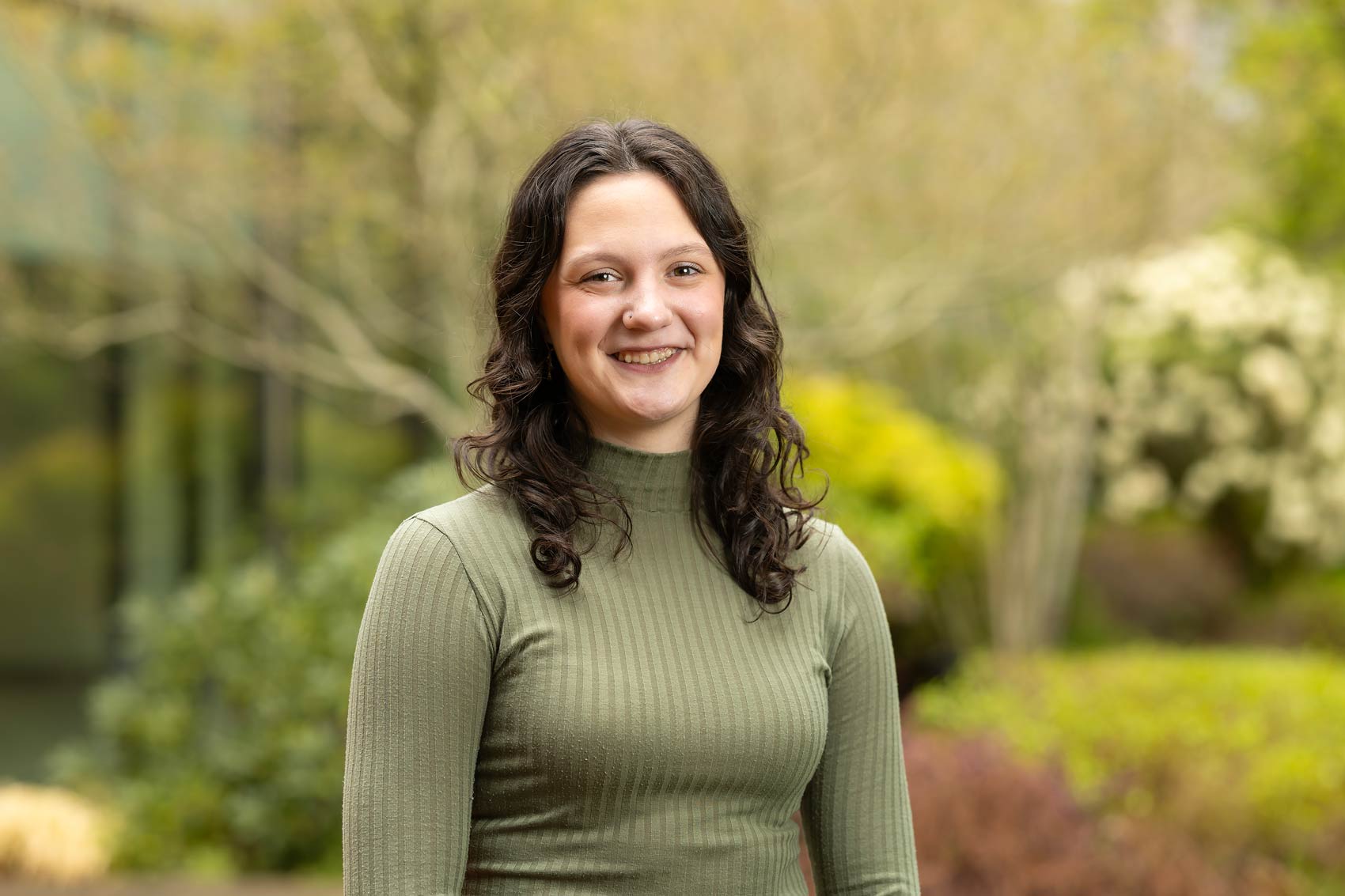
Meghan remembers, “Before I came back to school for spring semester this year, my mom held my hands, looked me in the eye, and said, ‘Thank you for being my daughter.’ That moment is something I carry with me as a reminder of the love we share and the kind of person I want to continue being.”
I try to say yes to things I would have once postponed, make space for people I care about, and be present instead of always thinking about what’s next. It’s made me more grounded, more appreciative, and more willing to prioritize what actually brings joy to my life, rather than assuming I’ll have time to get to it later.
Her lived experiences undoubtedly began to shape not just how she moves through the world, but what she wants to study and understand more deeply. “Throughout it all, I saw math and statistics. I saw it in the wide array of treatments she received, and I found myself wanting to know more about biostatistics.” Biostatistics became a way to connect her technical skills to real-world situations, offering a path to better understand the systems that shape patient outcomes.
Looking ahead, Meghan is stepping into a software engineering role at Symetra, building on two previous internships where she worked on both the Analytics Engineering and Data Science teams. The role is remote, and she’ll be moving to St. Louis as her partner finishes school, marking the start of a new chapter both personally and professionally. While she’s excited to begin her career, she’s also eyeing a possible return to school to pursue graduate study in statistics or biostatistics.