


Katlyne Smith ’25 on the stories that shape the future
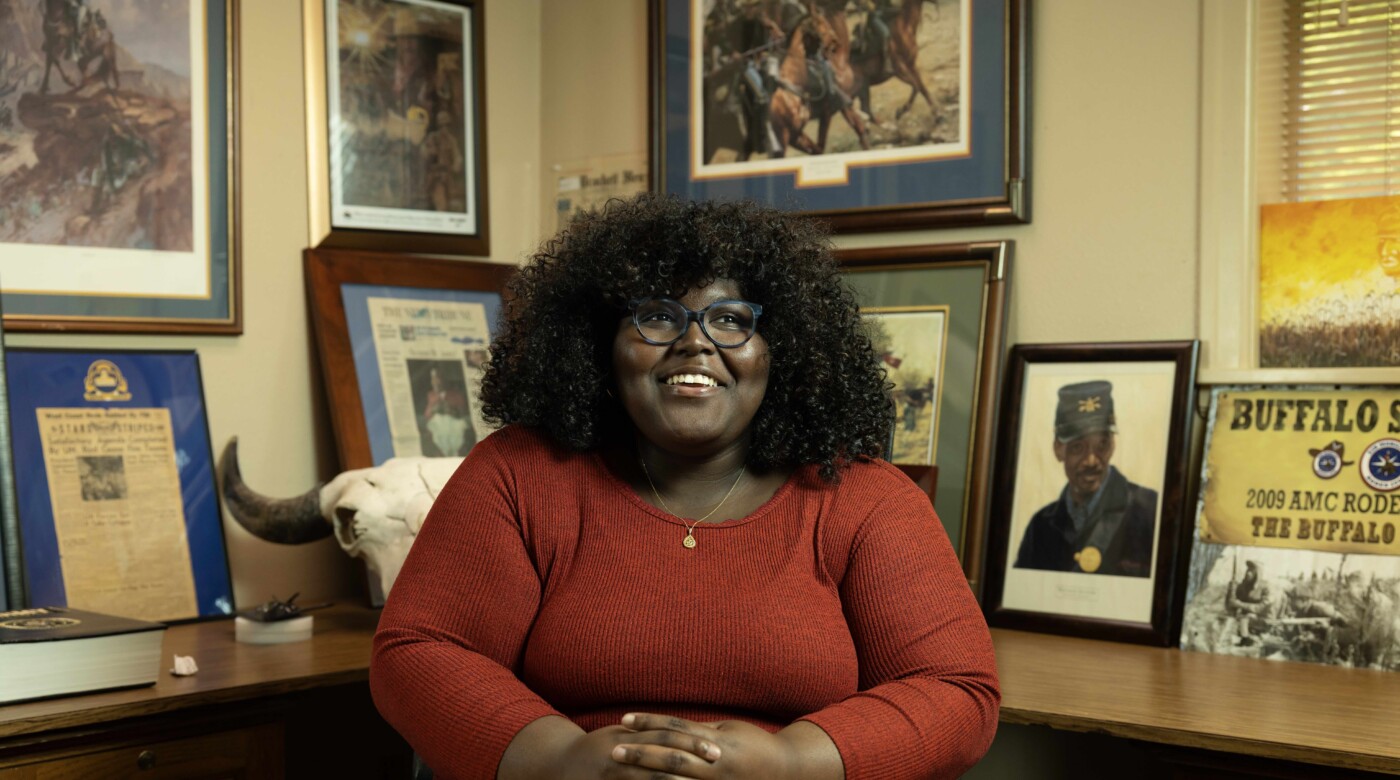
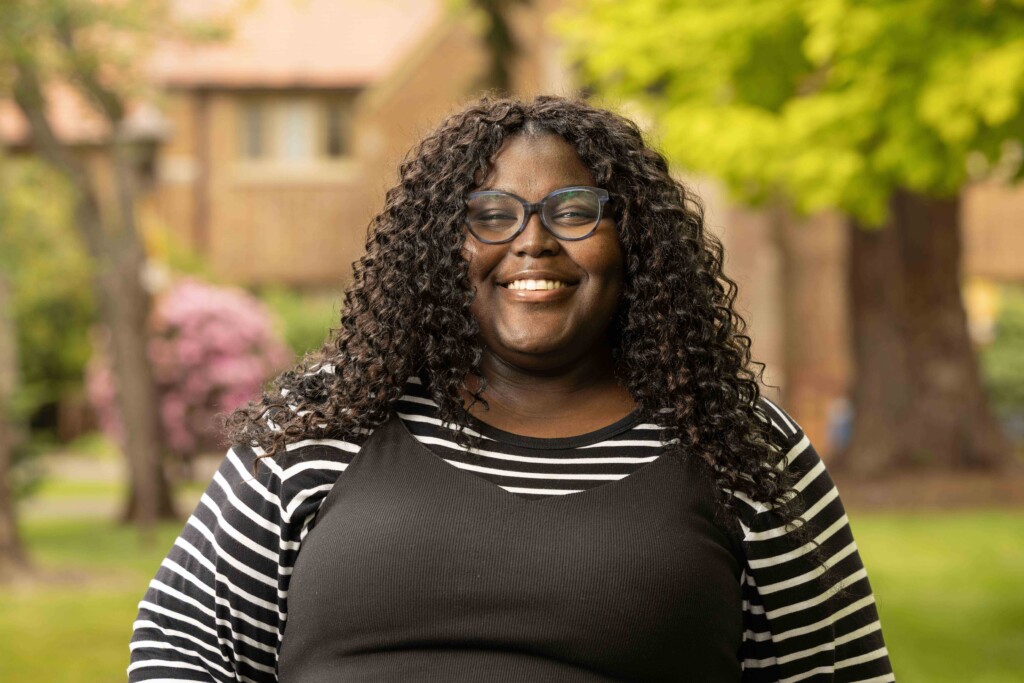
Image: History major and winter 2025 grad Katlyne Smith at her internship at the Buffalo Soldiers Museum. (PLU Photo / Sy Bean)
By Britt Board
Assistant Director of Communications
History is about more than what happened; it’s about what still shapes us. For history grad Katlyne Smith ’25, that understanding started close to home. “Growing up in Tacoma, I observed the importance of engaging with and learning from people whose experience and viewpoints differ from my own.”
This perspective carries through her work as a historian and future educator. Through research, community work, and hands-on teaching, she’s built a path grounded in the idea that the stories we tell – and whose voices are included – can change what comes next. Katylne puts it simply, “The stories we tell matter because they shape our perspective of the past, present, and future.”
I always felt like a part of the historical narrative was missing or wasn’t completely represented.
Can you share what drew you to history in the first place? Was there a moment when it really clicked for you?
My passion for history started when I was a teenager. I was looking to learn more about minority groups in the United States. Over the years, I learned about major historical timelines, but often through a limited lens. I always felt like a part of the historical narrative was missing or wasn’t completely represented. This led me to seek a deeper understanding of the contributions of people of color and to explore how their voices fit within major historical events.
What does this mean for your teaching practice?
While I recognize that history curricula have evolved over time, my goal is to become an educator who provides students with a more comprehensive and inclusive perspective of the past.
What was your senior capstone project about?
My capstone explored the aftermath of an altercation between the police and young people in Tacoma’s Hilltop District on May 11, 1969.
For those who don’t know, can you give us an overview of what happened that day in 1969?
It’s an incredibly important day in Tacoma’s history, later referred to as the Mother’s Day Disturbance. The Disturbance started as a response to the treatment of a young couple, Betty and Roy Forks, during their arrest and detainment.
Later that day, a crowd of young people from the Hilltop district gathered to protest the couple’s treatment as well as long-standing frustration and distrust toward the Tacoma Police Department. Tensions escalated on both sides, ultimately resulting in damage to the Hilltop district small business sector and the shooting of a police officer.
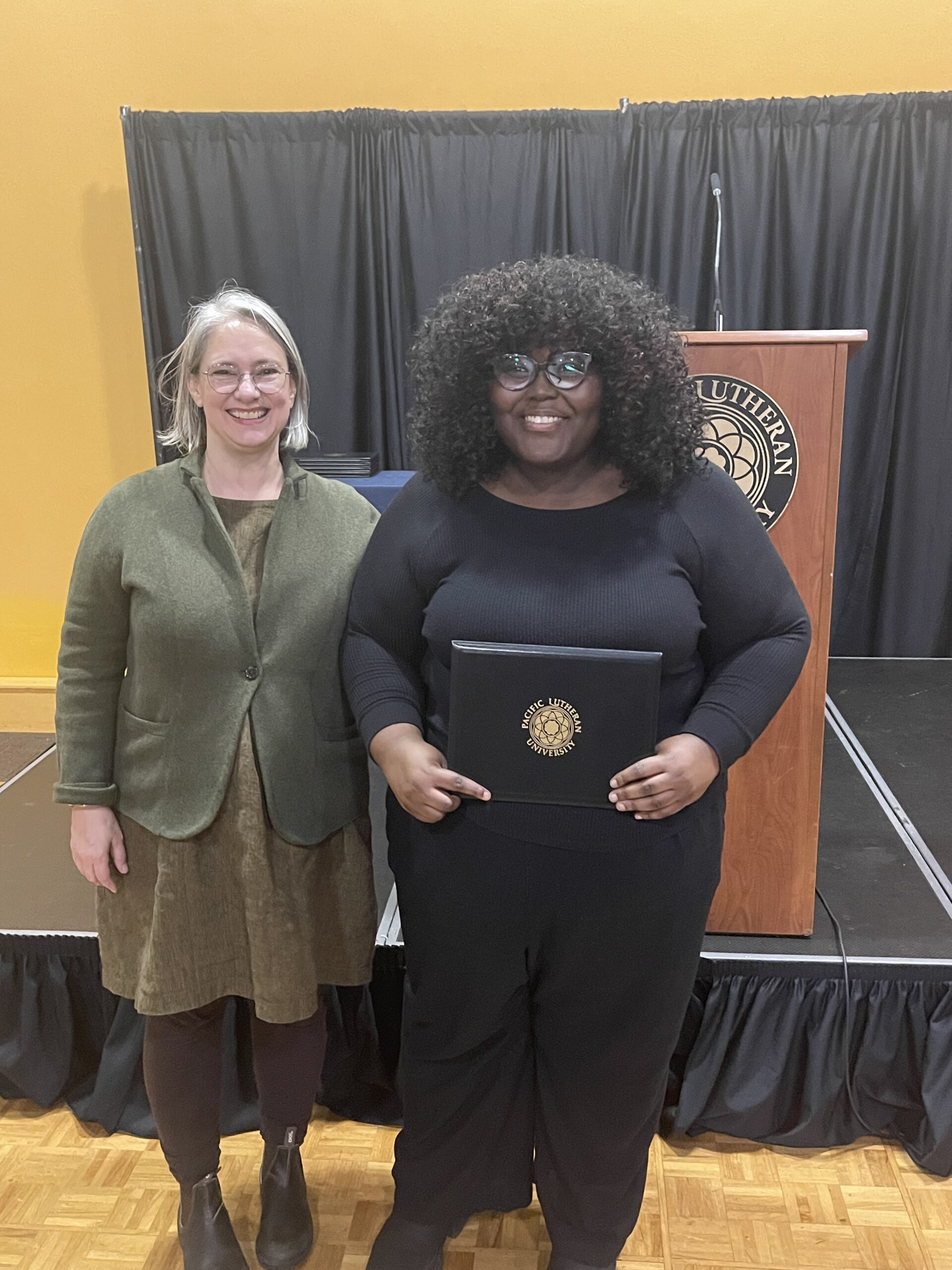
What was the research process like and what were your findings?
In my research, I analyzed Tacoma News Tribune reports and Tacoma City Council meeting minutes to highlight the financial, social, and political disparities the Hilltop District faced at the time. I argue that redlining and the lack of local investment in sustainable neighborhoods functioned as a silent post-colonial system of violence.
The Disturbance reflected the district’s boiling point, and it symbolized a demand for institutional reform. The Mother’s Day Disturbance also gave Black Hilltop leaders like Harold Moss and James Walton political leverage in their pursuit of local representation.
This historical event showed a correlation with the civil unrest and political changes that happened in major cities across the United States in the 1960s during the Civil Rights Movement. I conclude from my research that resistance to colonized ideologies and structures often comes from a multifaceted approach, combining community activism through civil disobedience and organized political engagement.
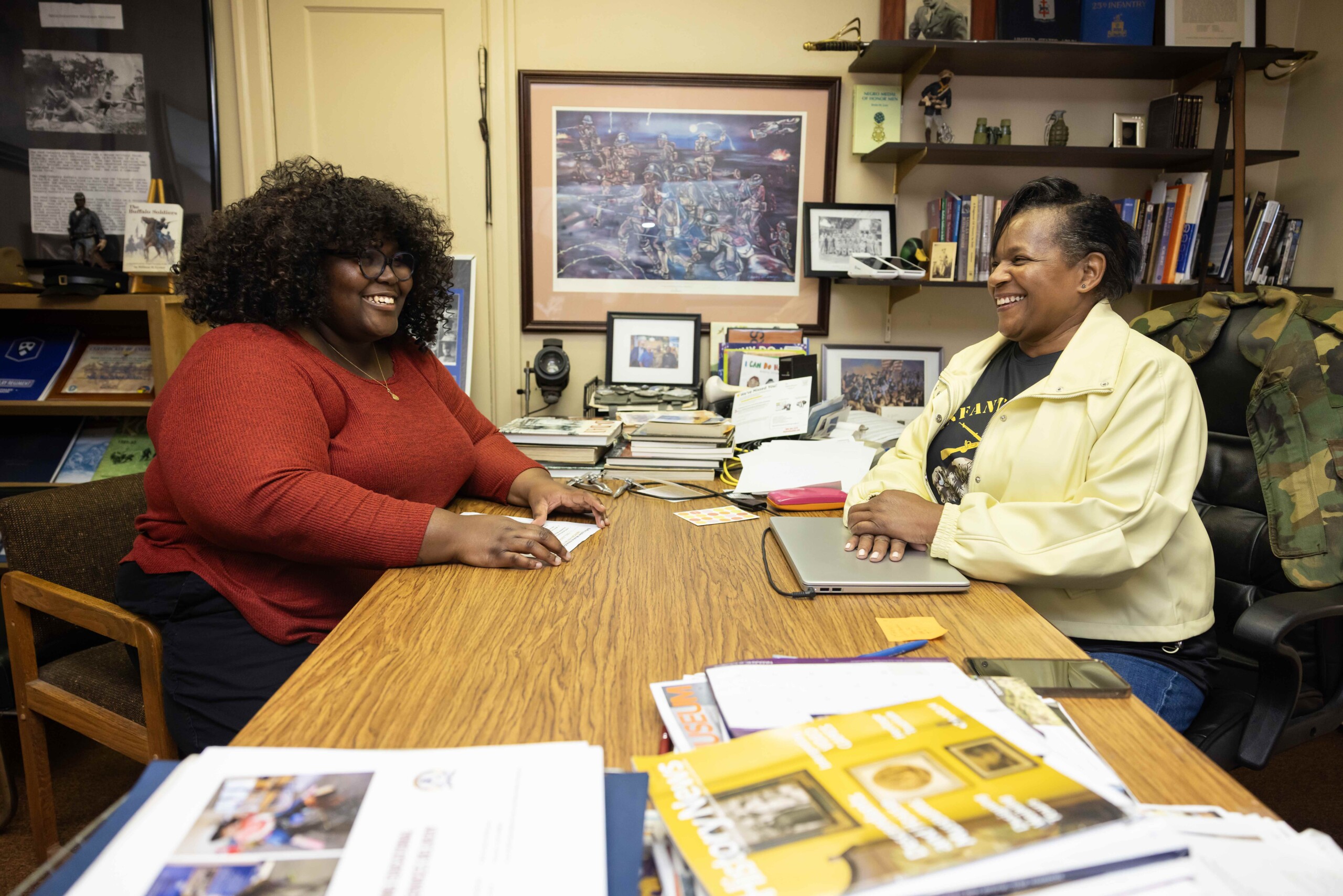
I can see parallels between this project and your internship with the Buffalo Soldiers Museum. How did this opportunity come about?
A fellow history major student at the time and now PLU alum, Franklin Brogan ’24, told me about the position and invited me to a meeting with Dr. Gina Hames to learn more about the internship.
Initially, I was apprehensive about taking on an internship. I was still adjusting to my first year at PLU as a transfer student and I had no prior experience working in a museum. I recognized it was an exciting opportunity to deepen my knowledge of African American history while actively contributing to public history that strengthens and connects the Tacoma community.
What kinds of things did you do for the museum?
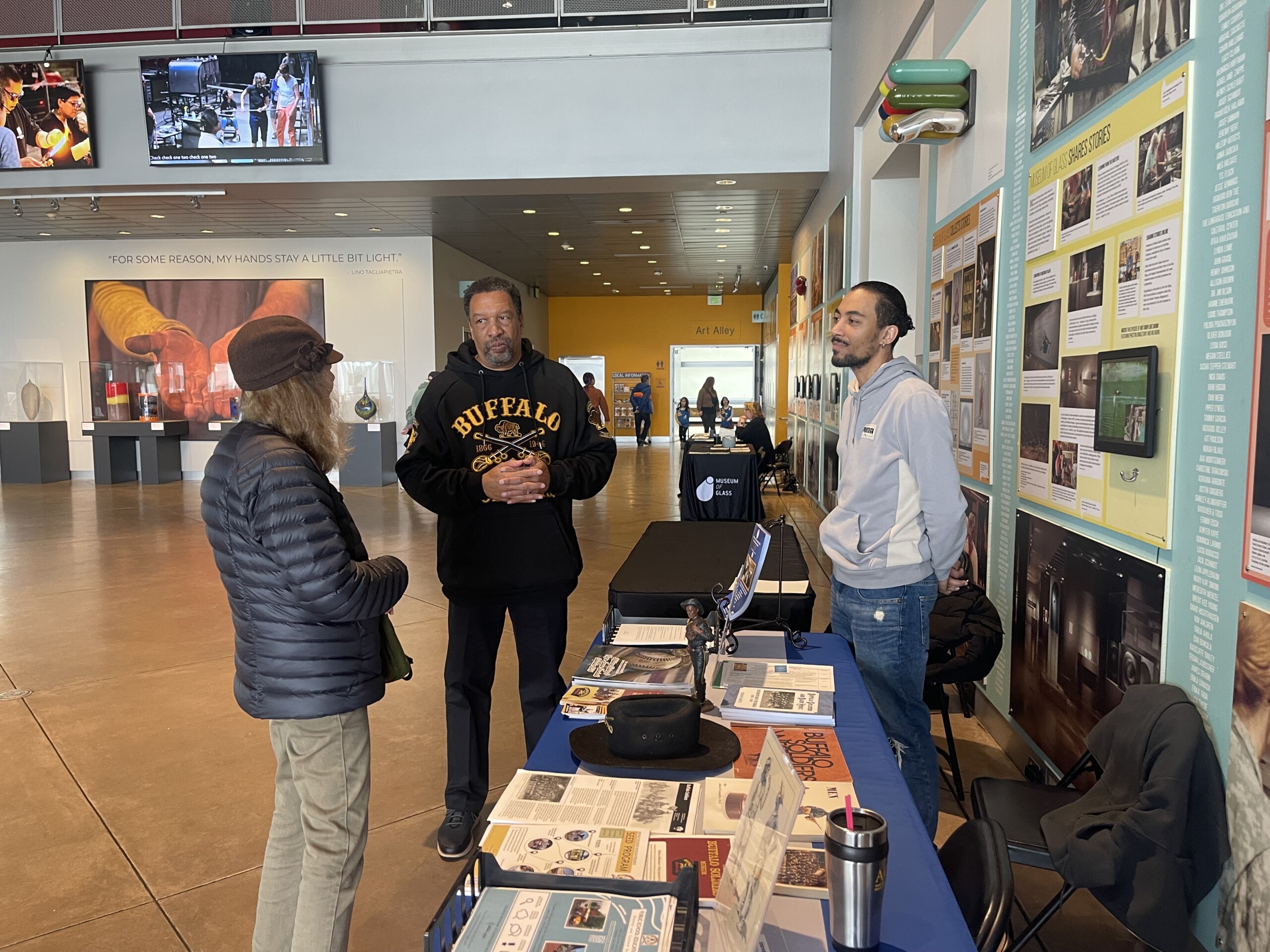
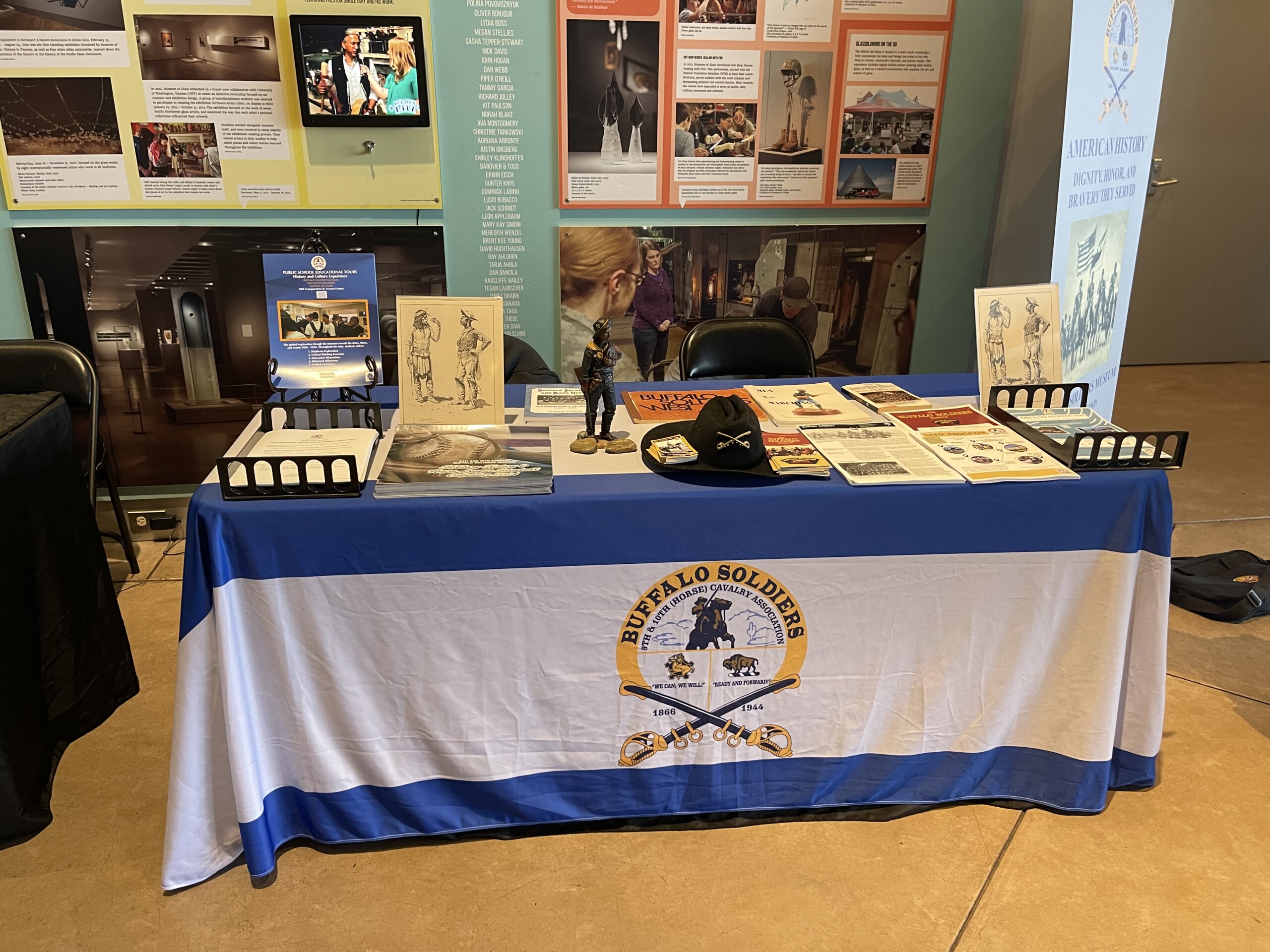
My central role at the museum was to create and edit engaging educational curriculum about the Buffalo Soldiers for elementary and middle school students. I helped design interactive stories about what life was like for Black soldiers in the 19th century. I also helped create scavenger hunt-themed lessons for students who would tour the museum during field trips.
My goal was to make a curriculum that would introduce complex historical themes while motivating students to practice analyzing primary and secondary sources. I had to make sure the curriculum correlated with Washington State’s Common Core standards, so history teachers could easily adapt it into their own lesson plans.
Through the internship, I learned different ways museums work to produce accessible forms of historical knowledge for their patrons. The Buffalo Soldiers Museum values building connections with educational departments, like Tacoma Public School District and Tacoma Public Libraries. I learned that museum curation and education are collaborative efforts with community members and historians.
A lot of your work has been steeped in Tacoma. Being from here, what does Tacoma mean to you? How does your relationship to Tacoma inform how you move and what you want to do in the future?
Tacoma is truly a melting pot of various cultural and ethnic identities and ideals. The neighborhoods and schools I was a part of were strengthened by the diversity of community members and leaders. Tacoma has taught me that diversity can foster innovation and unique problem-solving. It is the strongest tool we have to combat fascism and protect democracy.
This has deeply shaped how I move through the world and what I hope to do in the future. As an educator, I’m committed to creating a classroom environment where all students feel seen, valued, and heard.
How did you end up at PLU?
I was a transfer student from Tacoma Community College, and I valued having smaller class sizes and one-on-one time with my instructors.
When I toured the campus, I was excited to see students engaged in thoughtful discussions and actively participating in their own learning. I noticed a close-knit academic environment where students were supporting one another. I knew it was the place that would help me achieve my academic goals of becoming an educator.
This has deeply shaped how I move through the world and what I hope to do in the future. As an educator, I’m committed to creating a classroom environment where all students feel seen, valued, and heard.
What kinds of projects or experiences did you do on campus?
I worked with PLU Archives to help create a digital exhibit that highlights the history of activism at PLU. I focused on the negotiation of South African Divestment in the 1980’s.
I examined primary sources around the topic. This included reviewing faculty meeting minutes and several volumes of the Mooring Mast. I also selected various texts and images to be displayed in the exhibit. I collaborated with Lauren Loftis, Archivist & Special Collections Librarian, to create the digital website.
“Tacoma has taught me that diversity can foster innovation and unique problem-solving. It is the strongest tool we have to combat fascism and protect democracy.”
Thinking like a historian, what were the core things that happened during your time at PLU that you might put on a timeline or call out as key moments?
Being invited to join Phi Alpha Theta, PLU’s history honors society, was one of my proudest achievements. I deeply respect the history department at PLU, and I was truly honored to receive their nomination.
That’s a really amazing honor – as were your scholarships.
Absolutely. I received the Fuchs Foundation Scholarship and the George Lanning Memorial / Thrivent Financial for Lutherans Endowed Scholarship. I am so grateful to those organizations for investing their resources into my education.
Who were the people on campus who were important or influential during your time at PLU?
I would like to give a special thanks to Dr. Mergenthal, Dr. Hames, and Dr. Griech-Polelle from the history department. Their courses and instruction pushed me to engage deeply and think more critically about the past. Their support throughout my academic journey and internship experiences was instrumental to my success.
I would like to sincerely thank every professor whose class I took during my pursuit of my bachelor’s degree. They have all helped shape the person I have become and continue to grow into.
I’m also grateful for the faculty and staff who offered words of encouragement while I was studying and writing papers all over campus. Finally, I want to thank my mother, Bonnie Smith and my sister, Janiesa Smith for their unwavering support throughout this journey.
Where are you working now?
I am currently working as a substitute teacher for the Tacoma Public School District. It’s a great job that has given me the opportunity to gain classroom experience.
Substitute teaching has taught me how to think quickly on my feet, especially in situations where lesson plans may not be fully developed due to a teacher’s unexpected absence. You have to be prepared for anything.
Each school and classroom functions as its own ecosystem. Being an effective substitute requires the ability to adapt to each one of these learning environments. It’s never a dull moment working with children, they require a lot of patience and grace.