


Three pillars: How service, identity, and community shape social work senior Eric Canel ‘26
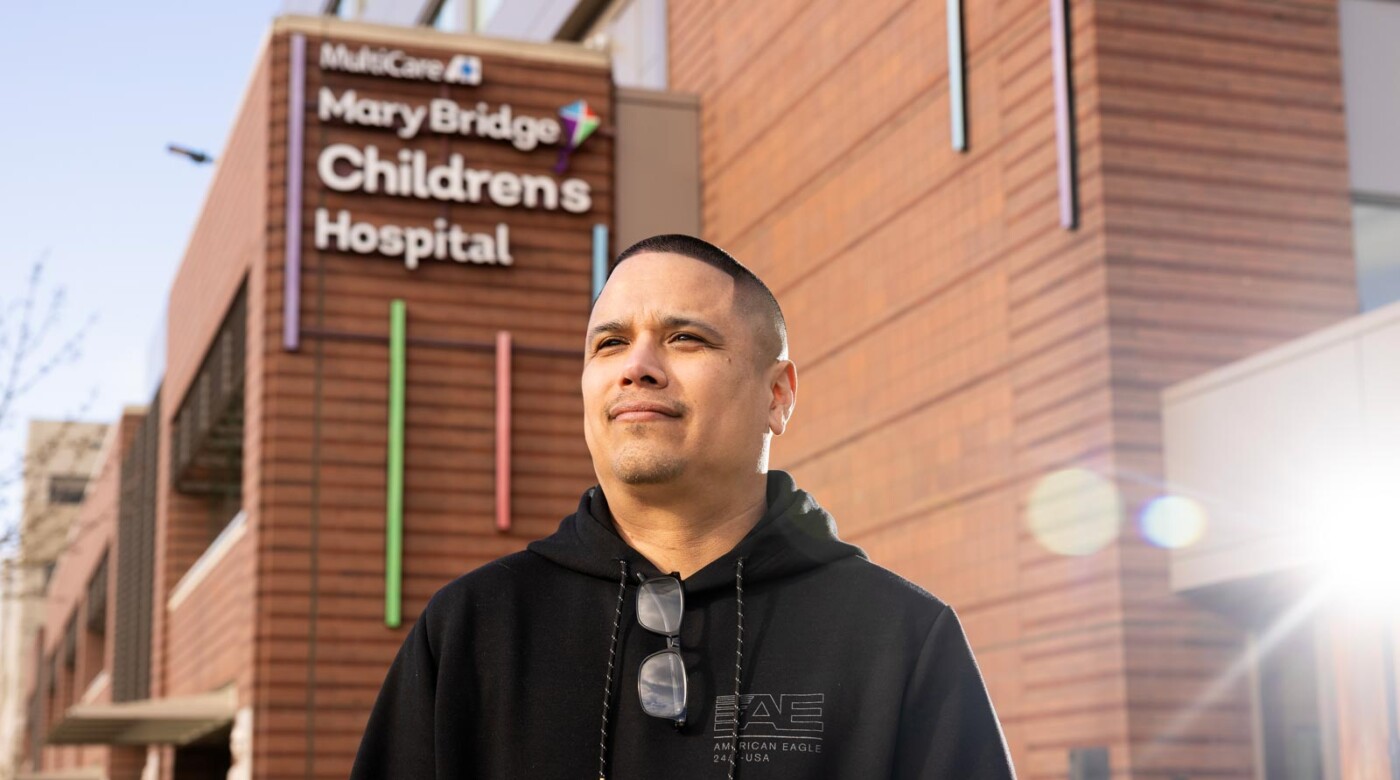
Image: BSW student Eric Canel poses outside of Mary Bridge Children’s Hospital where he is currently placed as part of his major, Thursday, April 2, 2026, at PLU. (PLU Photo / Sy Bean)
By Britt Board
Assistant Director of Communications
When asked what brought him back to school after his military career, Eric Canel ’26 remembers having clarity around his next step.
“After serving in the Army, I wanted to continue serving in a different way. Returning to school gave me the opportunity to turn my lived experience into tools that allow me to support and advocate for others.”
Service isn’t the only throughline for Eric. Two other forces shape him just as strongly: identity and community. Eric’s story is best understood through these three pillars, which have guided him from childhood to today, where he’s now paying it forward in his work with local youth.
After serving in the Army, I wanted to continue serving in a different way. Returning to school gave me the opportunity to turn my lived experience into tools that allow me to support and advocate for others.
Service — “The military taught me discipline, accountability, and the importance of teamwork.”
Eric’s path to social work started with the Army, but its influence shows up in the classroom and in his practicum just as clearly today. “I bring a strong work ethic, respect for diverse perspectives, and a mission-focused mindset to both the classroom and my practicum.”
His practicum takes place at Catholic Community Services, where Eric works directly with youth and their families to develop coping skills, emotional regulation, and self-advocacy. “It has been rewarding to build trust with youth and see them recognize their own strengths and resilience.”
Eric’s understanding of service expanded further during J-Term on the Hill, a social work course offered during January term (the month-long term between fall and spring semesters), where students learn through community support and engagement. “J-Term on the Hill showed me how policy directly impacts the communities we serve. It strengthened my commitment to advocacy and helped me see that social work happens not only in direct practice but also at the legislative level.”
Identity — “As a Native and Latine student, I am drawn to culturally grounded approaches that view healing as holistic and community-centered. I believe these methods restore identity, connection, and purpose in ways that traditional models sometimes overlook.”
Eric’s identities, along with the values he was raised with, form the foundation of his philosophy of care. “Both of my cultures emphasize community, respect, and collective healing. They guide me to approach social work with humility, cultural awareness, and a focus on relationships rather than just interventions.”
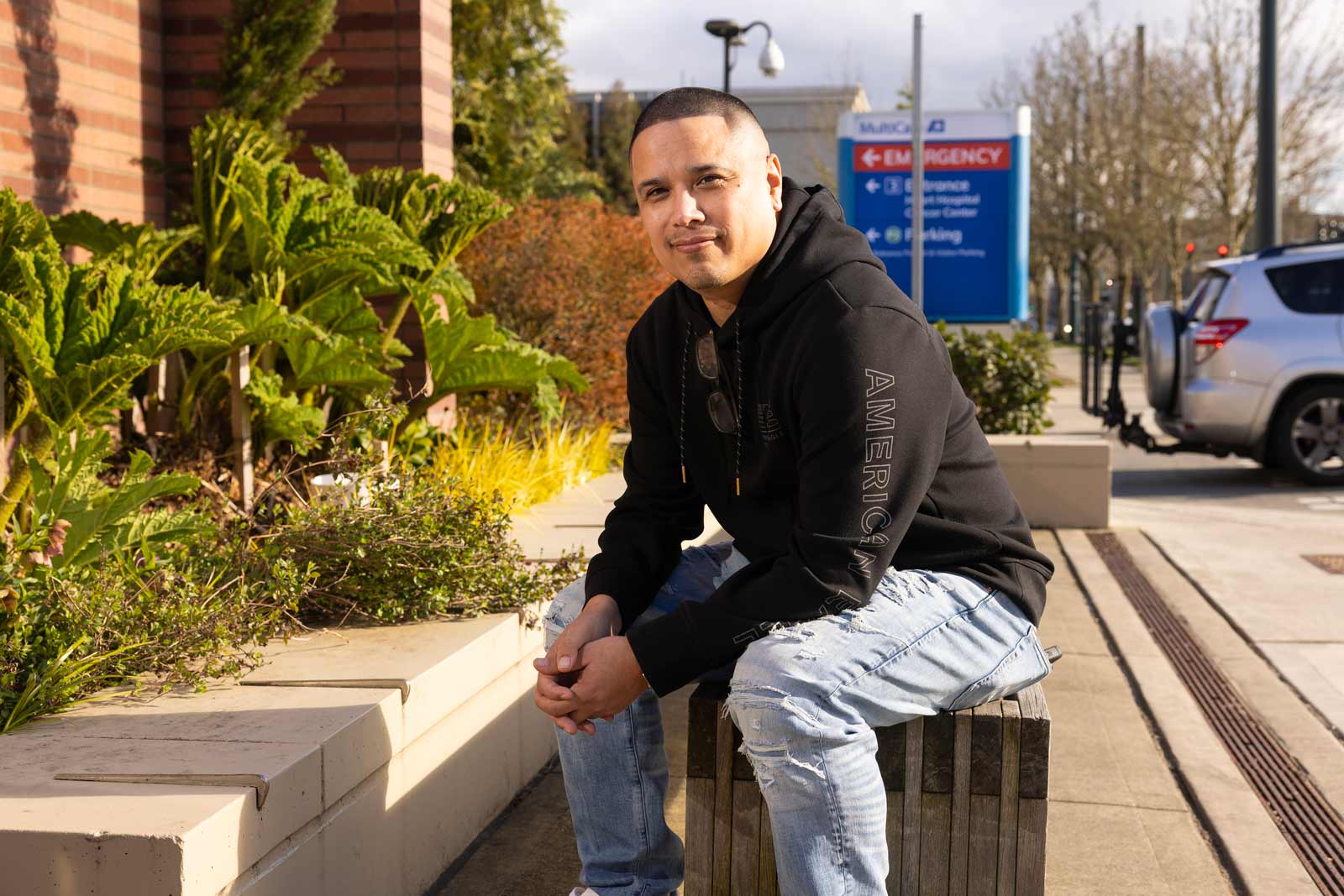
Ultimately, he hopes the next generation — especially young people with stories similar to his — will feel a sense of belonging in healing spaces. “Most importantly, I want young people to see that their experiences do not define their future.”
Community — “I enjoy spending time in the community, staying active, mentoring youth, and being with my family. I also value activities that help me stay grounded and maintain balance.”
Eric credits his family with encouraging and supporting his educational journey. “I come from a large family and was raised by a single mother who emphasized resilience and hard work. My family is very proud of my educational journey, and I balance responsibilities by staying organized, setting priorities, and remembering why I started.”
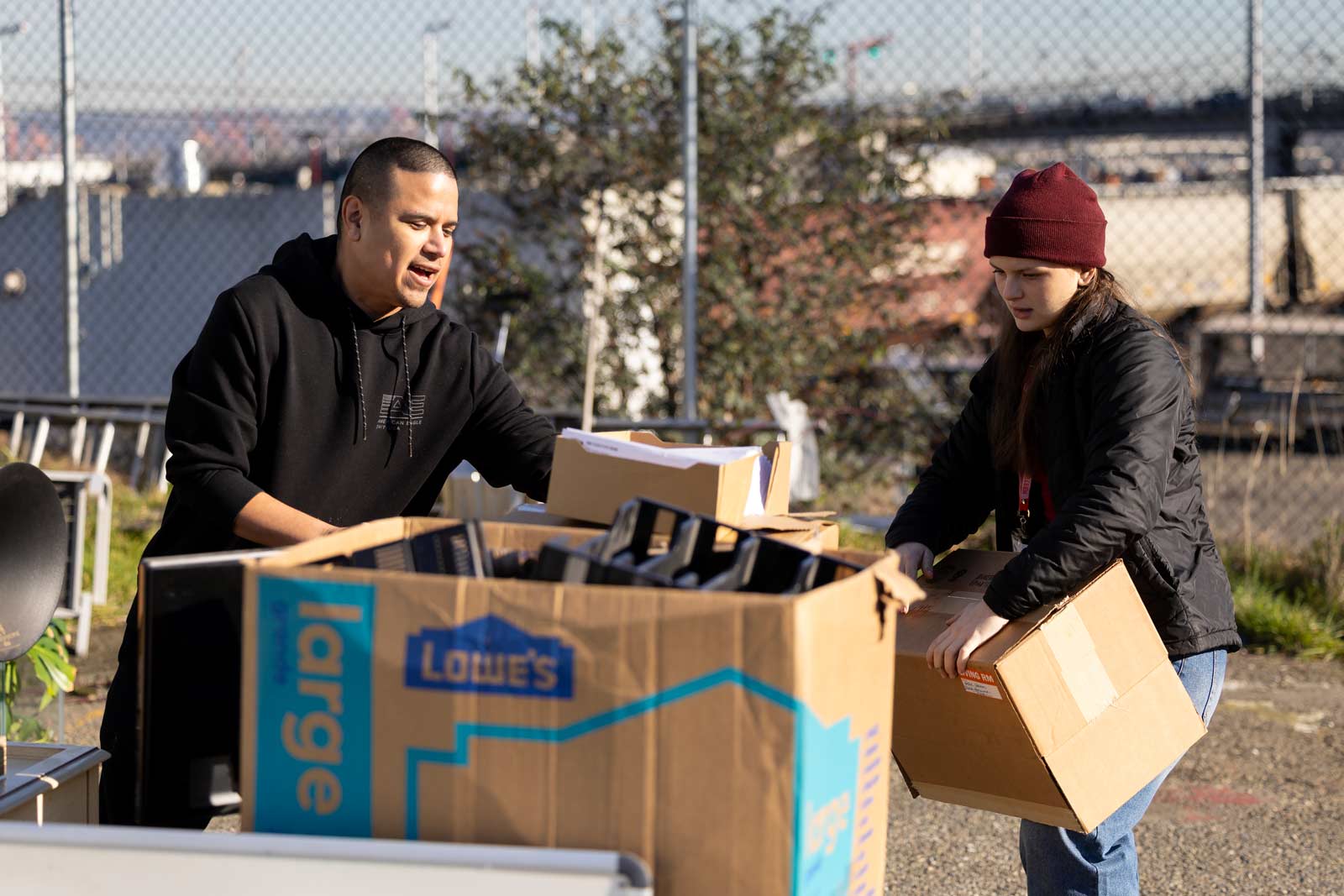
Community also drives his future work. After graduation, he plans to keep supporting youth and families while pursuing his Master of Social Work at PLU. “My long-term goal is to help develop and support culturally responsive programs that strengthen and empower my community. I hope to provide mentorship, increase access to resources, and help reduce stigma around mental health and substance use.”
For Eric, the power of his story lies in the journey itself. “My path has not been linear, but every challenge has strengthened my commitment to service. I want others to know that it is never too late to return to school and use your experiences to create positive change.”