
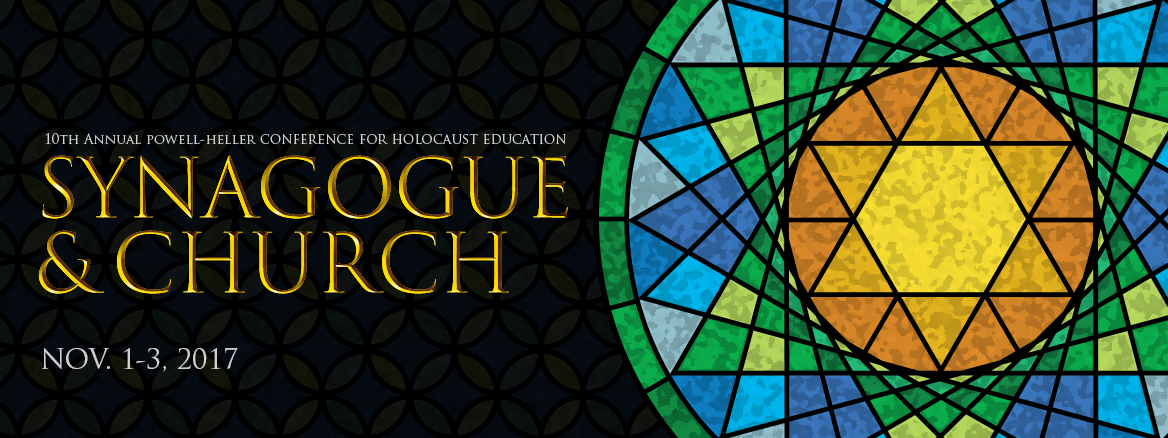
2017 Powell-Heller Conference for Holocaust Education:
“Synagogue & Church”
November 1-3, 2017
Thanks to the generosity of donors this event is free and open to the public.
The 10th annual Powell-Heller Conference for Holocaust Education “Synagogue & Church” will take place November 1-3 at Pacific Lutheran University.
The conference will dive into the controversial role of the Roman Catholic Church and its relationship to the events of the Holocaust. The speakers will present on the heated debate about the role of Pope Pius XII, examine the role of Catholic antisemitism, inaction by many Church leaders, and actions taken by those resisting the Nazis. By contrast speakers will share the courageous stories of individual Catholics who resisted, such as Bernhard Litchenberg.
The final sessions will focus on the changing nature of the Catholic Church vis a vis the Jewish people, with the aim of understanding efforts to improve Jewish-Catholic relations, providing attendees with a message of hope that antisemitism can be defeated.
PLU’s mission to support the education of our students and larger community on issues of diversity and justice are intimately connected to the study of the tragedy of the Holocaust. Students can see that marginalization of a minority group, such as the Jews of Nazi Germany, can lead to life-threatening situations culminating in one of the world’s modern genocides. Issues of distortion and denial make the process of reconciliation and healing less likely and serve as an insult to the memory of all those whose lives were destroyed in the Holocaust.
Schedule
All Times Posted are Pacific Standard (PST)
Opening Remarks – Acting President Belton
7:00 p.m. – Holy Secrets: Behind the Scenes (Scandinavian Cultural Center, Anderson University Center)
Documentary filmmaker Steve Pressman discusses his upcoming film, which will explore some of the actions (and inactions) taken by the Vatican during the Holocaust and in the years leading up to it. In particular, the film will focus on a variety of Americans – diplomatic and clerical – who attempted to influence Vatican policies during this period. Pressman will share clips from the film and take us behind the scenes as he talks about the film’s production.
Presenter:
- Steve Pressman, Documentary Filmmaker
Moderator:
- Robert P. Ericksen, Mayer Chair of Holocaust Studies, Emeritus, PLU
9:00 a.m. – Registration (Regency Room Lobby, Anderson University Center)
10:00 a.m. - 11:40 a.m. – The “Pius Wars” (Regency Room, AUC)
“Responsibility, Accountability and Judgement: Pius XII and the Holocaust” – Robert Ventresca
The so-called ‘Pius War’, that war of words over the Pope’s role during the Holocaust, has done great harm to our understanding of this major historical figure, and of the institution he governed for nearly two decades. Papal biographer Robert Ventresca provides a critical assessment of the debate, and offers a new framework for the proper historical and ethical evaluation of religious leadership during the Holocaust.
“The Holocaust and the Pope’s Dilemma” – Jacques Kornberg
Pope Pius XII presided over the Catholic Church during one of the most challenging moments in its history. Elected in 1939, Pius XII spoke out against war and destruction, but his refusal to publicly condemn Nazi Germany and its allies for mass atrocities and genocide remain controversial over seventy years after the end of the Second World War. I conclude that neither his defenders nor detractors are right.
Presenters:
- Robert Ventresca, Associate Professor of History, King’s University College at Western University in London, Ontario (Canada)
- Jacques Kornberg, Professor Emeritus, Department of History, University of Toronto
Moderator:
- Beth A. Griech-Polelle, Mayer Chair of Holocaust Studies, PLU
11:45 a.m. - 12:30 p.m. – Mayer Summer Research Fellow Presentations (Room 133, AUC)
Mayer Summer Research Fellows will offer brief overviews of their summer research projects as the conference participants enjoy box lunches.
Kurt Mayer Summer Research Fellows:
- Lottie Duren ’19, Pacific Lutheran University
- Courtney Olsen ’18, Pacific Lutheran University
- Sadie Powell ’17, Pacific Lutheran University
Moderator:
- Natalie Mayer
12:40 a.m. - 1:35 p.m. – Catholic Poets and the Holocaust (Regency Room, AUC)
“Mystics, Martyrs, and Resisters: Two French Catholic Poets of World War II and the Holocaust” – Mary Anne O’Neil (Mary Anne O’Neil’s paper will be presented by PLU student, Sophia Mahr)
Pierre Jean Jouve and Pierre Emmanuel: French Catholic Poets of the Holocaust
Catholic poets figured prominently in the intellectual resistance to the German Occupation of France. This presentation will examine the works of two French Catholic poets — Pierre Jean Jouve, and Pierre Emmanuel — written between 1939 and 1946 that address the Holocaust and explain the poet’s role as witness to the Nazi atrocities and resister. Jouve, a disciple of Freud with mystical tendencies, interprets the Shoah as the imminent Second Coming of Christ. Emmanuel becomes a member of the French Resistance and sees both the war and the Holocaust as episodes in the history of sin and redemption narrated in the Bible and re-enacted symbolically in the Catholic liturgical year. In four volumes of poetry written during the war, his thought evolves from a view of Hitler as the Anti-Christ to a concern with the rise of atheistic totalitarian regimes that seek to destroy the Judeo-Christian foundations of Western civilization. In conclusion, I would like to discuss critical reactions to this poetry both from the 1940s and today and attempt to situate these three poets in the history of poetry of mid-twentieth- century France.
I will provide brief English translations of the poems I discuss, as well as photographs of these poets in a power point.
Presenters:
- Mary Anne O’Neil, Professor of French emeritus, Whitman College, Walla Walla, Washington
- Sophia Mahr ’18, Pacific Lutheran University
Moderator:
- Rebecca Wilkin, Associate Professor of French, PLU
1:45 p.m. - 3:30 p.m. – The Question of Catholic Antisemitism (Regency Room, AUC)
“The Plight of Erna Becker-Kohen, a Catholic of Jewish Heritage in Hitler’s Germany” – Kevin P. Spicer and Martina Cucchiara
In 1931, Gustav Becker and Erna Kohen married. He was Catholic and she was Jewish. Erna and Gustav had no idea their religious affiliations, which mattered so little to them, would define their marriage under the Nazis. As one of the more than 20,000 German Jews married to an “Aryan” spouse, Erna was initially exempt from the most radical anti-Jewish measures. However, even after Erna willingly converted to Catholicism, the persecution, isolation, and hatred leveled against them by the Nazi regime and their Christian neighbors intensified, and she and their son Silvan were forced to flee alone into the mountains. Through intimate and insightful diary entries, Erna tells her own compelling and horrifying story and reflects on the fortunate escapes and terrible tragedies of her friends and family. The Nazis would exact steep payment for Erna’s survival: her home, her family, and ultimately her faithful husband’s life. The Evil That Surrounds Us reveals both the great evil of Nazi Germany and the powerful love and courage of her husband, friends, and strangers who risked everything to protect her.
“Weimar Catholics: Antisemites and Anti-Racists” – Martin Menke
Since the Wilhemine Empire, German Catholics defended Jewish rights not because of a particular affinity for the Jews of their era, but because they believed liberal democracy would respect Catholic rights if it were forced to respect all religious rights. During the years of the Weimar Republic, German Catholics all defend the rights of Jews because this defense applied to the rights of Catholics. More importantly, opposing the Nazis, German Catholics condemned racism as contrary to Catholic teaching, but did not understand Antisemitism to be racist. Thus, while German Catholics opposed Nazi racism, they continued to endorse or at least tolerate Nazi Antisemitism.
“Radical Catholic Traditionalists, the Holocaust and American Politics” – Mark Weitzman
The radical Catholic traditionalist movement in the US reflects the movements broad issues with antisemitism and religious freedom. I will trace their thought on those issues, as well as their attempts to influence American politics which have recently come under media attention.
Presenters:
- Kevin P. Spicer, the James J. Kenneally Distinguished Professor of History at Stonehill College, Easton, Massachusetts
- Martina Cucchiara, Assistant Professor of History, Bluffton University in Ohio
- Martin Menke, Professor of History and Political Science, Rivier University in Nashua, New Hampshire
- Mark Weitzman, Director of Government Affairs for the Simon Wiesenthal Center and Chief Representative of the Center to the United Nations in New York
Moderator:
- Antonios Finitsis, Associate Professor of Religion, PLU
3:45 p.m. - 5 p.m. – Resisters and Persecution (Regency Room, AUC)
“The Persecution of the Catholic Church in German-Occupied Poland.” – Jonathan Huener
With a focus on the region known as the “Reichsgau Wartheland,” this talk will discuss the diverse ways in which the Nazi occupation regime persecuted the Catholic Church in occupied Poland, the regime’s motives for these measures, the experiences and responses of the Polish clergy and laity, and the Vatican’s responses to the persecution of the Polish church.
“Bernhard Lichtenberg: Priest, Critic and Martyr of the Nazi Regime” – Brenda Gaydosh
Bernhard Lichtenberg: Priest, Critic and Martyr of the Nazi Regime is the definitive English biography of the martyred Nazi-era Berlin provost, Bernhard Lichtenberg. There is no thesis per se. The biography responds to the questions: “Why did Bernhard Lichtenberg take a path through the Nazi regime that differed from the majority of his fellow clergymen?” Why did he resist and protest Nazi measures? Why did he pray for the Jews? Vatican officials told Hermann Goering during his visit to Rome in 1931, that German bishops “had to follow their consciences and their religious convictions.” This seemed to be the Vatican’s expectations during the Third Reich. Bernhard Lichtenberg offered no criticism for papal inaction (the Pius debates), but simply followed his conscience. In hindsight, many criticize the Pope. Lichtenberg, however, who experienced the dire situations first hand, continued to look to the Pope as his Christian leader.
Presenters:
- Jonathan Huener, Associate Professor of History at the University of Vermont
- Brenda Gaydosh, Associate Professor of History at West Chester University of Pennsylvania
Moderator:
- Kirsten Christensen, Professor of German and Director of Holocaust and Genocide Studies Program, PLU
5:00 p.m. - 6:45 p.m. – Dinner Break (Scandinavian Center, AUC)
For those that have pre-registered, a reception with light fare will be in the Scandinavian Cultural Center
7 p.m. – Keynote Speaker: John F. Connelly (Regency Room, AUC)
“How the Catholic Church overcame its own Theology and Proclaimed that God loves Jews” – John Connelly
God loves the Jewish people. That is what the bishops of Vatican II proclaimed in 1965. Yet these words contradicted what the Church had taught about Jews for over a millennium. How was a revolution in teaching possible in a church that abhors change?
According to J. Connelly, it grew out of the Church’s encounter with the evil of Nazi racism. The theologians who advised the bishops in the 1960s began their careers by opposing Hitler in the 1930s. Many of them were converts from Judaism, and themselves targets of anti-Semitism. Yet for them the Church’s new teaching about Jews was not a revolution; it was a return to the ideas of the Jewish thinker Saul of Tarsus, known to Catholics as Saint Paul the Apostle. Far from a revolution, the new teaching of Vatican II was a return to the Church’s origins.
Presenter:
- John F. Connelly, Professor of History at the University of California at Berkley
Moderator:
- Christopher R. Browning, Frank Porter Graham Professor Emeritus, University of North Carolina-Chapel Hill
8:15 p.m. – Dessert Reception (Regency Room Lobby, AUC)
8:30 a.m. – Registration (Regency Room Lobby, Anderson University Center)
9:00 a.m. - 10:15 a.m. – Post-Holocaust Theology and the Jews (Regency Room, AUC)
“Political Correctness or revolution? Theological consequences of the post Vatican II Council theology of Judaism in the Polish context” – Zuzanna Radzik
“The Construction of Holocaust Memory in the Post-Conciliar Church” – Karma Ben Johanan
This lecture concentrates on the ways in which the Catholic discourse on the Holocaust functioned in the construction of the Church’s post-bellum identity and in the re-forging of Jewish-Christian relations from the Second Vatican Council to the present. In particular, Karma Ben Johnanan will consider the theological tension which the negotiation on the nature of Holocaust memory generated among Catholic leaders and theologians and between Catholics and Jews. Focusing on Popes John Paul II’s and Benedict XVI’s pontificates, Ben Johnanan will address the transition of Catholic Holocaust memory from a theological realm centered around Christ’s suffering to a moral-historical realm debating the Church’s responsibility for the destruction of European Jewry. In other words, Ben Johnanan will follow a process during which the Holocaust had ceased to be perceived as “a Christian event” and became a “Jewish event”, albeit one that has consequences for Christians.
Presenters:
- Zuzanna Radzik, Catholic theologian specializing in Christian-Jewish relations and feminist theology
- Karma Ben Johanan, post-doctoral scholar at the Polonsky Academy at the Van Leer Jerusalem Institute
Moderator:
- Marit A. Trelstad, Chair of Lutheran Studies and Professor of Constructive and Lutheran Theologies at PLU
10:30 a.m. - 12:15 p.m. – Legacies of the Holocaust in Jewish-Christian Relations (Regency Room, AUC)
“Invoking an Absent Past: The Holocaust in Catholic Responses to Contemporary Debates over Immigrants ,Refugees, and the Rise of Anti-Semitism” – Raymond C. Sun
Church leaders in the United States and Europe have responded to contentious contemporary debates over issues of immigration, refugees, and the rise of anti-Semitic hate crimes by strongly calling for Catholics to practice the virtues of love, mercy, and compassion regardless of race or religion. However, references to the Holocaust, while common in popular media analyses and advocacy as a compelling historical comparison and call to action, are largely absent from official Catholic statements. This presentation analyzes the rhetoric, symbolism, and historical precedents employed by church leaders in urging Catholics to oppose the persecution or exclusion of targeted groups, explores possible reasons for the absence of direct references to the Holocaust, and ponders the implications of this for Catholic memory of the Holocaust.
“‘The Restoration of Jewish Faith in the D.P. Camps” – Gershon Greenberg
The revival of Judaism in the German D.P. camps began with the question: “Why was I still alive?” The survivors’ answer was, in order to study Torah – which in turn nourished life. Torah found sacramental expression in religious practice (Sabbath; ethnicity; festivals) and thought (Hasidic, Da’at torah, religious-national). Insofar as sacramental existence was drawn simultaneously from the sacred above and the profane below, how, given its obliteration during the Holocaust, could its revival have been initiated solely from below? The fact that it was revived necessitates the conclusion that somehow, some way, sacramental existence never totally disappeared, even during the catastrophe.
Presenters:
- Raymond C. Sun, Associate Professor of History at Washington State University (Pullman)
- Gershon Greenberg, Visiting professor of Jewish thought at Hebrew University of Jerusalem and professor of philosophy and religion at American University in Washington, D.C.
Moderator:
- Bruce Kadden, Rabbi of Temple Beth El in Tacoma, Lecturer in Judaism, PLU
12:30 - 2:00 p.m. – ``Madame Celine Morali and daughter Simone, Holocaust Rescuers`` - Marie-Anne Harkness (Chris Knutzen Room, AUC)
Marie-Anne Harkness’s presentation will focus on the role of Catholic family members and others who rescued Jews in France.
Claude Zenatti was a Jewish teen smuggled out of Paris to the Free Zone in January 1942 by Celine Morali. He and his family were then sheltered near Albi under the supervision and encouragement of Msg. Joseph Moussaron, Bishop of Albi. Madame Morali was the first in a line of four Catholic rescuers honored by Yad Vashem in Israel, as Righteous Among the Nations for their part in saving the Zenatti family. Hear the story of Celine Morali told by her granddaughter.
Presenter:
- Marie-Anne Harkness, Granddaughter of Celine, Holocaust Center for Humanity, Seattle, WA
Moderator:
- Dee Simon, Director, Holocaust Center for Humanity, Seattle, WA
Keynote Speaker
``How the Catholic Church overcame its own Theology and Proclaimed that God loves Jews``
John F. Connelly
7:00 p.m. – Keynote: “How the Catholic Church overcame its own Theology and Proclaimed that God loves Jews” (Regency Room, AUC)
John Connelly, professor of history at the University of California at Berkley, is currently the director of the Institute for East European, Eurasian and Slavic Studies. He earned his BSFS from Georgetown University, MA in Russian and East European Studies from the University of Michigan and his Ph.D. from Harvard University.
Connelly has published Captive University: The Sovietization of East German, Czech and Polish Higher Education (Chapel Hill, 2000), which won the 2001 George Beer Award of the American Historical Association, and From Enemy to Brother: The Revolution in Catholic Teaching on the Jews (Harvard University Press, 2012), which was awarded the John Gilmary Shea prize of the American Catholic Historical Association.
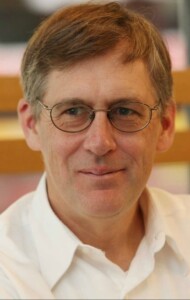
He is currently working on a history of East Central Europe, 1784-present, due to appear with Princeton University Press. Other work of his has appeared in Minerva, East European Politics and Societies, Geschichte und Gesellschaft, The Journal of Modern History, Slavic Review, The Nation, the London Review of Books, Znak (Krakow) and Commonweal.
His research has been supported by the American Council of Learned Societies, the Spencer Foundation, the German Marshall Fund, the Institute for Advanced Study (Princeton), Fulbright-Hayes, and the International Research and Exchanges Board. He is on the editorial boards of Zeitschrift für Ostmitteleuropaforschung, Slavic Review, and the Journal of Modern History, as well as the Kuratorium of the Imre Kertesz Kolleg in Jena.
Speakers
Wednesday, November 1
Presentation Title:
“Holy Secrets: Behind the Scenes”
Who:
Steve Pressman, documentary filmmaker
Bio:
Steven Pressman was born and raised in Los Angeles and received an undergraduate degree in political science at the University of California at Berkeley. He worked for many years as a newspaper and magazine journalist in Los Angeles, Washington, D.C. and San Francisco.
He is the writer, director and producer of 50 Children: The Rescue Mission of Mr. and Mrs. Kraus, a documentary film that premiered on HBO in April 2013 and was nominated for an Emmy in the category of Outstanding Historical Programming. Along with television broadcasts the film has been shown at film festivals, synagogues, Jewish Community Centers, Embassies and other venues throughout the United States and abroad.
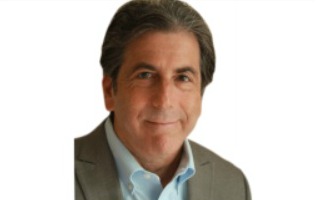
Steve is also the author of 50 Children: One ordinary American Couple’s Extraordinary Rescue Mission in the Heart of Nazi Germany (HarperCollins, 2014)
Moderator:
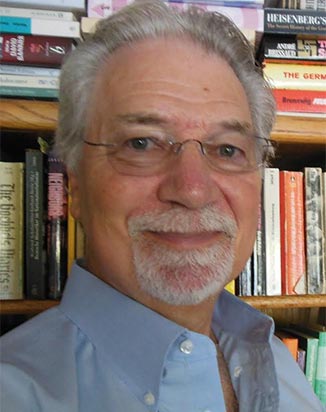
Robert P. Ericksen, Kurt Mayer Chair in Holocaust Studies (emeritus)
Bio:
Robert P. Ericksen is the author of Complicity in the Holocaust: Churches and Universities in Nazi Germany (Cambridge, 2012) and Theologians under Hitler (Yale, 1985), which appeared in German, Dutch, and Japanese translation and was turned into a documentary film of the same name (Vitalvisuals.com, 2005). He is co-editor with Susannah Heschel of Betrayal: German Churches and the Holocaust (Fortress, 1999) and has served on the Board of Editors of Kirchliche Zeitgeschichte since this journal was founded in 1988. He also is Chair of the Committee on Ethics, Religion and the Holocaust at the U.S. Holocaust Memorial Museum.
Thursday, November 2
Presentation Title:
“Responsibility, Accountability and Judgement: Pius XII and the Holocaust”
Who:
Robert Ventresca, associate professor of history, King’s University College at Western University in London, Ontario (Canada)
Bio:
Robert Ventresca is an associate professor of history at King’s University College at Western University in London, Ontario (Canada), and the author most recently of Soldier of Christ: The Life of Pope Pius XII (Harvard University Press, 2013), which was awarded the American Catholic Historical Association’s 2014 Koenig Prize for Catholic biography.
He is also the author of From Fascism to Democracy: Culture and Politics in the Italian Election of 1948 (Toronto, 2004), which received an honorable mention for the Canadian Historical Association’s Wallace K. Ferguson Prize.
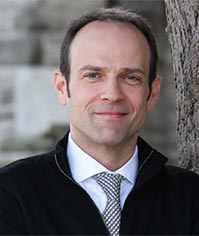
Ventresca’s research and teaching explore the role of religion in European fascism, as well as religious involvement in the Holocaust with a special focus on the Catholic Church. He was a founding member and inaugural co-chair of the former Center for Catholic-Jewish Learning at King’s University College at Western University. Ventresca has also been named a member of The Royal Society of Canada’s College of New Scholars, Artists and Scientists.
Presentation Title:
The Holocaust and the Pope’s Dilemma
Who:
Jacques Kornberg, Professor Emeritus, Department of History, University of Toronto
Bio:
Kornberg earned his his B.A. from Brandeis and his Ph.D. from Harvard. His research interests include intellectual history, modern European Jewish history, antisemitism and Holocaust studies.
He established the Kornberg-Jezierski Family Memorial Essay Prize in Holocaust Studies with restitution money from the Belgian occupation, 1940-45. The gift was made in memory of the family members who perished in the genocide of European Jews.
Moderator:
Beth Griech-Polelle, The Kurt Mayer Chair in Holocaust Studies, PLU
Bio:
Beth A. Griech-Polelle, the Kurt Mayer Chair of Holocaust Studies, earned her bachelor’s degree at Chestnut Hill College, Philadelphia, Pennsylvania and her M.A. and Ph.D. at Rutgers, the State University of New Jersey. Her doctoral advisor was Professor Omer Bartov. She is the author of Bishop von Galen: German Catholicism and National Socialism (Yale University Press, 2002).
She is the co-editor with Dr. Christina Guenther of the book, Trajectories of Memory: Intergenerational Representations of the Holocaust in History and the Arts (Cambridge Scholars Press, 2008) and she is the editor of The Nuremberg Trials and Their Policy Consequences Today (NOMOS Verlag, Baden-Baden, Germany, 2008). In addition, she is the author of many chapters in books and numerous book reviews. She is currently under contract with Bloomsbury Academic Press, London, UK to write a textbook on antisemitism and the Holocaust.
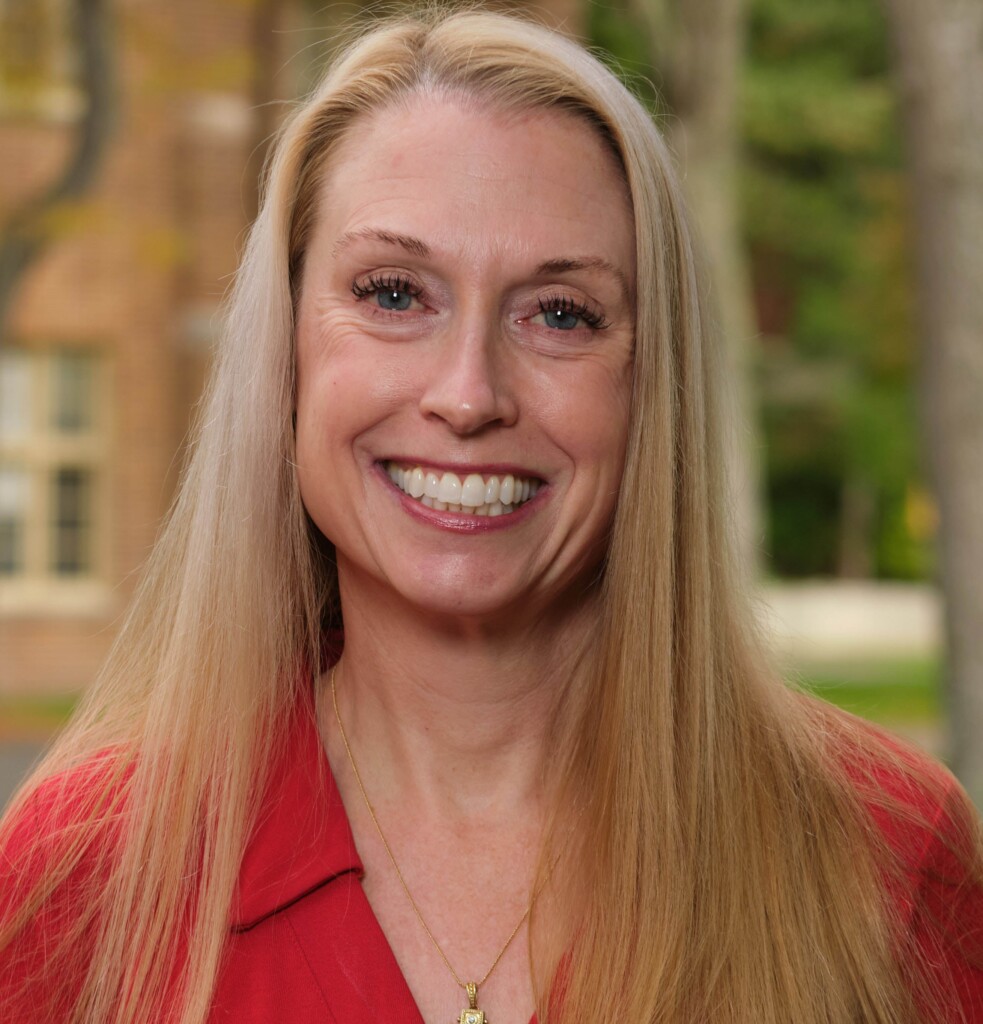
She has presented papers at conferences all over the world, including at Yad Vashem, Jerusalem, Israel, the Belgian Academy of Rome, Rome, Italy, and The German Historical Institute in London, UK. She has participated in scholars’ workshops and seminars at the United States Holocaust Memorial Museum and has given lectures in various venues including the Toronto Holocaust Education Week and at many synagogues. She is dedicated to educating the general public and has given lectures at historical societies, local high schools and junior highs, and at professional days for public school teachers. In addition to her public speaking, Dr. Griech-Polelle is an editor of the online journal, Contemporary Church History Quarterly and she is currently serving as guest editor of the Journal of Jesuit Studies special edition on Jesuits and communism.
Presentation Title:
Mayer Summer Research Fellow Presentation
Who:
Lottie Duran ’19
Majors: Politics & Government, Women’s & Gender Studies
Minor: Holocaust & Genocide Studies
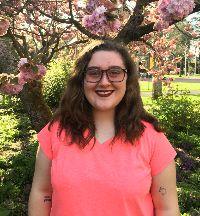
Presentation Title:
Mayer Summer Research Fellow Presentation
Who:
Courtney Olsen ’18
Majors: History and Economics
Minors: Norwegian and Religion
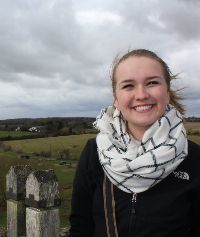
Presentation Title:
Mayer Summer Research Fellow Presentation
Who:
Sadie Powell ’17
Major: History
Minor: Norwegian
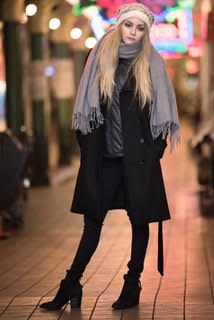
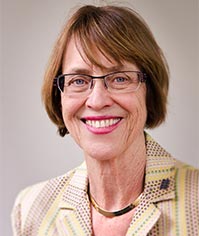
Presentation Title:
“Mystics, Martyrs, and Resisters: Three French Catholic Poets of World War II and the Holocaust
Who:
Mary Anne O’Neil, professor of French emeritus, Whitman College, Walla Walla, Wash.
Bio:
Mary Anne O’Neil is a professor of French emeritus from Whitman College in Walla Walla, Wash., where she taught Spanish and French language, French literature, and general studies for more than 30 years. Her main interests are 20th century French poetry, especially religious poetry, and the 19th century French novel. Her book on the mid-century Catholic poet, Pierre Emmanuel, entitled From Babel to Pentecost: The Poetry of Pierre Emmanuel (McGill-Queens University Press, 2012).
Presentation Title:
“Mystics, Martyrs, and Resisters: Two French Catholic Poets of World War II and the Holocaust” – Mary Anne O’Neil (Mary Anne O’Neil’s paper will be presented by PLU student, Sophia Mahr)
Who:
Sophia Mahr ’18, Pacific Lutheran University
Bio:
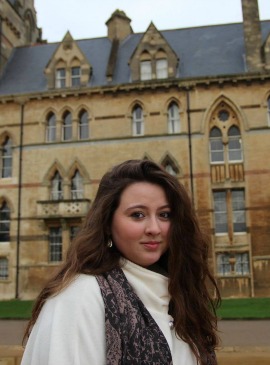
Sophia Mahr is a senior at Pacific Lutheran University majoring in Global Studies with concentrations in Development, Social Justice, and Transnationalism. Sophia is also pursuing minors in French & Holocaust and Genocide Studies. With a passion for traveling, she has studied abroad in Germany with the Kurt Mayer family, at the University of Oxford in England to research Forced Migration Studies, and will be going to Rwanda in 2018 as part of the Holocaust and Genocide Studies program. At PLU, Sophia works for the Global Studies program, the Office of Admission as a tour guide and intern, and the Office of the President as a Gonyea Fellow. In her free time, she hangs out with her dog and cross stitches. This past summer, she worked at a refugee resettlement agency in Minneapolis providing immigration support. Sophia plans to continue her passion for international learning and refugee advocacy through a service program after graduation.
Moderator:
Rebecca Wilkin, Associate Professor of French, PLU
Bio:
Professor Wilkin specializes in intellectual history in early modern France–skepticism, stoicism, Descartes and Cartesianism–from the standpoint of feminist criticism. She also works on Counter-Reformation culture: mysticism, demonology, and missionary encounters with the native peoples of North America. She teaches francophone literature from Europe, North America, and Africa.
Presentation Title:
“The Plight of Erna Becker-Kohen, a Catholic of Jewish Heritage in Hitler’s Germany”
Who:
Kevin P. Spicer, James J. Kenneally Distinguished Professor of History at Stonehill College, Easton, Massachusetts
Bio:
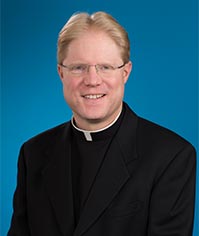
Kevin P. Spicer, C.S.C., Ph.D., is the James J. Kenneally Distinguished Professor of History at Stonehill College, Easton, Massachusetts.
Spicer’s research centers on the relationship between the Roman Catholic Church and the German state under National Socialism. Currently, he is working on a study concerning the relationship of Jews and Catholics in Germany from 1933 to 1945.
In 2017, Indiana University Press will publish, The Evil that Surrounds Us: The World War II Memoir of Erna Becker-Kohen, which Spicer and Martina Cucchiara translated and edited together. Spicer is also the author of Hitler’s Priests: Catholic Clergy and National Socialism (North Illinois University Press, 2008) and Resisting the Third Reich: The Catholic Clergy in Hitler’s Berlin (North Illinois University Press, 2004) and editor of Antisemitism, Christian Ambivalence, and the Holocaust (Indiana University Press, 2007).
His writing has appeared in both edited collections and in academic journals including Church History, Historisches Jahrbuch, and Holocaust and Genocide Studies. Spicer is co-editor of Studies in Christian-Jewish Relations, the academic journal of the Council of Centers on Jewish-Christian Relations, a member of the Holocaust Educational Foundation’s Academic Advisory Council, and a Catholic priest of the Congregation of Holy Cross.
Presentation Title:
“The Plight of Erna Becker-Kohen, a Catholic of Jewish Heritage in Hitler’s Germany”
Who:
Martina Cucchiara, Assistant Professor of History, Bluffton University in Ohio
Bio:
Martina Cucchiara is an assistant professor of history at Bluffton University in Bluffton, Ohio, where she teaches courses in European History, the Holocaust, Nazi Germany, and World War II. She has been awarded an Eli Lilly Presidential Fellowship at the University of Notre Dame as well as a Charles H. Revson Foundation Fellowship at the United States Holocaust Memorial Museum in Washington, D.C.
She has published articles on Catholic sisters Nazi Germany in European History Quarterly and the latest volume of Lessons and Legacies edited by Wendy Lower and Lauren Faulkner.
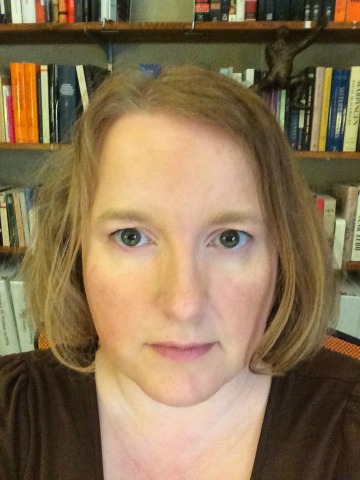
She is also the co-editor and translator with Kevin Spicer of the annotated diary of The Evil That Surrounds Us: The WWII Memoir of Erna Becker-Kohen (Indiana University Press, 2017). Martina Cucchiara currently is completing a manuscript for publication that focuses on Catholic sisters in Nazi Germany.
Presentation Title:
“Weimar Catholics: Anti-Semites and Anti-Racists”
Who:
Martin Menke, professor of history and political science at Rivier University in Nashua, New Hampshire
Bio:
Martin Menke is a historian of twentieth-century German political Catholicism. He earned his doctorate at Boston College in 1996. Menke is professor of history and political science at Rivier University in Nashua, New Hampshire, where he also serves as Chair of the Department of History, Political Science and Criminal Justice.
Menke serves on the executive committee of the American Catholic Historical Association and as Executive Secretary of the New England Historical Association. Menke has published in The Catholic Historical Review, Kirchliche Zeitgeschichte, and Journal of Church and State. Most recently, he has published “Multiple Caesars? Germany, Bavaria, and German Catholics in the Interwar Period” in Beyond the Borders of Baptism: Catholicity, Allegiances, and Lived Identities, edited by Michael L. Budde (Cascade Books, 2016).
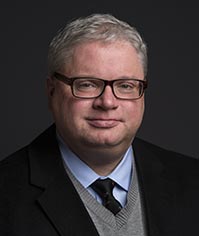
He is completing an article on the Center Party Leader Monsignor Ludwig Kaas and is writing a manuscript on the German Center Party, 1917-1933.
Presentation Title:
“Radical Catholic Traditionalists, the Holocaust and American Politics”
Who:
Mark Weitzman, Director of Government Affairs for the Simon Wiesenthal Center and Chief Representative of the Center to the United Nations in New York
Bio:
Mark Weitzman is Director of Government Affairs for the Simon Wiesenthal Center and is also Chief Representative of the Center to the United Nations in New York. Mr. Weitzman is a member of the official US delegation to the International Holocaust Remembrance Authority (IHRA) where he chairs the Committee on Antisemitism and Holocaust Denial. He spearheaded IHRA’s recent adoption of the Working Definition of Antisemitism which is the first definition of antisemitism with any formal status, and also was the lead author of IHRA’s Working Definition of Holocaust Denial and Distortion which was adopted as well by the 31 member countries of IHRA. He is a member of the advisory panel of Experts on Freedom of Religion or Belief of the Organization for Security and Co-operation in Europe (OSCE), and co-chairs the Working Group on International Affairs of the Global Forum on Antisemitism.
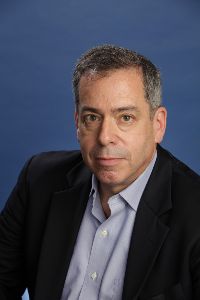
Currently Mr. Weitzman is also a participant in the program on Religion and Foreign Policy of the Council on Foreign Relations. He is also a board member and former Vice-President of the Association of Holocaust Organizations and was member of the advisory board of the Institute for the Study of Global Antisemitism and Policy at Yale University as well as a longtime member of the official Jewish-Catholic Dialogue Group of New York.
Mr. Weitzman is a winner of the 2007 National Jewish Book Award for best anthology for Antisemitism, the Generic Hatred: Essays in Memory of Simon Wiesenthal which he co-edited and contributed to and which has appeared in French, Spanish and Russian editions. Forthcoming is his Introduction to the Russian edition of Jan and Irena Gross’ Golden Harvest. His Jews and Judaism in the Political Theology of Radical Catholic Traditionalists was published by the Vidal Sassoon Center for the Study of Antisemitism at the Hebrew University (2015) and his chapters “Every Sane Thinker Must Be an Anti-Semite”: Antisemitism and Holocaust Denial in the Theology of Radical Catholic Traditionalists appeared in the volume Antisemitism Before and Since the Holocaust: Altered Contexts and Recent Perspectives (2017, edited by Anthony McElligott and Jeffrey Herf) and “ Antisemitism and the Radical Catholic Traditionalist Movement” in the volume Deciphering the “New” Antisemitism, (2015, edited by Alvin Rosenfeld). Other publications include the chapters “Magical Logic: Globalization, Conspiracy Theory and the Shoah”, which appeared in the 2012 volume Holocaust Denial: the Politics of Perfidy, edited by Robert Wistrich (an earlier version was published by the Vidal Sassoon Center for the Study of Antisemitism at the Hebrew University in 2009) and “Antisemitism and Terrorism on the Electronic Highway” which appeared in the book Terrorism and the Internet: Threats — Target Groups — Deradicalisation Strategies (IOS Press for NATO, 2010). Mr. Weitzman also co-edited Strategies in Facing Antisemitism: An Educational Resource Guide, a joint publication of the Simon Wiesenthal Center and Yad Vashem which was published in 2009. A frequent commentator on issues related to antisemitism, extremism and tolerance, Mr. Weitzman has appeared on television (Charlie Rose, Rachel Maddow, Keith Olbermann and the History Channel) as well as in newspapers (The New York Times, Washington Post, Washington Times, Jerusalem Post, Times of Israel, The Jewish Week and The Forward).
Mr. Weitzman has testified in Congress, met with world leaders including UN Secretary-Generals Kofi Annan, Ban Ki-moon and Antonio Guterres and been a featured speaker at three UN conferences on antisemitism and extremism. He was also one of the Jewish leaders to meet with Popes Benedict and Francis on their US visits.
Dismantling the Big Lie: the Protocols of the Elders of Zion, which he co-authored with Steven L. Jacobs, the first full refutation of the infamous Protocols, was published in 2003 and has been translated into Arabic and Japanese with a Turkish edition forthcoming. His chapter “Antisemitismus und Holocaust-Leugnung : permanente Elemente des globalen Rechtsextremismus – Antisemitism (Antisemitismand Holocaust Denial: Permanent Elements of Global Right-wing Extremism”) was published in the volume Globalisierter Rechtsextremismus?: Die extremische Rechte in der Ara der Globalisierung (Globalized Right-wing Extremism: Right-wing Extremism in an Era of Globalization – 2006) and the chapter “The Transmigration of Antisemitism: Old Myths; New Realities”, appeared in the volume Not Your Father’s Antisemitism: the Hatred of Jews in the Early 21st Century, (2008). He also was a contributor to the Encyclopedia of Genocide and Crimes Against Humanity (2004) and has overseen the Wiesenthal Center’s annual electronic report, Digital Hate and Terrorism (2000-2017). Other publications include editing and contributing to The New Lexicon of Hate (3rd edition, 2004) and the textbook The Holocaust: Historical Case Studies (1996). In 1987 he was on the board of advisors for the companion guide for the film Shoah.
He has been recognized for his work by the US Army, the Negro Leagues Baseball Museum and also served as the Historical Advisor to the Marvel Comics graphic novel “X-Men: Magneto Testament”.
Moderator:
Antonios Finitsis, Associate Professor of Hebrew Bible, PLU
Bio:
Antonios Finitsis’ professional interests and approach are deeply socio-historical. He has always found the intersection between religion and politics fascinating. Since Judeo-Christian religion was shaped under powerful empires, part of his research revolves around the impact of colonial interests and power structures in the development of religious ideas. Human relationships are another favorite topic of Dr. Finitsis, particularly, when these relationships are seen through the lens of the human-divine contact and in the context of spirituality.
Presentation Title:
“The Persecution of the Catholic Church in German-Occupied Poland.”
Who:
Jonathan Huener, Associate Professor of History at the University of Vermont
Bio:
Jonathan Huener is associate professor of history at the University of Vermont, where he teaches courses on the history of the Holocaust, Poland, Germany, and modern Europe.
His research has focused on public memory in post-World War II Germany and Poland, Polish-Jewish relations, the German occupation of Poland, and Auschwitz. He is author of Auschwitz, Poland, and the Politics of Commemoration, 1945-1979 (Athens: Ohio University Press, 2003), which was awarded the Orbis Books Prize in Polish Studies from the American Association for the Advancement of Slavic Studies and was a finalist for the Pro Historia Polonorum award of the Polskie Towarszystwo Historyczne (Polish Historical Association) for the best foreign-language book in Polish history.
In addition, he is co-editor, with Francis R. Nicosia, of Medicine and Medical Ethics in Nazi Germany: Origins, Practices, Legacies, Business and Industry in Nazi Germany, and The Arts in Nazi Germany: Continuity, Conformity, Change. He is currently completing a book on Polish Catholicism and the Polish Roman Catholic Church under German occupation, to be published by Indiana University Press.
Presentation Title:
“Bernhard Lichtenberg: Priest, Critic and Martyr of the Nazi Regime”
Who:
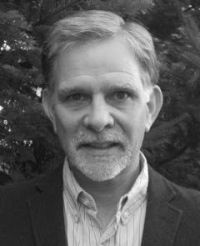
Brenda Gaydosh, associate professor of history, West Chester University of Pennsylvania
Bio:
Brenda Gaydosh earned a B.S. degree in mathematics in 1980 and worked as an actuarial analyst for 15 years. She returned to school in 1996, earning her M.A. in history from West Chester University (1999) and Ph.D. in history from American University (2010). She is currently a professor of history at West Chester University in West Chester, Pennsylvania, teaching courses in European history, German history and Genocide. Bernhard Lichtenberg: Catholic Priest and Martyr of the Nazi Regime is her first major publication.
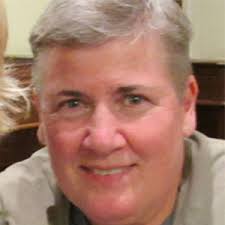
Moderator:
Kirsten M. Christensen, Professor of German and Director of Holocaust and Genocide Studies Program
Bio:
Kirsten M. Christensen earned her Ph.D. in Germanic Studies, with an emphasis on medieval and early modern literature and culture, from the University of Texas at Austin in 1998. Her research has focused on writings by medieval women mystics. In particular, she explores the often fraught relationships between women mystics and their male contemporaries to understand the ways gender relations impacted women’s theologies and religious communities.
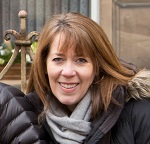
Professor Christensen’s teaching interests include not only medieval and early modern literature, but also East German and post-Unification literature and film, and language pedagogy. Before coming to PLU, she taught at Mount Holyoke College and the University of Notre Dame. She is delighted to be part of PLU’s German program, which is large enough to offer a robust variety of courses to its majors, yet small enough to allow close collaboration and exploration between students and faculty. She is particularly grateful to be able to teach language and culture at PLU, whose commitment to global awareness and citizenship provides a deeply supportive environment for language students and faculty. ~Prism 2006
Moderator:
Christopher R. Browning, Frank Porter Graham Professor Emeritus, University of North Carolina-Chapel Hill
Bio:
Christopher R. Browning was the Frank Porter Graham Professor of History at the University of North Carolina-Chapel Hill until his retirement in May 2014. Before taking up this position in the fall of 1999, he taught for 25 years at Pacific Lutheran University in Tacoma, Washington.
Browning received his B.A. degree from Oberlin College in 1967 and his M.A. and Ph.D. from the University of Wisconsin-Madison in 1968 and 1975 respectively. He is the author of eight books: The Final Solution and the German Foreign Office (1978), Fateful Months: Essays on the Emergence of the Final Solution (1985), Ordinary Men: Police Battalion 101 and the Final Solution in Poland (1992), The Path to Genocide (1992), Nazi Policy, Jewish Workers, German Killers (2000), Collected Memories: Holocaust History and Postwar Testimony (2003), and The Origins of the Final Solution: The Evolution of Nazi Jewish Policy, September 1939-March 1942 (2004), and Remembering Survival. Inside a Nazi Slave Labor Camp (2010). He is also co-editor of Every Day Lasts a Year: A Jewish Family’s Correspondence from Poland (2007).
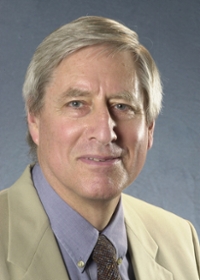
Browning has served as the J. B. and Maurice Shapiro Senior Scholar (1996) and Ina Levine Senior Scholar (2002-3) at the U.S. Holocaust Memorial Museum. He has been a fellow of the Institutes for Advanced Studies in Princeton, New Jersey, and on the campus of the Hebrew University of Jerusalem. He has also received Fulbright, Alexander von Humboldt, DAAD, and Woodrow Wilson Foundation fellowships. He has delivered the George Macaulay Trevelyan Lectures at Cambridge University (1999) and the George L. Mosse Lectures at the University of Wisconsin-Madison (2002), as well as the lectures of the Bertelsmann Visiting Professorship at Mansfield College, Oxford University (2007). He is a three-time recipient of the Jewish National Book Award—Holocaust Category, for Ordinary Men, The Origins of the Final Solution, and Remembering Survival. For this last book he is also a recipient of the Yad Vashem International Book Prize for Holocaust Research. He was named a fellow of the American Academy of Arts and Sciences in 2006.
Browning has served as an expert witness in “war crimes” trials in Australia, Canada, and Great Britain. He has also served as an expert witness in two “Holocaust denial” cases: the second Zündel trial in Toronto in 1988 and in David Irving’s libel suit against Deborah Libstadt in London in 2000.
Friday, November 3
Presentation Title:
“Political correctness or revolution? Theological consequences of the post-II Vatican Council theology of judaism in the Polish context.”
Who:
Zuzanna Radzik, Catholic theologian specializing in Christian-Jewish relations and feminist theology
Bio:
Zuzanna Radzik is a Catholic theologian specializing in Christian-Jewish relations and feminist theology. Graduate of Hebrew University in Jerusalem and Pontifical Faculty of Theology in Warsaw where she received her M.A and S.T.L. In 2015 published a book Kościół kobiet (Women Church). She is an Executive Board Member at the Forum for Dialogue.
Presentation Title:
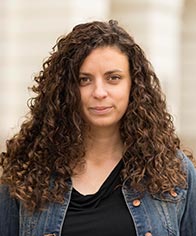
“The Construction of Holocaust Memory in the Post-Conciliar Church”
Who:
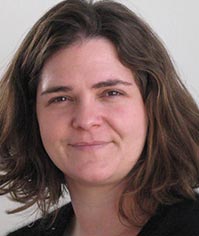
Karma Ben Johanan, post-doctoral scholar at the Polonsky Academy at the Van Leer Jerusalem Institute
Bio:
Karma Ben Johanan, is a post-doctoral scholar at the Polonsky Academy at the Van Leer Jerusalem Institute, with a Ph.D. from the Tel Aviv University School of Historical Studies. She was a Fulbright post-doctoral scholar at the Department of History, UC Berkely, a visiting lecturer at the Cardinal Bea Centre for Judaic studies at the Pontifical Gregorian University in Rome, and a visiting scholar at the John XXII Institution for Religious studies in Bologna. Ben Johanan’s research focuses on the history of contemporary Catholic and Jewish theology, and on Jewish and Christian reciprocal perceptions from the Second Vatican Council onwards.
Moderator:
Marit A. Trelstad, Chair of Lutheran Studies and Professor of Constructive and Lutheran Theologies at PLU
Bio:
Dr. Trelstad has a Ph.D. in Philosophy of Religion and Theology from Claremont Graduate University and an M.A. in Systematic Theology from Luther Northwestern Seminary. Her scholarly work combines feminist, process and Lutheran theologies and has focused on Christology, theological anthropology, the doctrine of God, and science and religion. As a contributor and editor, she published Cross Examinations: Readings on the Meaning of the Cross Today (Fortress, 2006) and contributed chapters to Transformative Lutheran Theologies (Fortress, 2010), Lutherrenaissance: Past and Present (Göttingen: Vandenhoeck & Ruprecht 2014), Theologies of Creation: Creatio Ex Nihilo and Its New Rivals (Routledge, August 2014) and Creating Women’s Theology: A Movement Engaging Process Thought, (St. Louis: Chalice, 2011).
Presentation Title:
“Invoking an Absent Past: The Holocaust in Catholic Responses to Contemporary Debates over Immigrants ,Refugees, and the Rise of Anti-Semitism”
Who:
Raymond C. Sun, Associate Professor of History at Washington State University (Pullman)
Bio:
Raymond Sun is an associate professor of history at Washington State University (Pullman), where he has been since 1991 after completing his doctorate in modern German history at The Johns Hopkins University. His teaching and research interests center on the world wars, war memory, Nazi Germany and the Holocaust, rescue and resistance in the Holocaust, and the social history of religion. He is currently researching a project about a Dutch Holocaust rescuer and survivor as a case study of female Jewish resistance to Nazi Jewish policy.
Presentation Title:
“The Jewish religious renaissance in DP Camps in American and British Zones in the immediate aftermath of the war”
Who:
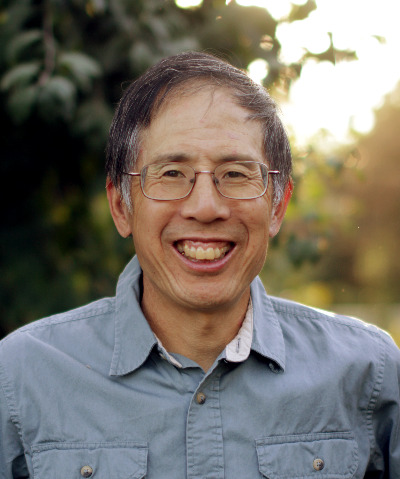
Gershon Greenberg, visiting professor of Jewish thought at Hebrew University of Jerusalem and professor of philosophy and religion at American University in Washington, D.C.
Bio:
Gershon Greenberg is visiting professor of Jewish thought at Hebrew University of Jerusalem and professor of philosophy and religion at American University in Washington, D.C.
Professor Greenberg is considered the leading expert of Jewish religious thought through the Holocaust, which he teaches in the Department of Jewish Thought at the Hebrew University of Jerusalem.
His recent books include:
Justice is Like the Great Deep: Orthodox Theological Responses to the Holocaust (Jerusalem 2016)
Modern Jewish Thinkers From Mendelssohn to Rosenzweig (Brighton, Mass, 2011)
Moderator:
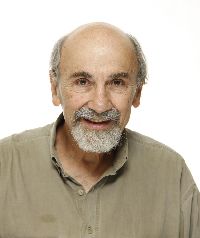
Bruce Kadden, Rabbi of Temple Beth El in Tacoma, Lecturer in Judaism, PLU
Bio:
Bruce Kadden is rabbi of Temple Beth El in Tacoma and teaches Judaism. He is the co-author, along with his wife Barbara, of Teaching Mitzvot: Concepts, Values and Activities; Teaching Tefilah: Insights and Activities on Prayer; and Teaching Jewish Life Cycle: Traditions and Activities. He has written articles for the website interfaithfamily.com, including, “Whose Wedding is it Anyway?” “Interfaith and Interfaithless Marriages”; “Why January 1 is Special: Even Jesus was Circumcised on the Eighth Day”; “What Jews and Christians Should Know About Each Other: An Important Primer on the Two Religions”; and “A Christian’s Guide to Passover.”
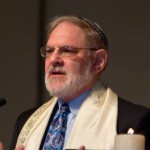
Presentation Title:
“Madame Celine Morali and daughter Simone, Holocaust Rescuers”
Who:
Marie-Anne Harkness, Granddaughter of Celine, Holocaust Center for Humanity, Seattle, WA
Bio:
“When I was a little girl, I heard stories around the dinner table from my family about what happened during the Nazi occupation of Paris. My grandmother has always been my hero, as she helped to save 300 Jewish refugees.”
Living in Paris during the Holocaust, Marie-Anne Harkness tells how her grandmother and mother defied their Nazi occupiers and rescued Jews as members of the French Resistance. Céline Morali, Marie-Anne’s grandmother, has been recognized by Yad Vashem in Israel, as Righteous Among the Nations.
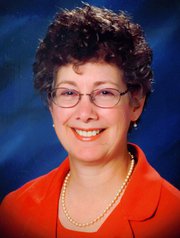
Moderator:
Dee Simon, Baral Family Executive Director, Holocaust Center for Humanity, Seattle, Washington
Bio:
Dee Simon, is the Baral Family Executive Director of the Holocaust Center for Humanity. A graduate of the University of Southern California’s business school, she has held positions with major corporations in the finance field and as a business consultant.
Dee has been working with the Holocaust Center for over 21 years. First as a volunteer, then a board member, followed by four terms as President of the Board. She joined the staff as Co‐Executive Director in 2006 becoming the Executive Director in 2012.
Dee serves on the board of the international Association of Holocaust Organizations.