


Natalie Mayer and Raphael Lemkin Lecture - Spring 2024
Undesirables: Forced Mobilities and Internments in Mediterranean Bande Dessinée
Professor Aomar Brown
Professor Aomar Boum, The Maurice Amado Chair in Sephardic Studies in the Departments of Anthropology, Near Eastern Languages and Cultures, and History at the University of California, Los Angeles, will be our Lemkin Lecturer on Tuesday, April 2, 2024 at 7:00 pm in the Scandinavian Cultural Center, AUC.
The lecture will be preceded by a brief presentation of the Lemkin Essay contest winner’s paper.
Does a Mediterranean bande dessinée exist? I contend that a well-established genre of Mediterranean comics and bande dessinée have been created and developed by artists and authors from around the Mediterranean Sea for decades. These comics inform our understanding of the historical and social dynamics of the Mediterranean social, cultural and political zone. They offer an artistic way to explore and grapple with the complex legacies of conflict, labor camps, colonialism, and nationalism as well as the opportunities and challenges of contemporary life in the region. In this talk, I propose reading Mediterranean waterscapes and geographic landscapes through comics of colonial conscripts (Senegalese tirailleurs and Moroccan goumiers) and WWII refugees. I coin Mediterranean bande dessinée of mobility and internment as a reference to a natural multinational artistic project with an educational orientation to evaluate colonial pasts and postcolonial relations between both sides of the Mediterranean landscapes. MED-BD has the capacity to challenge deceptive unrepresentative photographic reportage and journalistic writing and humanize internees and refugees of WWII in North Africa and today’s migrants in Europe. The MED-BD has developed into a repository of visual stories that challenge pictorial archives of photographers and filmmakers about southern Mediterranean landscapes.
2024 Lemkin Essay Contest Winners
1st Place Finalist: Anna Marko
“The Evolution of the Field of Genocide Studies”
1st Place Finalist: Maddie Lamwers
“Genocide and Future Generations: How Education and Treatment of Children Will Decide the Future”
2nd Place Finalist: Cody Dever
“The Word Genocide is a Tool”
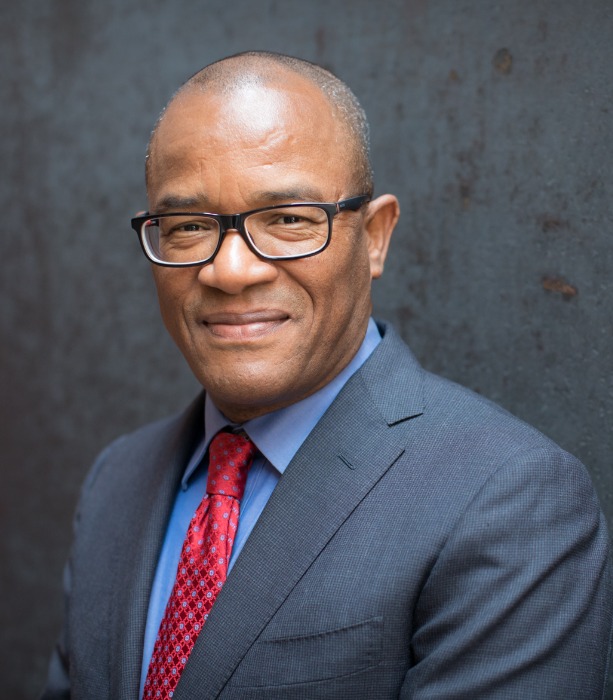
A historical anthropologist and member of the Academy of the Kingdom of Morocco, Aomar Boum is Professor and Maurice Amado Chair in Sephardic Studies in the Department of Anthropology, Department of History and Department of Near Eastern Languages and Cultures at the University of California, Los Angeles. Co-founder and co-editor of Tamazgha Studies Journal, Boum is interested in the place of religious and ethnic minorities such as Jews, Baha’is, Shi’a, Amazigh, and Christians in post-independence Middle Eastern and North African nation states. A native of a Saharan community in southeastern Morocco, Boum has interdisciplinary training in anthropology, history, Middle Eastern and North African studies, and Judaic Studies. Co-founder and co-director of Moroccan Jewish Studies Initiative at UCLA, his work is focused on diverse aspects of North African Jewish-Muslim relations, and specifically on the way in which social interactions between these two communities have been understood in the historical center (Middle East) and in the periphery (Sub-Saharan and North Africa). In addition to Memories of Absence: How Muslims Remember Jews in Morocco (2013), Boum is co-editor of The Holocaust and North Africa (2019) and Wartime North Africa: A Documentary history, 1934-1950 (Stanford University Press, 2022) as well as author with artist Nadjib Berber of the graphic history: Undesirables: A Holocaust Journey to North Africa (Stanford University Press, 2023). Boum is a member of the Academic Committee of the United States Holocaust Memorial Museum and a Faculty Fellow at Université Internationale de Rabat, Morocco. Website: https://www.aomarboum.com/
Natalie Mayer and Raphael Lemkin Lecture - Spring 2023
Adrift Between Two Americas
David Treuer
Bestselling author and Ojibwe Indian David Treuer delivered the 2023 Natalie Mayer and Raphael Lemkin lecture. The son of Robert Treuer, an Austrian Jew and Holocaust survivor and Margaret Seelye Treuer, a tribal court judge, Treuer grew up on Leech Lake Reservation in northern Minnesota. He is the recipient of a Pushcart Prize, two Minnesota Book Awards, and fellowships from the NEH, Bush Foundation, and the Guggenheim Foundation. His book, “The Heartbeat of Wounded Knee” was a 2019 finalist for both the National Book Award and Carnegie Medal.
Treuer presented “Adrift Between Two Americas.” David Treuer’s father, an Austrian immigrant and Holocaust survivor, loved this country. His Native mother, born on the Leech Lake reservation, could never forgive it. Where does that leave him?
2023 Lemkin Essay Contest Winners
1st Place: Parker Brocker-Knapp
“Translating Genocide: Preventing the Erasure of Holocaust Stories”
2nd Place: Kara Atkinson
“Lessons of the Holocaust and their Application in Israel and Palestine”
Raphael Lemkin Lecture - Spring 2022
Bosnian Genocide: Denial, Glorification, and Triumphalism, 30-years on
Presented by Ehlimana Memišević, a legal historian and genocide scholar.
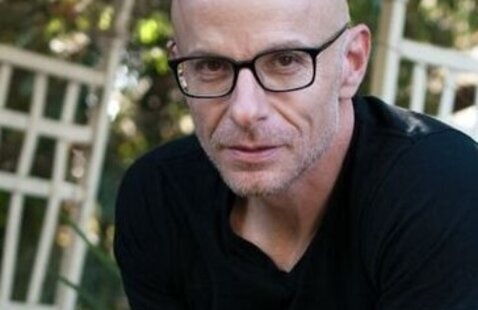
Ehlimana Memišević presented “Bosnian Genocide: Denial, Glorification and Triumphalism: 30-years on” virtually from Sarajevo, Bosnia. In her lecture, Ehlimana highlighted the genocide and subsequent denial of it during the war in Bosnia and Herzegovina from 1992 to 1995. The violence resulted in more than 100,000 deaths, some 2.5 million displaced, 800,000 destroyed homes, and widespread human rights abuse. Denial of the crimes took place during the genocide and continued immediately after. Memišević is an assistant professor at the Department of Legal History and Comparative Law, Faculty of Law, University of Sarajevo.

Raphael Lemkin Lecture - Spring 2021
Hitler's American Friends - Political Extremism and Nazi Sympathizers in the 1930's
Dr. Bradley W. Hart, Ph.D. – California State University, Fresno
Dr. Bradley Hart, author of “Hitler’s American Friends”, was the guest presenter at the 2021 Raphael Lemkin Lecture event.
Most Americans remember the years of the Second World War as a period of national unity and shared sacrifice, but this is hardly a complete picture of the era. In reality, the United States was deeply divided, with far-right groups, including the German American Bund and the Silver Legion, advocating an American version of Nazi Germany. At the same time, the mainstream political establishment struggled to cope with the many challenges facing the country. This talk examines the extremist groups that threatened American democracy before Pearl Harbor and how the country’s leaders worked to ensure that Hitler’s American friends were defeated.
Lemkin 2021 Essay Winner
Zackery Gostisha
“Meaning, Logic, and Death: Genocide and its Underlying Causes”
Raphael Lemkin Lecture - Spring 2020
“Rescue and Resistance” - Event canceled due to Covid-19
Dr. Mordecai Paldiel
Dr. Mordecai Paldiel is a leading scholar on the rescue of Jews during the Holocaust. Born in Antwerp, Belgium, in 1937, to Jewish parents who had moved there from Poland – during the German invasion of Belgium, in May 1940, the family fled to France. Originally settled in St. Gaudin, southwestern France, the family, then known as Wajsfeld, moved to various parts of occupied France. In September 1943, with the help of the Catholic cleric Simon Gallay, the family, then numbering parents and six children, fled to Switzerland, where they stayed until the war’s end — then returned to Belgium. In 1950, the family moved to the USA, and settled in Brooklyn.
Lemkin 2020 Essay Winner
Kate Wiley
“More Than Mass Murder: Considering Involuntary Sterilization as an Act of Genocide”
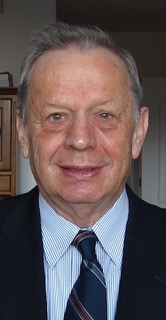
In 1962, Mordecai Paldiel made Aliyah and studied at the Hebrew University, Jerusalem, where he earned a BA degree in Economics and Political Science. He then furthered his studies at Temple University, Philadelphia, where he earned an MA and PhD in Holocaust Studies, under the tutorship of Professor Franklin H. Littell.
Returning to Israel, Paldiel was nominated director of the Righteous Among the Nations Department, at Yad Vashem – the country’s national Holocaust Memorial, a post he occupied from 1982 to 2007. During that 24-year stint, under Paldiel’s stewardship, some 18,000 non-Jewish men and women from various countries were awarded the prestigious honor of “Righteous Among the Nations,” by the Yad Vashem Holocaust Memorial, for their role in saving Jews from the Nazis at considerable risks to themselves.
Paldiel is currently teaching, in New York: at Yeshiva University-Stern College, New York – courses in Holocaust & Rescue, and History of Zionism; as well as Touro college, in Modern European History. He also taught at Drew University, in Madison, New Jersey, and Richard Stockton College, Pomona, New Jersey.
Dr. Paldiel has published numerous books and articles on the rescue of Jews during the Holocaust, such as: “The Path of the Righteous: Gentile Rescuers of Jews during the Holocaust”; “Saving the Jews: Amazing Stories of Men and Women Who Defied the Final Solution”; “Churches and the Holocaust: Unholy Teaching, Good Samaritans & Reconciliation”; “Diplomat Heroes of the Holocaust”; “Saving One’s Own: Jewish Rescuers During the Holocaust”; and “German Rescuers of Jews: Individuals versus the Nazi System”.
Raphael Lemkin Lecture - Spring 2019
Nameless Victims, Silenced Voices: A Profile of Victims of the ``Euthanasia`` Program
Patricia Heberer-Rice - U.S. Holocaust Memorial Museum
From October 1939 until the final days of World War II, the “euthanasia” (T4) program claimed the lives of an estimated 250,000 disabled patients residing in institutional settings throughout Germany and in certain regions of German-occupied Europe. Who were the victims of Nazi “euthanasia” policy? Until recently, relatively little research has attempted to reconstruct the lives and fates of T4 victims. Scholarly preoccupation with the over-arching killing apparatus has helped to overshadow the individual identities of these individuals. Lack of adequate documentation has heretofore presented a major obstacle: many patient files have been lost or destroyed, while German privacy laws have ensured that the bulk of these records remained inaccessible to researchers. Utilizing patient files from the Bezirkskrankenhaus Kaufbeuren, formerly a notorious “euthanasia” facility near Augsburg, this presentation will offer a much-needed perspective to a field in which the analysis of process and perpetrator often precludes important questions about the victims themselves.
Lemkin 2019 Essay Winner
Kiyomi Kishaba
“Fire”
About Dr. Patricia Heberer-Rice
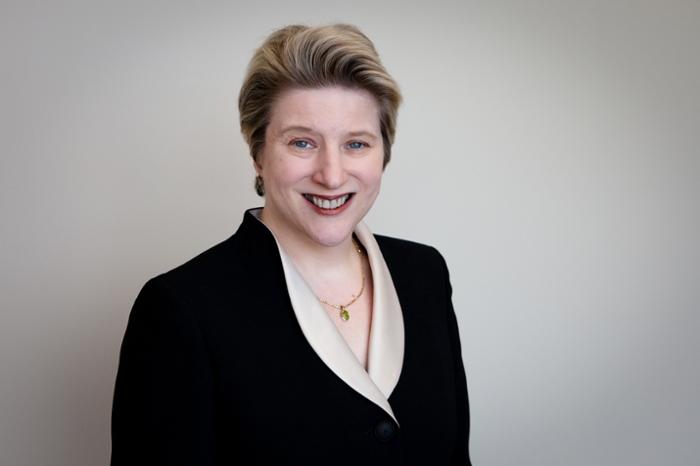
Dr. Heberer Rice is one of the leading scholars on the Nazi Euthanasia murders. She has been based at the Museum’s Center for Advanced Holocaust Studies (former U.S. Holocaust Research Institute) since 1993. Heberer Rice completed her undergraduate degree in Historical Studies and German Language and Literature at Southern Illinois University as the graduating class’ valedictorian. She conducted her doctoral studies at the Free University of Berlin and the University of Maryland (UMD)-College Park, where Heberer Rice earned a PhD based on her dissertation on the Hadamar killing facility and its role in the Euthanasia program. She is the author of many articles and book chapters on the Euthanasia killings and other aspects of the Nazi state’s murder programs. Dr. Heberer Rice (co-)authored two books, Children during the Holocaust, a volume in the Center’s series Documenting Life and Destruction(AltaMira Press, 2011) and Atrocities on Trial: The Politics of Prosecuting War Crimes in Historical Perspective, co-edited with Jürgen Matthäus (University of Nebraska Press, 2008). Dr. Heberer Rice is currently the Director of the Division of the Senior Historian, The Jack, Joseph and Morton Mandel Center for Advanced Holocaust Studies at the United States Holocaust Memorial Museum.
Raphael Lemkin Lecture - Spring 2018
Violence, Espionage, & Anti-Semitism: British & Soviet Spy Ops Against Boston’s Christian Front Organization, 1940-1945
Father Charles R. Gallagher, S.J.
Dr. Charles R. Gallagher, S.J., of the history department at Boston College spoke about his explorations of a heretofore unknown set of intelligence relationships involving Nazi, British, and Soviet spy networks in Boston during World War II.
During the summer of 1940, the leader of Boston’s Christian Front organization was successfully recruited by Nazi SS intelligence agents in the United States. The clandestine relationship produced excellent results in the area of propaganda, particularly anti-Semitic propaganda. In 1941, the Nazi propaganda wins caught the attention of British intelligence in the United States – MI6. Without knowing that the Christian Front had been compromised by the Nazis, the British decided to run their own spy operation against the Boston group. In the spring of 1941, the British military returned to Boston for the first time since 1776, this time as spies. With a view to circumventing the FBI, the British founded a front organization in Boston whose purpose was to pressure local Boston politicians and the Boston Police Department to move in and shut down the Christian Front. This operation worked flawlessly.
Lemkin 2018 Essay Winners
First place: Teresa Hackler
“It is Nice in a Developed Country Like America: Reflections on the 1994 Genocide against Tutsi and the Global Implications of Divisive Language”
Second place: Katherine Wiley
“People are Bad but…Exploring the Lessons of Genocide”
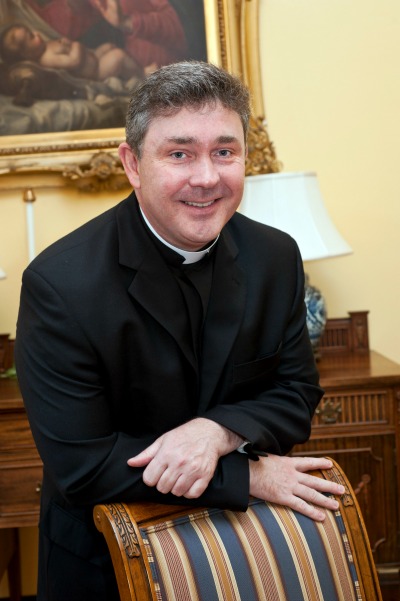
With the Christian Front out of business, a surge of Catholic anti-Semitic violence emerged in Boston in 1943. Gangs of Irish-Catholic youth roamed the city fomenting riots and beating up young Jews. The situation received national attention in the press at the time. Gallagher’s talk will show how this upswell in anti-Semitic violence was really the unintended consequence, or blowback, from the illegal and unwarranted intelligence operation run by MI6 in 1941 in 1942. At the same time, in January of 1942, Soviet intelligence agents also began to take an interest in prosecuting the Christian Front. They too, sent secret agents to Boston to firm up a prosecution of Christian Front leaders. This Soviet operation reached the highest U.S. government officials – including the President of the United States.
Gallagher’s work is under contract to be published as a book by Harvard University Press in 2019 under the title The Nazis of Copley Square: A History of the Christian Front, 1939 – 1945.
Raphael Lemkin Lecture - Spring 2017
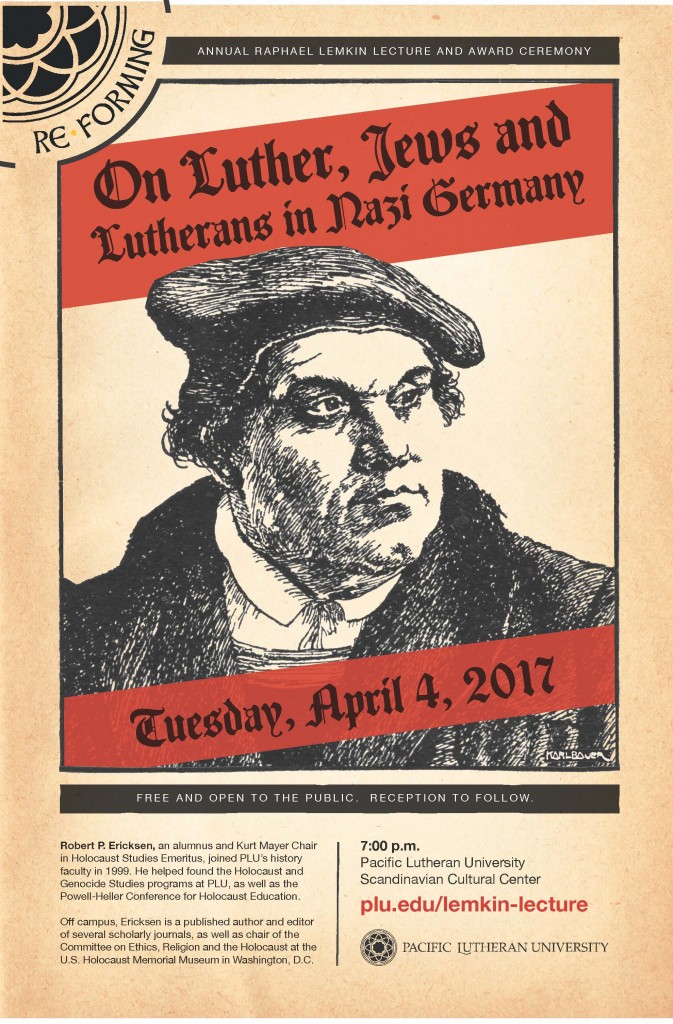
On Luther, Jews and Lutherans in Nazi Germany
Professor Robert P. Ericksen
Lemkin 2017 Essay Winner
Carli Synder
“‘To Create her World Anew’: Charlotte Salomon as an Artist in Hiding During the Holocaust”
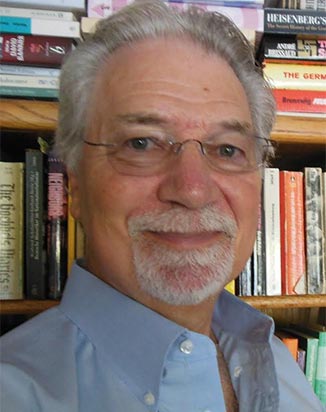
Robert P. Ericksen, Kurt Mayer Chair in Holocaust Studies Emeritus, joined the PLU History Department in 1999 as successor to Christopher Browning. In 2007 he helped found the endowed Holocaust Studies Program at PLU, including the Kurt Mayer Chair and the Powell and Heller Annual Holocaust Conference. He also helped establish the Holocaust and Genocide Studies Program in 2013, which now offers a minor.
Ericksen, a graduate of PLU, completed his Ph.D. in history at the London School of Economics. His first book, Theologians under Hitler: Gerhard Kittel, Paul Althaus and Emanuel Hirsch (Yale University Press, 1985), appeared also in German, Dutch and Japanese translation. In 2005 it was the basis for a documentary film, also called Theologians under Hitler, produced by Stephen Martin at vitalvisuals.com. Other publications include Complicity in the Holocaust: Churches and Universities in Nazi Germany (Cambridge, 2013); five edited books, including one co-edited with Susannah Heschel, Betrayal: German Churches and the Holocaust (Fortress Press, 1999); plus 50 articles and/or book chapters. He expects his next book, Christians in Nazi Germany, to appear with Cambridge University Press in 2018.
Ericksen is Chair of the Committee on Ethics, Religion and the Holocaust at the U.S. Holocaust Memorial Museum in DC. He serves on the Board of Editors of a German journal, Kirchliche Zeitgeschichte, and of an online journal, Contemporary Church History Quarterly. He is a Fellow of the Alexander von Humboldt Stiftung. He has lectured extensively in ten countries on three continents, including the biennial Kaplan Holocaust Lectures at the University of Cape Town, the annual Raul Hilberg Memorial Lecture at the University of Vermont, and the annual Meyerhoff Lecture at the U.S. Memorial Holocaust Museum.
Raphael Lemkin Lecture - Spring 2016
Pope Pius XII and World War II
Dr. Gerhard Weinberg
Dr. Gerhard Weinberg, Professor Emeritus of University of North Carolina, Chapel Hill, will be speaking at PLU on Thursday, April 7, 2016 at 7:00 pm in the Regency Room. Dr. Weinberg is a leading world scholar on the topics of Nazi Germany, WWII, foreign policy, and the Holocaust. He was born in Nazi Germany into a family of German Jews, he and his family escaped to London. Later, Dr. Weinberg joined the U.S Military. He earned his Ph.D. in 1951 at the University of Chicago. He worked on Columbia University’s War Documentation Project, and established the program for microfilming the captured German documents.
Professor Weinberg has, over the course of his long career, taught at Universities of Chicago, Kentucky, Michigan, and North Carolina-Chapel Hill. He has chaired several professional organizations and served on and chaired several U.S. government advisory committees. Now retired, he has authored or edited eleven books and over 100 chapters, articles, guides to archives and other publications. Some of his books include:
- World in the Balance: Behind the Scenes of WWII
- Hitler’s Foreign Policy, 1933-1939: The Road to WWII
- A World at Arms: A Global History of WWII
- Visions of Victory: The Hopes of Eight WWII Leaders
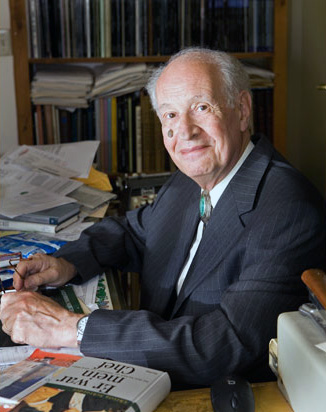
Professor Weinberg’s lecture on April 7, “Pope Pius XII in World War II,” addresses the heated controversy among historians regarding the silence of the Pope. Called “the Pius Wars,” historians still argue why the Pope did not intervene and openly denounce the Nazi’s attempted extermination of the Jews of Europe.
Raphael Lemkin Lecture - Spring 2015
In Their Own Words: The World of the Child During the Holocaust
Using sources created by children during the Holocaust, the 2015 Lemkin Lecturer will discuss the ways in which they coped and contended with the challenges, fears, violence, and losses that pervaded their world during the years of Nazi oppression and murder.
Patricia Heberer-Rice, Mandel Institute, U.S Holocaust Memorial Museum Author of Children During the Holocaust
Convener: Robert Ericksen, Emeritus Kurt Mayer Chair of Holocaust Studies, PLU