
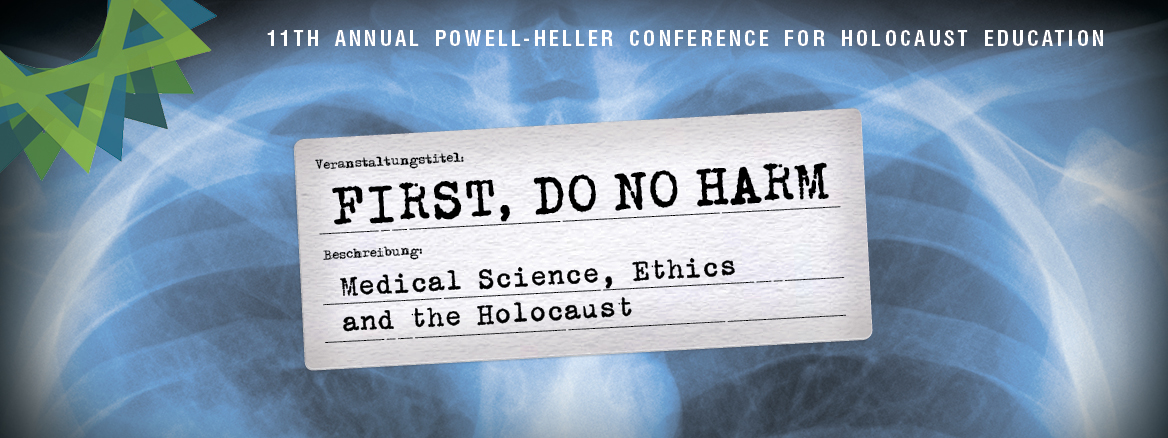
2018 Powell-Heller Conference for Holocaust Education:
“First, Do No Harm: Medical Science, Ethics and the Holocaust”
October 24-26, 2018
Thanks to the generosity of donors this event is free and open to the public.
The 2018 Powell-Heller Conference for Holocaust Education, in its 11th year at Pacific Lutheran University, will be dedicated to exploring the role of medical science and the Holocaust. In the last decades, historical research on Nazi Germany has focused on sites of terror- especially concentration camps and extermination camps. Despite a multitude of works exploring these places of terror, comparatively little work has been done exploring the role of medical scientists and nurses in perpetrating ethical violations of their mandate to “first, do no harm.” Perhaps even fewer works have attempted to explore the role of Jewish medical personnel and their attempts to fight against the Nazi regime in whatever limited capacity they had. In the post-world war II environment of military tribunals and subsequent doctors’ trials, the field of medical science was forced to revise its code of ethical conduct and rethink its notion of patient informed consent, embodied in the Nuremberg Code.
PLU’s mission to support the education of our students and larger community on issues of diversity and justice are intimately connected to the study of the tragedy of the Holocaust. Students can see that marginalization of a minority group, such as the Jews of Nazi Germany, can lead to life-threatening situations culminating in one of the world’s modern genocides. Issues of distortion and denial make the process of reconciliation and healing less likely and serve as an insult to the memory of all those whose lives were destroyed in the Holocaust.
Schedule
All Times Posted are Pacific Standard (PST)
Opening Remarks – Acting President Allan Belton
7:00 p.m. - Video: “Caring Corrupted: The Killing Nurses of the Third Reich” (Chris Knutzen Hall, AUC 214)
``Lessons From Nazi Germany for Today’s Healthcare Providers``
Video produced by University of Texas Health School of Nursing
The relevance of the role of healthcare providers in the events in Nazi Germany to today’s healthcare providers will be discussed. The journey of a school of nursing in making a film about nurses in Nazi Germany as well as of the use of the film in nursing education is explored.
Commentator and Presenter:
- Cathy L. Rozmus, Ph.D., R.N. Vice Dean UTH
- Professor Francis Nicosia
Moderator:
- Robert P. Ericksen, Mayer Chair of Holocaust Studies, Emeritus, PLU
8:30 p.m. Refreshments in the Scandinavian Center Lobby
9:00 a.m. – Registration (Regency Room Lobby, Anderson University Center)
10:00 a.m. - 11:40 a.m. – (Chris Knutzen Hall, AUC 214)
“The Torturous Killing of Anna Maria Buller – the Role of Nurses in the Killing of Sick Persons Under the Nazi Regime” – Thomas Foth
During the Nazi regime (1931-1945) more than 300,000 psychiatric patients were killed. The well-calculated killing of chronically mentally ‘ill’ patients was part of a huge biopolitical program of well-established scientific, eugenic standards of the time. Among the medical personnel implicated in these assassinations were nurses, who carried out this program through their everyday practice. Using a case study approach, the activities of nurses at the Hamburg psychiatric asylum Langenhorn will be detailed in an attempt to understand how they were involved in killing their patients.
“Memories of Gusen: U.S Army Nurses’ Reflections on Witnessing the Liberation of a Concentration Camp” – Ms. Carli Snyder
This paper focuses on the testimonies of nine retired U.S. Army nurses who served during the liberation of Gusen concentration camp, a satellite camp of Mauthausen, near Linz, Austria. These interviews were conducted in 1995 by a radio journalist, Neenah Ellis, for the United States Holocaust Memorial Museum’s Oral History Department. Through the testimonies, we learn about a group of American women’s experiences of witnessing the Holocaust’s aftermath, the perceived lessons of the Holocaust in the 1990s, and the process of collecting Holocaust oral history.
Presenters:
- Thomas Foth, R.N., M.A.(Ed), Ph.D.
- Ms. Carli Snyder, Graduate Student
Moderator:
- Christina Pepin, Chair, School of Nursing at PLU
11:45 a.m. - 1:35 p.m. – Mayer Summer Research Fellow Presentations (Room 133, AUC)
Mayer Summer Research Fellows will offer brief overviews of their summer research projects as the conference participants enjoy box lunches.
Introduction:
- Natalie Mayer
Kurt Mayer Summer Research Fellows:
- Jessica Alley, Abigail Kunkel, Christian Riddall, Alicia Sprague
Moderator:
- Lisa Marcus, Professor of English, PLU
1:45 p.m. - 3:30 p.m. – (Chris Knutzen Hall, AUC 214)
“Routine Pharmacological Procedures Against Women in Auschwitz: An Unspoken Narrative” – Peggy Kleinplatz
The history of routine pharmacological interventions affecting women’s fertility during the Shoah and thereafter has been hidden in plain sight. It is past time to assemble the fragments of this unrecognized phenomenon and begin to give expression to a cohesive narrative. Kleinplatz is working with Dr. Paul Weindling to give voice to these women’s histories.
“Manipulating Birth to Implement Genocide” – Beverley Chalmers
Holocaust literature gives exhaustive attention to ‘direct’ means of exterminating Jews, by using gas chambers, torture, starvation, disease, and intolerable conditions in ghettos and camps, and by the Einsatzgruppen. Manipulating reproduction and sexuality –as a less ‘direct,’ method of genocide of Jews – has not yet received the same attention. The Nazis prevented Jewish women from having sex or bearing children through legal, social, psychological and biological means, as well as by murder. In contrast, they promoted reproductive life and sexuality among so-called ‘Aryans’. Implementing measures to prevent birth is a core feature of the UN Convention on the Prevention and Punishment of Genocide. Doctors were integrally involved in the manipulation of birth. This presentation reveals a specter of brutality that is not often recognized, and is contrary to the traditional image of the ‘helping profession’ of medicine, and particularly, reproductive medicine. It is based on the multiple-award winning book: Birth Sex and Abuse: Women’s Voices under Nazi Rule (2015).
“Mengele at Auschwitz: Reconstructing the Twins” – Paul Weindling
The twins researched on by Mengele are an iconic group among the ca. 30000 victims of Nazi medical experiments and coerced research. There remain open questions regarding Mengele’s research practices, how the twin and dwarf research was resourced in relation to SS administrative structures, and timing in relation to Mengele’s role as doctor to the Zigeunerlager and his role in genocidal selections on the ramp at Auschwitz. These issues shape the twins’ identities, numbers, retention of parents, and experiences between survival and death from experimental interventions. This paper develops evidence from the CANDLES twin survivor organization, as well as key prisoner testimonies such as from the pathologist Nyiszli by linking survivor narratives with administrative documents.
Issues include Mengele’s resourcing of prisoner-research staff, particularly the pathology laboratory, as well as relations with the Raisko Hygiene Institute of the Waffen-SS. Further issues include the supply of body parts from Auschwitz, including blood, bones and hetero-chromic eyes to the Kaiser Wilhelm Institute for Anthropology. Mengele’s prisoner assistants included a range of medical specialists, as well as artists and anthropologists. The documentation needs to be set against the extensive narratives of the surviving twins. Wider issues include Mengele’s academic links as well as evidence for how his research was supported. This paper offers an attempt to integrate these diverse approaches. Finally, the post-war history of delayed and reduced compensation for the twins needs to be figured in.
Presenters:
- Peggy J. Kleinplatz, Ph.D.
- Beverley Chalmers (D.Sc.(Med);Ph.D.)
- Paul Weindling, Ph.D.
Moderator:
- Carrie Ann Matyac, DNP, ARNP
3:45 p.m. - 5 p.m. – (Chris Knutzen Hall, AUC 214)
“Doctors Ensnared between Hitler and Stalin: German Medical Scientists in the USSR” – David Zimmerman
Beginning in April 1933, university faculty were among the first victims of Nazi persecution. They were dismissed from their post for racial and political reasons. Compared to other academics, medical researchers had a difficult time trying to escape from Germany in 1930s. In this talk I will examine the particular issues faced by medical doctors in finding refuge in the western world, and explore why a few decided to make the perilous decision to migrate to the Soviet Union. The talk will focus on the stories of two of these doctors, Siegfried Gilde, and Kurt Zinneman, both of whom were arrested by the Soviet secret police during Stalin’s Great Purge. Their stories illustrate the desperate and, often futile efforts German Jews made to try to save themselves and their families.
“’Russian’ Victims of Nazi Medicine – Moving from Lists to Biographies” – Nichola Farron
This presentation will provide an overview of the use of Soviet prisoners in Nazi human experiments and coerced research, and will provide details of experiments in Sachsenhausen and Dachau concentration camps where ‘Russian’ prisoners were exposed to the ambition of German scientists engaged in unethical research practices. Drawing on the archival material, the details and motives of these experiments will be outlined, along with the potential and importance of naming Soviet victims. Used in a range of high-profile and infamous experiments at the camps, including high-altitude and freezing testing, ‘Russian’ prisoners nonetheless remain one of the most under-researched groups of victims: this presentation will explore some of the historical problems around this research-gap whilst highlighting the potential to move forward and understand this important history.
Presenters:
- David Zimmerman, Ph.D.
- Nichola Farron
Moderator:
- David Simpson, Chair of Social Work at PLU
5:00 p.m. - 6:45 p.m. – Dinner Break (Scandinavian Center, AUC)
For those that have pre-registered, a reception with light fare will be in the Scandinavian Cultural Center
7 p.m. – Keynote Speaker: Dr. Sabine Hildebrandt, M.D. (Chris Knutzen Hall, AUC 214)
“Anatomy in National Socialist (Nazi) Germany – Politics, Science, Ethics and Legacies”
In this talk, the history of the interaction between anatomists and politics in Nazi Germany will be presented, as well as the changes in the traditional anatomical body procurement during that time, which included rising numbers of victims of the Nazi regime. The use of these victims’ bodies in anatomical education and research can be interpreted as stages of an ethical transgression. The legacies from this history for today’s medicine will be discussed.
Presenter:
- Sabine Hildebrandt, M.D.
Associate Professor of Pediatrics; Lecturer on Global Health and Social Medicine
Boston Children’s Hospital, Harvard Medical School,
Div. General Pediatrics, Dep. Medicine
Moderator:
- Christopher R. Browning, Frank Porter Graham Professor Emeritus, University of North Carolina-Chapel Hill
8:15 p.m. – Dessert Reception (Chris Knutzen Hall Lobby)
8:30 a.m. – Registration (Regency Room Lobby, Anderson University Center)
9:00 a.m. - 10:15 a.m. – (Chris Knutzen Hall, AUC 214)
“Medical Science, Ethics and Saving Lives” – Naomi Baumslag
Jewish doctors worked under conditions of extreme personal danger and cruelty during the Holocaust. There is evidence that despite orders for the calculated, callous extermination of lives in the name of science, ethical physicians such as Ludvik Fleck, Moses Brauns and Adina Szwajger improvised to work around their constraints in order to save lives.
“Women Prisoner-Doctors in Auschwitz” – Claude Romney
Presenters:
- Naomi Baumslag, M.D., M.P.H.
- Claude Romney Ph.D.
Moderator:
- Kirsten Christensen, Professor of German, PLU
10:30 a.m. - 12:15 p.m. – (Chris Knutzen Hall, AUC 214)
“For Health, for Profit, for Nothing at All?: Jewish Physicians in the Warthegau Forced Labor Camps for Jews, 1940-1943” – Sari J. Siegel, Ph.D.
This presentation addresses the recruitment of Jewish doctors for medical work in the little-known forced labor camps for Jews in the Warthegau—a region annexed to the Third Reich from western Poland. Through the consideration of the multiple parties (e.g., municipal, regional, and federal government officials and businessmen in public and private industries) that sought to harness the expertise of Jewish medical professionals and the motivations behind their respective efforts, new findings come to light and greater insight into the mechanics of exploitation and mass murder emerges.
“Legacy of the Nuremberg Code: 70th Anniversary” – Susan Miller
The goals of this presentation are to review the origins of the Nuremberg Code and to explore the historical and current day relevance of the Code for medical science, investigators, institutions and research subjects.
Presenters:
- Sari J. Siegel, Ph.D.
- Susan M. Miller M.D., M.P.H., FACP, FAAFP
Moderator:
- Sergia Hay, Associate Professor of Philosophy, PLU
12:30 - 2:00 p.m. – (Chris Knutzen Hall, AUC 214)
“250+ letters from Dachau: A Journey of Words, though Rarely Spoken” – Clarice Wilsey
Clarice Wilsey’s father, Captain David Wilsey, M.D., was an American army physician who treated survivors of Dachau Concentration Camp after liberation. He and several dozen other medical staff stayed at Dachau with thousands of former prisoners under quarantine, in order to bring some healing to the survivors. Dr. Wilsey’s letters from Dachau to his wife back home survived, and after Clarice found them in 2009, inspired her to share her father’s experiences with students and others as a member of the Holocaust Center for Humanity Speakers Bureau.
Presenter:
- Clarice Wilsey, Seattle Holocaust Center for Humanity
Moderator:
- Dee Simon, Director, Holocaust Center for Humanity, Seattle, WA
Keynote Speaker
``Anatomy in National Socialist (Nazi) Germany - Politics, Science, Ethics and Legacies``
7:00 p.m. – Keynote (Regency Room, AUC)
In this talk, the history of the interaction between anatomists and politics in Nazi Germany will be presented, as well as the changes in the traditional anatomical body procurement during that time, which included rising numbers of victims of the Nazi regime. The use of these victims’ bodies in anatomical education and research can be interpreted as stages of an ethical transgression. The legacies from this history for today’s medicine will be discussed.
Dr. Sabine Hildebrandt is an associate professor of pediatrics in the Division of General Pediatrics, Department of Medicine at Boston Children’s Hospital, and a lecturer on Global Health and Social Medicine at Harvard Medical School. Her research interests are the history and ethics of anatomy, and specifically the history of anatomy in National Socialist Germany, a field in which she is an internationally recognized expert.
One focus of her work is the restoration of biographies of victims of the Holocaust. Her educational approach integrates anatomy, medical history and medical ethics. She teaches these topics at Harvard Medical School and Harvard College. Her book “The Anatomy of Murder: Ethical Transgressions and Anatomical Science during the Third Reich” was published by Berghahn Books in January 2016, in paperback in August 2017, and is the first systematic study of anatomy during National Socialism.
Speakers
Wednesday, October 24
Commentator Title:
Video: “Caring Corrupted: The Killing Nurses of the Third Reich”
Presentation Title:
“Lessons From Nazi Germany for Today’s Healthcare Providers”
Who:
Cathy L. Rozmus, Ph.D., R.N. Vice Dean UTH
Bio:
Cathy L. Rozmus PhD, RN is PARTNERS Professor and Vice Dean for Academic Affairs at the Cizik School of Nursing at The University of Texas Health Science Center at Houston. She is Assistant Vice President for Institutional Assessment and Enhancement in the UTHealth Office of Academic and Research Affairs. She also is a Faculty Associate in the McGovern Center for Humanities and Ethics at the UTHealth McGovern Medical School. She has served on the Board of Directors of the Center for Medicine after the Holocaust.
Dr. Rozmus’ research interests include health behavior decision making and health professions education. Her more recent research is in ethics education for health care professionals.
Benedict, S. & Rozmus, C. (2014). Chapter 7: Nurses and human subjects research during the Third Reich and now. In S. Rubenfeld and S, Benedict (Eds). Human Subjects Research After the Holocaust (pp. 87-98). Switzerland: Springer International Publishing. DOI: 10.1007/.978-3-319-05702-6 7.
Benedict, S. & Shields, L. (2014). Nurses and midwives in Nazi Germany: The
“euthanasia programs”. New York: Routledge.
Presentation Title:
The First Miller Symposium, 2000: “Medicine and Medical Ethics in Nazi Germany.”
Who:
Francis R. Nicosia, Professor of History Emeritus, Raul Hilberg Distinguished Professor of Holocaust Studies Emeritus, University of Vermont
Bio:
Francis R. Nicosia is Professor of History Emeritus and the Raul Hilberg Distinguished Professor of Holocaust Studies Emeritus at the University of Vermont. He is the author of Nazi Germany and the Arab World (2015), Zionism and Anti-Semitism in Nazi Germany (2008, 2010) with the German edition Zionismus und Antisemitismus im Dritten Reich appearing in 2012, and The Third Reich and the Palestine Question (1986 and 2000). He is also co-author (with Donald Niewyk) of The Columbia Guide to the Holocaust (2001). He has edited or co-edited ten books, among them most recently, Dokumente zur Geschichte des Deutschen Zionismus 1933-1941, in the Leo Baeck Institute’s “Schriftenreihe wissenschaftlicher Abhandlungen des Leo Baeck Insttituts,” Vol. 77 (2018).
Moderator:
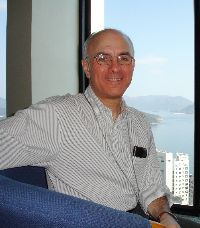
Robert P. Ericksen, Kurt Mayer Chair in Holocaust Studies (emeritus)
Bio:
Robert P. Ericksen is the author of Complicity in the Holocaust: Churches and Universities in Nazi Germany (Cambridge, 2012) and Theologians under Hitler (Yale, 1985), which appeared in German, Dutch, and Japanese translation and was turned into a documentary film of the same name (Vitalvisuals.com, 2005). He is co-editor with Susannah Heschel of Betrayal: German Churches and the Holocaust (Fortress, 1999) and has served on the Board of Editors of Kirchliche Zeitgeschichte since this journal was founded in 1988. He also is Chair of the Committee on Ethics, Religion and the Holocaust at the U.S. Holocaust Memorial Museum.
Thursday, October 25
Presentation Title:
“The torturous killing of Anna Maria Buller – the role of nurses in the killing of sick persons under the Nazi regime”
Who:
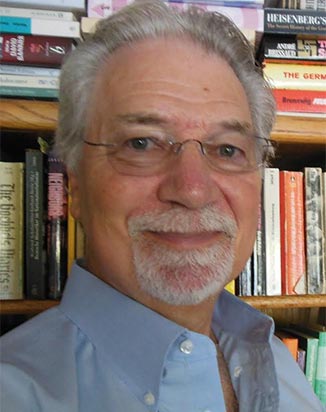
Thomas Foth, R.N., M.Ed., Ph.D., is Associate Professor in the School of Nursing at the University of Ottawa.
Bio:
“Thomas Foth, R.N., M.Ed., Ph.D., is Associate Professor in the School of Nursing at the University of Ottawa. His fields of interest include history of nursing, critical analysis of nursing practice, nursing theories and epistemology, ethics, nursing care provided to marginalized populations, power relationships between healthcare professionals and patients, and finally, gender issues in nursing.
Presentation Title:
“Memories of Gusen: U.S Army Nurses’ Reflections on Witnessing the Liberation of a Concentration Camp”
Who:
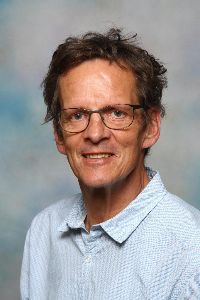
Ms. Carli Snyder, doctoral student in the History Ph.D. program at the City University of New York Graduate Center
Bio:
Ms. Carli Snyder is a doctoral student in the History Ph.D. program at the City University of New York Graduate Center, under the direction of Dagmar Herzog. She teaches World History courses at Brooklyn College and also serves as a Holocaust Education Intern at the Museum of Jewish Heritage in lower Manhattan. Her current research focuses on Holocaust testimonies recorded in the United States during the 1990s. Snyder graduated from Pacific Lutheran University in 2017 with a B.A. in History and Women’s and Gender Studies and a minor in Holocaust and Genocide Studies. She was awarded PLU’s Mayer Summer Research Fellowship in 2015 and 2016.
Moderator:
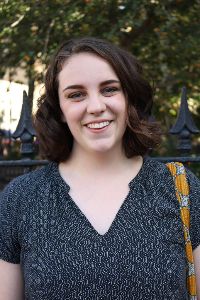
Christina Pepin, Chair, School of Nursing at PLU
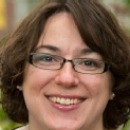
Moderator:
Natalie Mayer
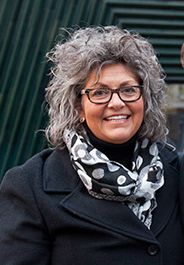
Presentation Title:
“Routine Pharmacological Procedures Against Women in Auschwitz: An Unspoken Narrative”
Who:
Peggy J. Kleinplatz, Ph.D.
Bio:
Dr. Peggy J. Kleinplatz is Professor of Medicine, Clinical Professor of Psychology and Director of Sex and Couples Therapy Training at the University of Ottawa. She is a clinical psychologist, Board Certified in Sex Education and as a Diplomate and Supervisor of Sex Therapy. In 2015, Kleinplatz received the American Association of Sexuality Educators, Counsellors and Therapists’ Professional Standard of Excellence Award. She has a particular interest in sexual health in the elderly, disabled and marginalized populations.
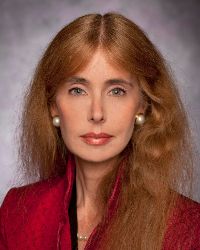
Bouman, W. & Kleinplatz, P.J. (Eds.) (2016). Sexuality and Ageing New York: Taylor & Francis.
Kleinplatz, P.J. (Ed.) (2012). New Directions in Sex Therapy: Innovations and Alternatives (2nd Ed). New York: Routledge.
Presentation Title:
“Manipulating Birth to Implement Genocide”
Who:
Dr. Beverley Chalmers (D.Sc.(Med);Ph.D.)
Bio:
Dr. Chalmers’ (D.Sc.(Med);Ph.D.) research specializes in examining the birth experiences of women in difficult religious, social, political and economic situations. These settings reveal challenging circumstances ranging from political and economic repression in Apartheid South Africa, and in the former Soviet Union, religiously inspired cruelty of female genital mutilation, and over-medicalization of birth in the technologically developed world. None of these, however, comes anywhere close to matching the horrors experienced by those whom the Nazi regime targeted for reproductive and sexual manipulation, and, in the case of Jewish women and babies, extermination. She is an internationally renowned academic with over 290 publications and over 450 conference presentations and addresses to her credit.
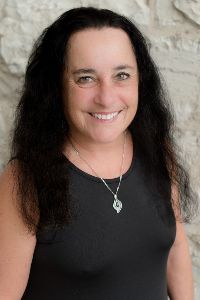
She has two doctoral degrees: a Doctorate of Science in Medicine (D.Sc. (Med)) and a Ph.D. in Psychology. Her book, “Birth, Sex and Abuse: Women’s Voices under Nazi Rule “(2015) has been awarded twelve book awards. These include: a USA Jewish Book Award (Women’s Studies), a Vine Award for Canadian Jewish Literature (History), a Canadian Jewish Literary Award (Holocaust Studies), a CHOICE ‘Outstanding Academic Title’ Award, an International Book Award (History), and a Montaigne Medal for thought provoking books.
Presentation Title:
“Mengele at Auschwitz: Reconstructing the Twins”
Who:
Paul Weindling, Ph.D.
Bio:
Paul Weindling is Research Professor in History of Medicine at Oxford Brookes University. In 2016-17 he was Senior Fellow of the Vienna Wiesenthal Institute, and in 2018 Fellow of the City of Vienna at the IFK Vienna.
Honours include Membership of the German National Academy of Sciences Leopoldina since December 2014. From 2015 he holds the Anneliese Maier Prize awarded by the Humboldt Foundation. From 2017 he is part of a group researching the life histories of victims of brain research and the post-WW2 history of the brain specimens. Since 2003 on the Council of Management and Trustee CARA (Council for At-Risk Academics), originally Academic Assistance Council, founded in 1933 to assist academics displaced by Nazism and other authoritarian regimes.
He was on advisory commissions concerning: 1. National Socialism for the President of the Max Planck Gesellschaft, 1999-2004; 2. the Robert Koch Institute under National Socialism, 2005-9; 3. the German Association of Psychiatry, Psychotherapy, Psychosomatics and Neurology (DGPPN), 2010-2012, and is now Honorary Member of the DGPPN; 4. to research the medical faculty of the Reich University Strassburg; 5. Austrian neurology under National Socialism.
His research interests cover eugenics, international health organizations, and coerced experiments/ research under National Socialism. Publications include Health, Race and German Politics between National Unification and Nazism (1989), Epidemics and Genocide in Eastern Europe 1890-1945 (2000), Nazi Medicine and the Nuremberg Trials: From Medical War Crimes to Informed Consent (2004), John W. Thompson, Psychiatrist in the Shadow of the Holocaust (2010), and Victims and Survivors of Nazi Human Experiments: Science and Suffering in the Holocaust (2014).
He recently edited 3 collections:
- From Clinic to Concentration Camp: Reassessing Nazi Medical and Racial Research, 1933-1945 (Abingdon: Routledge, in press)
- with Herwig Czech, Österreichische Ärzte und Ärztinnen im Nationalsozialismus. DOEW Jahrbuch (Vienna: DOEW, 2017)
- with Herwig Czech & Christiane Druml,, “Medical Ethics in the 70 Years after the Nuremberg Code, 1947 to the Present”, Wiener klinische Wochenschrift (Special Issue, June 2018)
Moderator:
Carrie Ann Matyac
Bio:
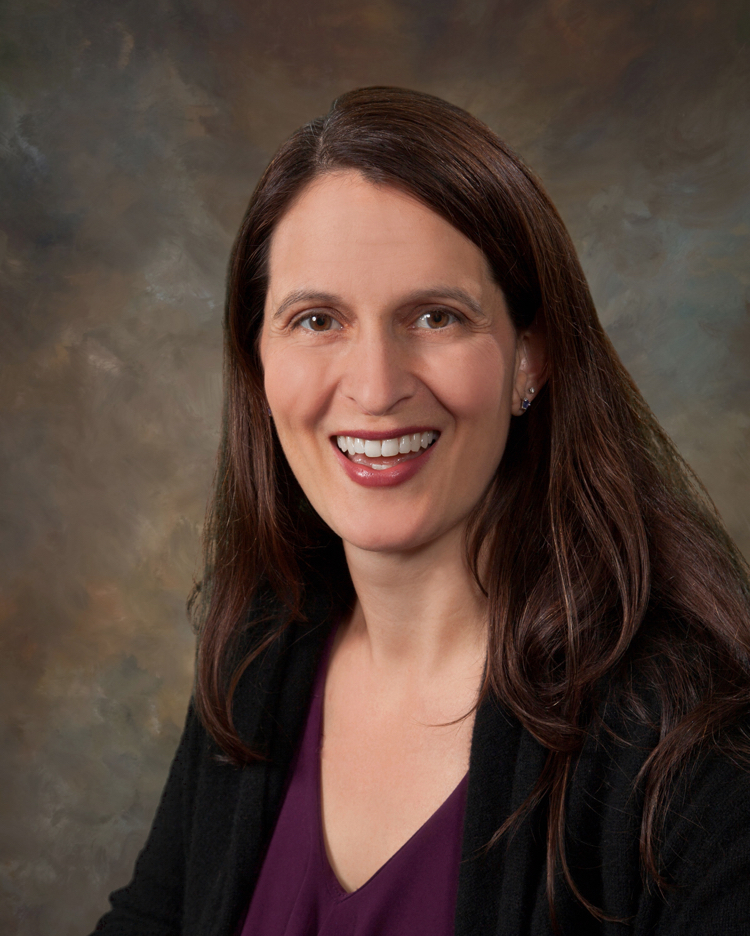
Carrie Ann Matyac, DNP, ARNP
Presentation Title:
“Doctors Ensnared between Hitler and Stalin: German Medical Scientists in the USSR”
Who:
David Zimmerman, Ph.D., Department of History, University of Victoria
Bio:
David Zimmerman is Professor of Military History at the University of Victoria. He is the author of Britain’s Shield: Radar and the Defeat of the Luftwaffe; Top Secret Exchange: The Tizard Mission and the Scientific War; The Great Naval Battle of Ottawa; and Maritime Command Pacific: The Royal Canadian Navy in the Pacific during the Early Cold War. He has published three articles on the early history of the Society for the Protection of Science and Learning, the British academic rescue organization; as well as an article on Canada and the academic refugee crisis. He is currently writing a book titled, “Ensnared Between Hitler and Stalin: The Incredible Story of Academic Refugees in the USSR.” He is also president of the Victoria Holocaust Remembrance and Education Society.
Presentation Title:
“‘Russian’ Victims of Nazi Medicine – Moving from Lists to Biographies”
Who:
Nichola Farron
Publications (all articles):
‘Rascher and the “Russians” – Human Experimentation on Soviet Prisoners in Dachau, A New Perspective’ in From clinic to concentration camp : reassessing Nazi medical and racial research, 1933-1945 Milton Park, Abingdon, Oxon ; New York, NY : Routledge, 2017
‘The victims of unethical human experiments and coerced research under National Socialism’, Paul Weindling, Anna von Villiez, Aleksandra Loewenau, Nichola Farron, Endeavour (Volume 40, Issue 1, March 2016, Pages 1–6)
‘Nameless Victims: Nazi Human Experiments on Russians in WWII: Statistics, Stories and Stereotypes’ Included in Justice, Politics & Memory in Europe After the Second World War: Volume 2: Landscapes after Battle, Eds. Suzanna Bardgett, David Cesaraniet al Vallentine Mitchell & Co. Ltd, London2011
Moderator:
David Simpson, Chair of Social Work at PLU
Bio:
Dr. David Simpson is Assistant Professor of Social Work and Chair of the Department of Social Work at Pacific Lutheran University. He arrives at PLU in 2016 from the University of Illinois at Chicago and the Institute for Juvenile Research (IJR), Department of Psychiatry, where he was Assistant Professor of Clinical Psychiatry and Social Work. At IJR, he was the Clinic and Research Coordinator of the Pediatric Stress and Anxiety Disorders Clinic.
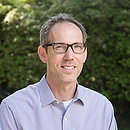
As a clinician, he used Cognitive-Behavioral Therapy to treat individuals across the life-span with anxiety disorders, including Post-Traumatic Stress Disorder. Particularly, Dr. Simpson developed specific expertise in treating clients with Obsessive-Compulsive Disorder. In order to maximize treatment gains, he worked closely with families and schools to ensure these systems were addressing issues related to his clients’ symptoms. Additionally, he remains Co-Primary Investigator of a risk and protective factors research study designed to look at correlates associated with anxiety symptoms in youth. While at UIC, Dr. Simpson was the Program Evaluator for the Urban Youth Trauma Center (UYTC), a Treatment Services Adaptation Center within the National Child Traumatic Stress Network (NCTSN) that aims to improve the lives of youth and families affected by community violence who are experiencing traumatic stress and co-occurring conditions, including substance abuse and disruptive behavior problems. Dr. Simpson was an Adjunct Professor at the Jane Addams College of Social Work at the University of Illinois at Chicago where he taught mental health practice and research classes to students in the mental health concentration.
Moderator:
Christopher R. Browning, Frank Porter Graham Professor Emeritus, University of North Carolina-Chapel Hill
Bio:
Christopher R. Browning was the Frank Porter Graham Professor of History at the University of North Carolina-Chapel Hill until his retirement in May 2014. Before taking up this position in the fall of 1999, he taught for 25 years at Pacific Lutheran University in Tacoma, Washington.
Browning received his B.A. degree from Oberlin College in 1967 and his M.A. and Ph.D. from the University of Wisconsin-Madison in 1968 and 1975 respectively. He is the author of eight books: The Final Solution and the German Foreign Office (1978), Fateful Months: Essays on the Emergence of the Final Solution (1985), Ordinary Men: Police Battalion 101 and the Final Solution in Poland (1992), The Path to Genocide (1992), Nazi Policy, Jewish Workers, German Killers (2000), Collected Memories: Holocaust History and Postwar Testimony (2003), and The Origins of the Final Solution: The Evolution of Nazi Jewish Policy, September 1939-March 1942 (2004), and Remembering Survival. Inside a Nazi Slave Labor Camp (2010). He is also co-editor of Every Day Lasts a Year: A Jewish Family’s Correspondence from Poland (2007).
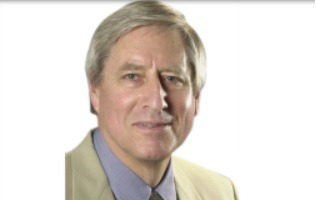
Browning has served as the J. B. and Maurice Shapiro Senior Scholar (1996) and Ina Levine Senior Scholar (2002-3) at the U.S. Holocaust Memorial Museum. He has been a fellow of the Institutes for Advanced Studies in Princeton, New Jersey, and on the campus of the Hebrew University of Jerusalem. He has also received Fulbright, Alexander von Humboldt, DAAD, and Woodrow Wilson Foundation fellowships. He has delivered the George Macaulay Trevelyan Lectures at Cambridge University (1999) and the George L. Mosse Lectures at the University of Wisconsin-Madison (2002), as well as the lectures of the Bertelsmann Visiting Professorship at Mansfield College, Oxford University (2007). He is a three-time recipient of the Jewish National Book Award—Holocaust Category, for Ordinary Men, The Origins of the Final Solution, and Remembering Survival. For this last book he is also a recipient of the Yad Vashem International Book Prize for Holocaust Research. He was named a fellow of the American Academy of Arts and Sciences in 2006.
Browning has served as an expert witness in “war crimes” trials in Australia, Canada, and Great Britain. He has also served as an expert witness in two “Holocaust denial” cases: the second Zündel trial in Toronto in 1988 and in David Irving’s libel suit against Deborah Libstadt in London in 2000.
Friday, October 26
Presentation Title:
“Medical Science, Ethics and Saving Lives”
Who:
Prof. Naomi Baumslag, M.D., M.P.H.
Bio:
Professor Naomi Baumslag is a South African graduate from the University of the Witwatersrand, Johannesburg. She practiced in clinics located in the African townships of Alexandria and Soweto. She left South Africa for political reasons during the apartheid years. In South Africa she was awarded a WHO fellowship for her research on megaloblastic anemia.
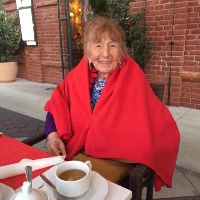
After moving to the United States Prof. Baumslag was awarded a public health fellowship to John Hopkins School of Public Health, where she obtained an M.P.H. in Public Health. She served on the faculties of Cincinnati, Emory, Georgetown and Tulane Medical Schools.
Prof. Baumslag held positions at Human Health Services, USAID and UNICEF in the field of international maternal and infant nutrition and health care. She served on the Human Rights Committee of the APHA and on the Health Advisory Committee of International La Leche League. Prof. Baumslag presents at national and international conferences on infant nutrition and health care.
In 2006 Prof. Baumslag’s definitive work on medical atrocities perpetrated by the Nazis during World War II, Murderous Medicine, was published (Praeger Press). It was reprinted in 2014 and she continues to be invited to present on the subject at conferences around the world.
Publications
Murderous Medicine Nazi Doctors Human Experimentation and Typhus, Praeger press 2006 reprinted 2014.
Typhus Epidemic Containment as Resistance to Nazi Genocide; p39 in Jewish Medical Resistance in the Holocaust, edited by Michael Grodin, Berghahn books, 2014.
Coercion is not Collaboration: Ethics and Agonizing Decisions; pp111-112, abstracts, Second Conference on Medicine in the Holocaust and Beyond, 2017, western Galilee, Israel.
Presentation Title:
“Women Prisoner-Doctors in Auschwitz”
Who:
Claude Romney, Ph.D.
Bio:
Born and educated in Paris, Claude Romney holds a Ph.D. from the University of Paris VIII. She has taught at universities in France, England and Canada and is now Professor Emerita of French at the University of Calgary.
Her publications bear on topics ranging from Applied Linguistics (including Translation), to French Canadian Literature, as well as the Holocaust, particularly the written testimonies of Auschwitz prisoner-doctors, which she has been working on for many years.
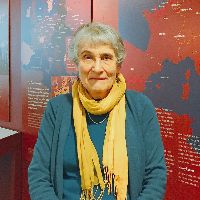
On this topic she has presented papers in North America, Europe and Australia, and has also published articles and book chapters. Her book, based on the writings of fifty-nine former Auschwitz prisoner-doctors, men and women arrested in almost all the countries occupied by the Nazis, will (hopefully!) be published soon. She is the daughter of one of those prisoner-doctors.
She now lives in Vancouver where she is a member of the Executive Committee of the Child Survivors’ Group and regularly talks about the Holocaust to school and university students. She is a Life Fellow of the Vancouver Holocaust Centre Society for Remembrance and Education.
Moderator:
Kirsten M. Christensen, Professor of German, PLU
Bio:
Kirsten M. Christensen earned her Ph.D. in Germanic Studies, with an emphasis on medieval and early modern literature and culture, from the University of Texas at Austin in 1998. Her research has focused on writings by medieval women mystics. In particular, she explores the often fraught relationships between women mystics and their male contemporaries to understand the ways gender relations impacted women’s theologies and religious communities.

Professor Christensen’s teaching interests include not only medieval and early modern literature, but also East German and post-Unification literature and film, and language pedagogy. Before coming to PLU, she taught at Mount Holyoke College and the University of Notre Dame. She is delighted to be part of PLU’s German program, which is large enough to offer a robust variety of courses to its majors, yet small enough to allow close collaboration and exploration between students and faculty. She is particularly grateful to be able to teach language and culture at PLU, whose commitment to global awareness and citizenship provides a deeply supportive environment for language students and faculty. ~Prism 2006
Presentation Title:
Who:
Sari J. Siegel, Ph.D.,Postdoctoral Associate, Yale University
Bio:
Sari J. Siegel is currently a Postdoctoral Associate at Yale University as the 2018-2019 Geoffrey H. Hartman Postdoctoral Fellow at the Fortunoff Video Archive for Holocaust Testimonies. She recently earned her Ph.D. from the University of Southern California for her dissertation “Between Coercion and Resistance: Jewish Prisoner-Physicians in Nazi Camps, 1940-1945.”
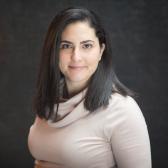
Over the course of her research and writing, she held fellowships in residence at the Institute of Contemporary History (Berlin and Munich), the Vienna Wiesenthal Institute for Holocaust Studies, and the U.S. Holocaust Memorial Museum Mandel Center for Advanced Holocaust Studies. Her dissertation project also received support from the Claims Conference and the Harry F. Guggenheim Foundation, among others. She has presented her research at lectures, conferences, and workshops in Denmark, England, France, Germany, Israel, and Poland, as well as the U.S. Her work has already appeared in peer-reviewed publications including Holocaust and Genocide Studies, and she has several articles in progress.
Publications:
“Treating an Auschwitz Prisoner-Physician: The Case of Dr. Maximilian Samuel,” Holocaust and Genocide Studies 28 (2014), 3: 450-481 http://academic.oup.com/hgs/article/28/3/450/628612/Treating-an-Auschwitz-PrisonerPhysician-The-Case?guestAccessKey=5ab56004-b890-4d88-9794-11c0517d6857
“The Past and Promise of Jewish Prisoner-Physicians’ Accounts,” S:I.M.O.N. – Shoah: Intervention. Methods. DocumentatiON 3 (2016), 1: 89-103 http://simon.vwi.ac.at/images/Documents/Articles/2016-1/2016-1_ART_Siegel/ART_Siegel01.pdf
Presentation Title:
“Legacy of the Nuremberg Code: 70th Anniversary”
Who:
Susan M. Miller M.D., M.P.H., FACP, FAAFP
Bio:
Susan M. Miller M.D., M.P.H., FACP, FAAFP, is the John S. Dunn, Sr. Research Chair in General Internal Medicine at the Houston Methodist and is a Professor in the Department of Family Medicine and a Professor of Clinical Medicine at the Institute of Academic Medicine, Houston Methodist Research Institute. She is an Associate Professor, Weill Medical College, Cornell University. Dr. Miller is the Deputy Chief in the Department of Family Medicine at The Methodist Hospital. Dr. Miller is currently the senior Chair of the Institutional Review Board of the Methodist Hospital Research Institute and is the Director of the Chao Program for International Research Ethics.
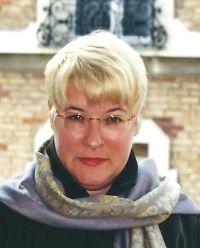
Dr. Miller has provided consultation work to health care institutions in Central and Eastern Europe, Russia, Cameroon, the Philippines, South Korea, and Monterrey. She is the Vice-Chair for the Center for Medicine After the Holocaust (Houston) and a board member of the Maimonides Institute for Medicine, Ethics and the Holocaust, and is a co-founder of the Center for Medicine after the Holocaust-Ukraine where she is also a board member of the Scientific Council of the Informational Center of Bioethics – Ukraine. In addition, Dr. Miller is the Vice-Chair of the Executive Advisory Board of CITI and has an honorary faculty position at the Tomsk Regional Center for AIDS and Other Infectious Diseases in Tomsk, Siberia.
Moderator:
Sergia Hay, Associate Professor of Philosophy, PLU
Bio:
Dr. Sergia Hay studied at Wellesley College, Cambridge University, Luther Seminary, and Columbia University and has previously taught philosophy in Massachusetts and Germany. At PLU since 2011, she teaches courses in applied ethics and the history of philosophy. Her area of scholarly specialization is Søren Kierkegaard and her current research investigates his views on language as well as the influence on his work by Johann Hamann, a contemporary of Kant. Dr. Hay believes that in addition to posing fascinating questions, philosophy can help us solve pressing problems like hunger and environmental degradation.
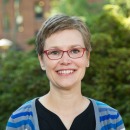
Presentation Title:
“Letters from Dachau: A Journey of Words though Rarely Spoken”
Who:
Clarice Wilsey, Seattle Holocaust Center for Humanity
Bio:
Clarice Wilsey’s father, Captain David Wilsey, M.D., was an American army physician who treated survivors of Dachau Concentration Camp after liberation. He and several dozen other medical staff stayed at Dachau with thousands of former prisoners under quarantine, in order to bring some healing to the survivors. Dr. Wilsey’s letters from Dachau to his wife back home survived, and after Clarice found them in 2009, inspired her to share her father’s experiences with students and others as a member of the Holocaust Center for Humanity Speakers Bureau.
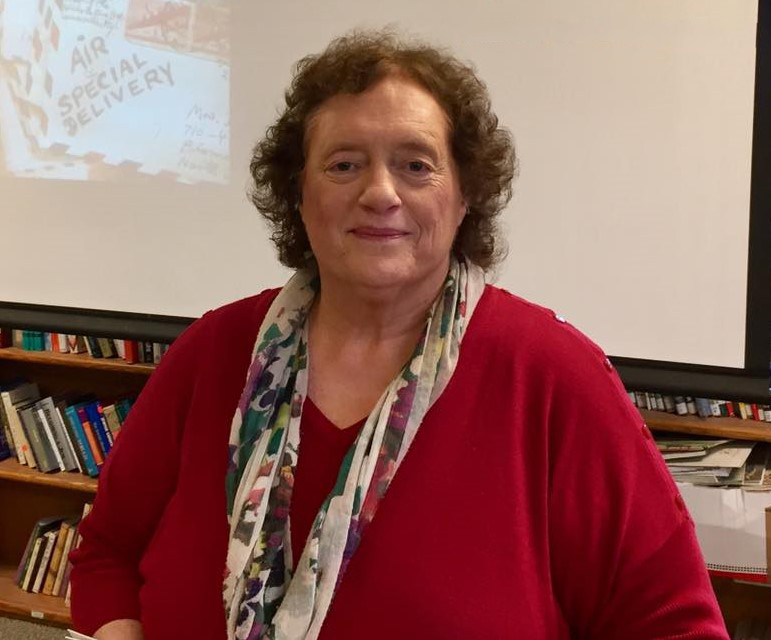
Moderator:
Dee Simon, Baral Family Executive Director, Holocaust Center for Humanity, Seattle, Washington
Bio:
Dee Simon, is the Baral Family Executive Director of the Holocaust Center for Humanity. A graduate of the University of Southern California’s business school, she has held positions with major corporations in the finance field and as a business consultant.
Dee has been working with the Holocaust Center for over 21 years. First as a volunteer, then a board member, followed by four terms as President of the Board. She joined the staff as Co‐Executive Director in 2006 becoming the Executive Director in 2012.
Dee serves on the board of the international Association of Holocaust Organizations.